

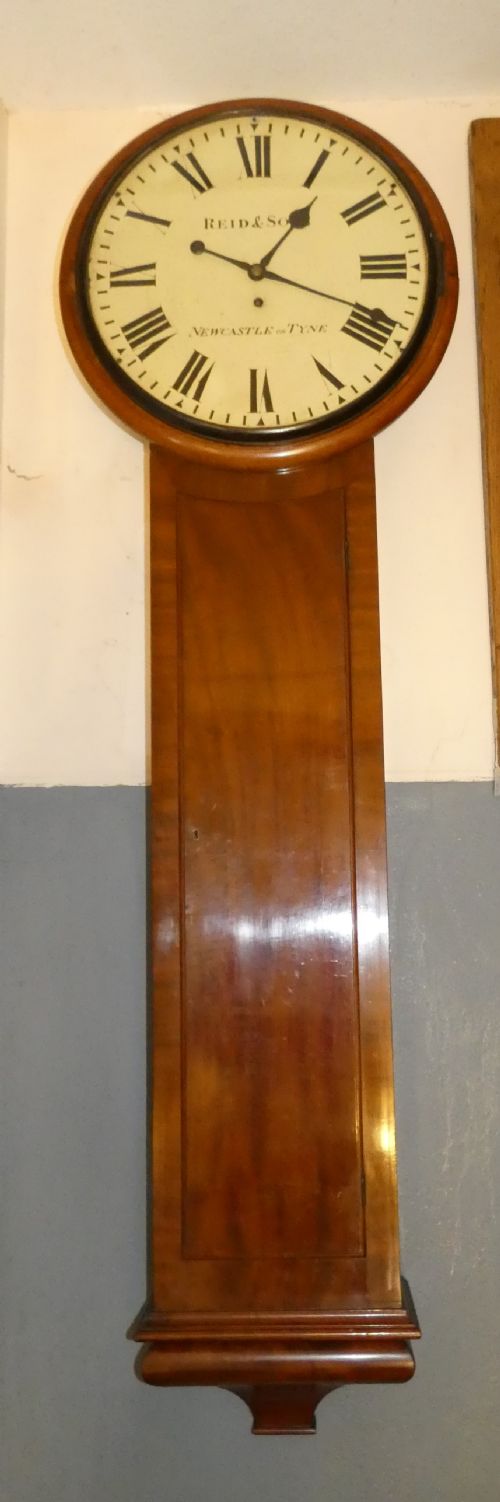


Vintage Regulator Wall Clock
A vintage regulator wall clock keeps precise time and brings mechanical gravity to a room through steady pendulum movement.
Vintage Regulator Wall Clock
A vintage regulator wall clock is a timepiece designed for domestic or public spaces, often built around a long pendulum and clear enamel dial. You encounter these instruments in various regional traditions, notably German and Austrian workshop formats and French styles spanning the nineteenth and twentieth centuries.
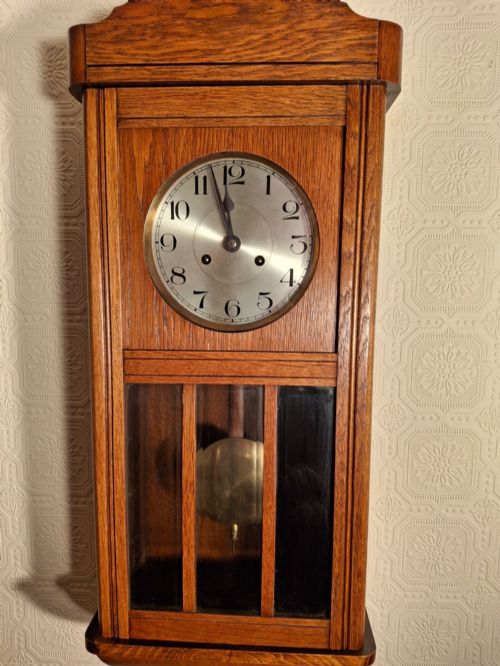
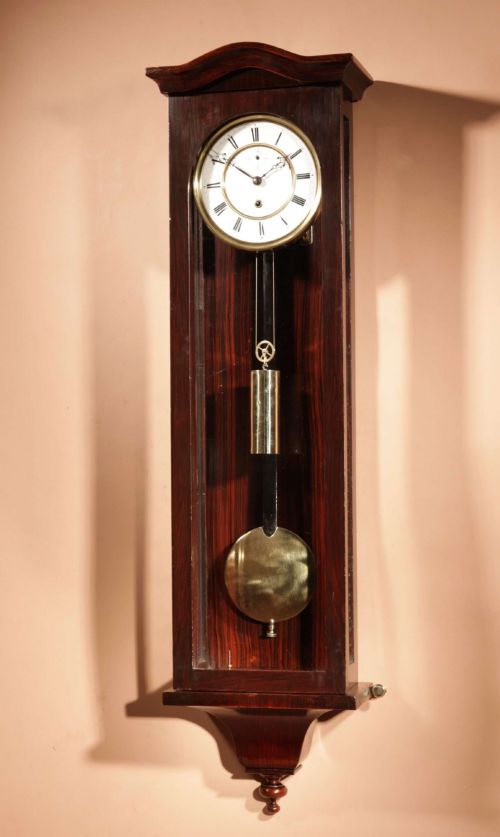
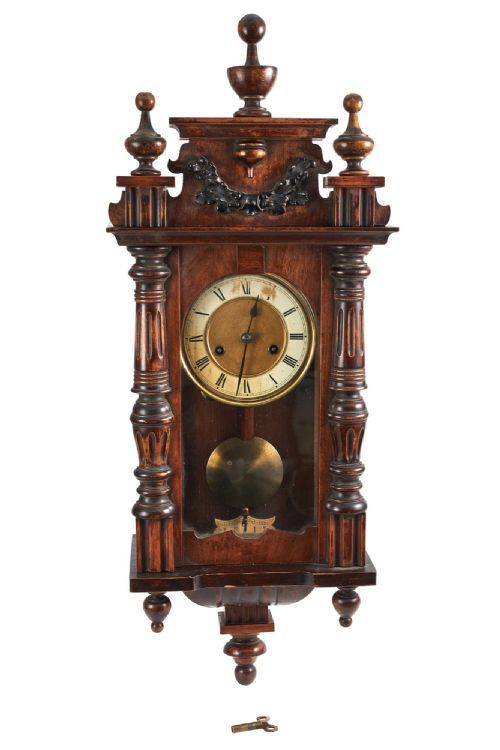
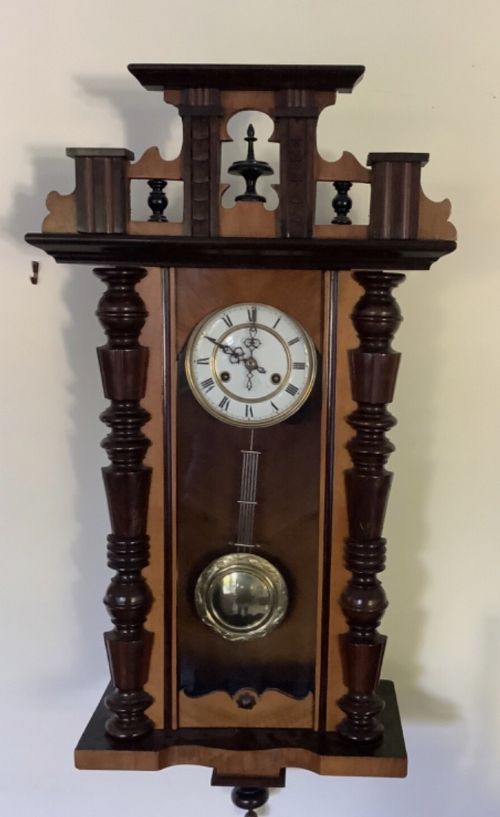
The selection here includes walnut and mahogany cases alongside oak, rosewood, and ebonised wood examples. Forms range from traditional Vienna wall clock layouts to drop dial instruments and Art Deco carillon designs.
Pieces stretch across distinct periods, from Regency and Victorian eras through Edwardian, Arts and Crafts, and mid-century modern decades. Walnut stands out as the dominant timber in the current assembly.
Materials and Construction
Cases rely on hardwoods like walnut, mahogany, oak, and rosewood, frequently enhanced by burr veneers, ebonised detailing, and carved mouldings. Glazed doors protect the dial and pendulum swing, while brass components form the internal movements and bezels.
Dials typically feature white enamel with Roman or Arabic numerals, paired with delicate metal hands. Internal weight-driven or spring-driven mechanisms translate the pull of gravity and tension into regulated mechanical motion.
Assessing Quality
Quality rests in the crispness of the timber carving, the choice of burr walnut or figured veneers, and the condition of the enamel dial. Stronger examples display balanced proportions and precise joinery within the wooden case.
Mechanical execution separates standard production from finer workshop output, evident in the finish of the brass plates and the legibility of the dial inscriptions.
Johann Baptist Beha·Gustav Becker
The Vintage Regulator Wall Clock Glossary
- Regulator
- A precision pendulum clock designed to serve as a standard for timekeeping. These movements prioritise accuracy and steady mechanical performance.
- Vienna Regulator
- A prominent style of wall clock originating in Austria featuring a long glass-fronted case to display the pendulum and weights. These pieces often incorporate neoclassical architectural details.
- Drop Dial
- A clock with a circular dial case mounted above a vertical wooden trunk or box that houses the hanging pendulum. This configuration is common in English and regional European timepieces.
- Carillon
- A clock movement set up to play tunes on a set of bells or gongs at specific intervals. This mechanism often accompanies Art Deco French wall clock designs.
- Ebonised Wood
- Timber treated to resemble ebony through staining or painting. This finish provides a dark, uniform contrast against brass bezels and white enamel dials.
Vintage Regulator Wall Clock: Frequently Asked Questions
How do I wind a regulator wall clock?
Most models use a key inserted into winding holes on the enamel dial to tension the internal springs or lift the driving weights. Take care not to over-wind the mechanism.
Ensure the key matches the square arbour precisely to avoid slipping and damaging the internal components during routine maintenance.
Where should I hang a wall clock?
Mount the clock on a solid interior wall away from direct sunlight, heating vents, and damp areas. A stable surface prevents vibrations that disrupt the pendulum.
Ensure the wall can support the combined weight of the timber case and internal metal movement safely.
Why is my clock losing time?
Timekeeping variations often result from an out-of-beat escapement or changes in ambient temperature affecting the pendulum rod. Adjusting the small nut beneath the pendulum bob usually corrects the rate.
Older mechanical movements also require periodic cleaning and lubrication by a specialist to maintain consistent operation.
How do I identify a Vienna regulator?
Look for a tall, narrow wooden case featuring full-length glass side panels and a central door that reveals the weights and pendulum. The dial is typically clean and easy to read from a distance.
These pieces emphasise mechanical visibility and architectural timber framing characteristic of nineteenth-century Austrian workshops.