





Nineteenth Century Regulator Clock
A nineteenth century regulator clock represents precision timekeeping at its finest, offering accuracy and striking cabinet work for the serious collector.
Nineteenth Century Regulator Clock
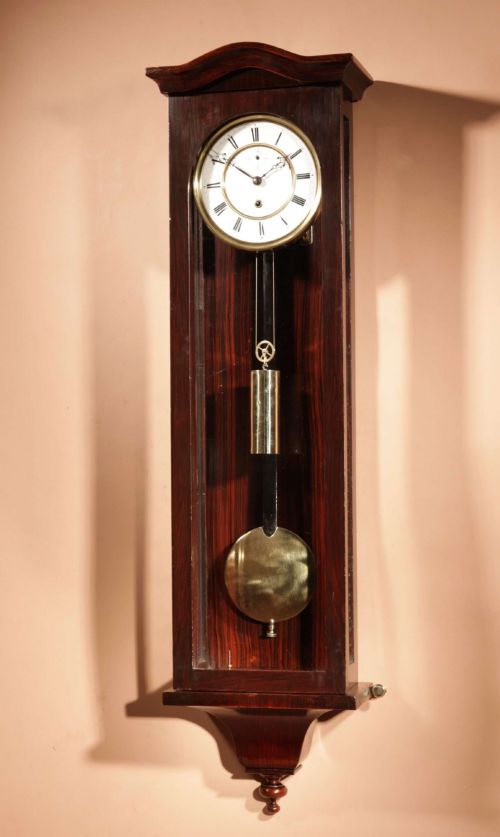
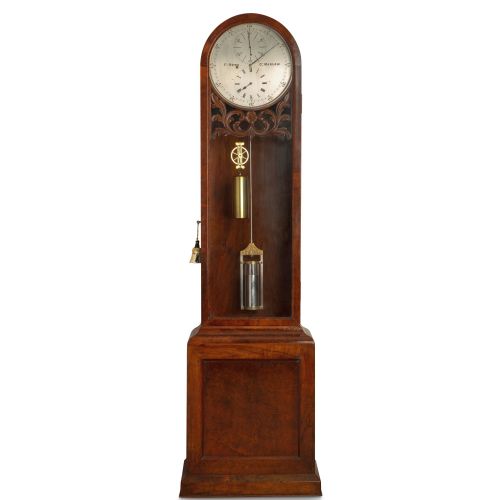
A nineteenth century regulator clock combines exceptional precision movement engineering with refined cabinet making, designed originally to keep time for scientific or domestic exactitude. These pieces appear across various forms on this page, ranging from grand floor-standing longcase examples to impressive wall-hanging Vienna styles and table mantel pieces.
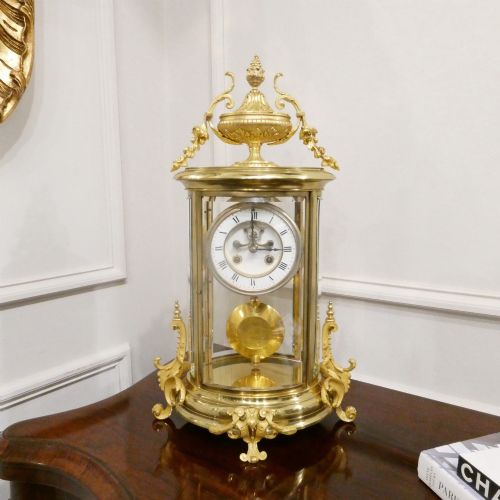
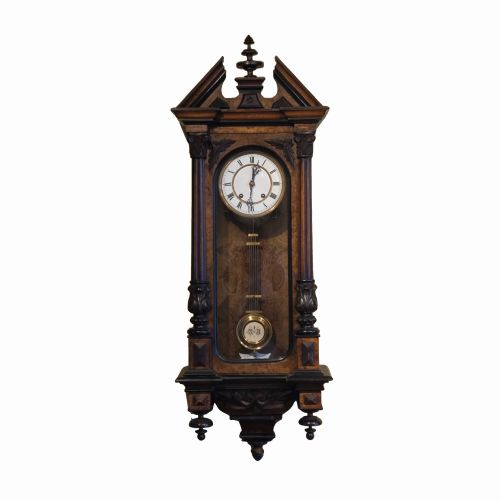
The domestic versions you meet most frequently on this page span the Victorian era, French late nineteenth century design, and German workshop production. Makers housed these accurate mechanisms within mahogany, walnut, or gilt bronze cases featuring glazed panels to showcase the swinging pendulum and weights.
How they were made
Clockmakers constructed these precision instruments using robust brass for the gear trains and escapements, paired with silvered metal or enamel dials for clear legibility. Cases utilised dense timber frames of mahogany and walnut, polished to a rich sheen and glazed with heavy glass panels to protect the delicate movements from dust.
Workshop methods involved meticulous hand-adjustment of the gear teeth and pendulum suspensions to achieve the high degree of accuracy required for a regulator. Cabinet makers fitted brass bezels, intricate porcelain inlays, and gilt bronze mounts to complement the functional integrity of the mechanical core.
Black Forest workshops produced regulator wall clocks with an unmistakable dark charm, hiding precision German mechanics behind rustic wooden charm.
What varies in quality
The standard of a nineteenth century regulator clock rests largely upon the refinement of its movement and the execution of its case. Finer examples display meticulous hand-finishing on the brass plates, heavier deadbeat escapements, and substantial mercury or gridiron compensating pendulums.
Cabinet work similarly dictates value, distinguishing between standard commercial production and pieces bearing the signature of renowned makers. Superior specimens feature carefully selected timber veneers, flawless silvered dials, and crisp architectural detailing that has survived intact.
Samuel Marti·Gustav Becker·James Wood·Aitchison of Glasgow·Frederick Rowe of Great Marlow·Richard Rowell
The Nineteenth Century Regulator Clock Glossary
- Regulator clock
- A high-precision pendulum clock designed to serve as a standard for setting other timepieces. These mechanisms prioritize exact timekeeping over striking complications.
- Vienna regulator
- A distinct wall-hanging clock style originating in Austria, characterised by a long glazed trunk door and a weight-driven movement. They gained popularity across Europe for their reliability and elegant proportions.
- Deadbeat escapement
- A clock mechanism that stops the escape wheel from recoiling backward, reducing wear and improving timekeeping accuracy. It is a hallmark of better quality regulator movements.
- Four glass clock
- A mantel or desk clock enclosed entirely in glass panels within a brass or gilt bronze frame, allowing light to pass through to the movement. This French style exposes the pendulum and gear train from multiple angles.
- Silvered metal
- A brass or copper dial surface treated with a silver compound to produce a matte, reflective finish. Engraved numerals and markers are typically filled with black wax for contrast.
Nineteenth Century Regulator Clock: Frequently Asked Questions
What is a regulator clock?
A regulator clock is a high-precision timepiece built specifically for exceptional accuracy rather than daily domestic convenience. They were utilised in railway stations, observatories, and wealthy homes where exact time measurement mattered.
These clocks feature weight-driven movements and clean, legible dials designed for quick reading. Their refined mechanisms made them the benchmark against which smaller household clocks were set.
Where should I hang a wall clock?
Wall clocks need a secure fixing directly into solid masonry or substantial timber wall studs to support their considerable weight. The mounting must be completely rigid to prevent any vibration from interfering with the pendulum's swing.
Choose an interior wall away from direct sunlight, dampness, and draughts to protect the wooden case and delicate movement oils. Placing them at eye level also makes daily reading and weekly winding much more practical.
How do I tell different periods apart?
Distinguishing periods involves examining the case design, timber choice, and dial ornamentation alongside any maker signatures. Mid-century examples often favour simpler architectural walnut or mahogany cases, while later Victorian versions incorporate richer carving and revival motifs.
French models from the later decades frequently utilise gilt bronze frames and exposed glass panels. Comparing the dial typography and mechanical finishing provides further clues to the decade of manufacture.