

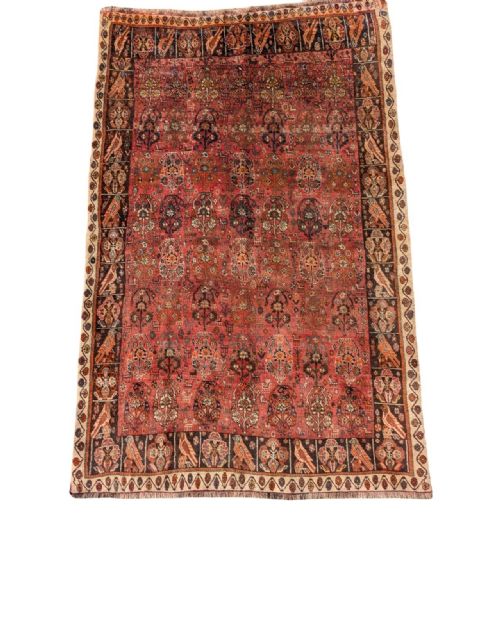


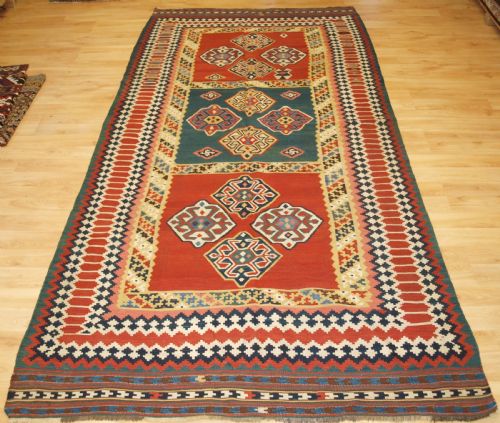


Vintage Qashqai Runner
A vintage qashqai runner brings nomadic South Persian artistry into a hallway, offering rich tribal patterns and deep historical character.
Vintage Qashqai Runner
A vintage qashqai runner represents the textile traditions of South-West Persia, specifically originating from the Fars province and associated tribal groups such as the Qashqai and Luri. These narrow, elongated carpets were woven by nomadic and village weavers for practical floor coverings within tents and homes.
The selection here encompasses both knotted pile rugs and flatwoven kilims, alongside related Gabbeh and Shiraz pieces spanning the nineteenth and early twentieth centuries. Geometric medallions, tree of life motifs, and banded designs dominate the visual language of these tribal textiles.
Buyers seeking this phrase encounter pieces dating from the mid-nineteenth century up to the 1930s. Each example reflects the distinct aesthetic preferences of the tribes inhabiting the mountainous regions of South Persia.
Materials and construction methods
Construction relies heavily on wool and hand-spun wool for the pile and surface, supported by cotton foundations in many examples. The use of hand-spun wool imparts an irregular, tactile texture that responds uniquely to wear and natural ageing.
Natural dyes provide the palette, yielding soft colours and organic variations across the field that chemical counterparts cannot replicate. The interplay of hand-spinning and natural dyeing creates the characteristic depth found in these tribal weaves.
Vintage Qashqai Runner Retail Price Guide 2026
Typical asking prices for vintage qashqai runner among the pieces listed under this phrase on Sellingantiques today, from the lower quarter to the upper quarter. They describe what is for sale here now, not the wider market.
Look closely for stray weaver errors in the geometric borders, where makers intentionally varied the pattern to outsmart evil spirits.
Distinguishing finer examples
Quality in these textiles rests upon the fineness of the knotting or the tightness of the flatweave, alongside the precision and balance of the tribal geometry. Superior pieces demonstrate a confident handling of traditional motifs, such as triple medallions or compartment layouts, executed with skilled proportion.
The handling of natural dyes also dictates distinction, where subtle tonal shifts and harmonious colour saturation elevate the visual impact of the weave. Condition and structural integrity further separate standard utilitarian pieces from exceptional survivals of the period.
The Vintage Qashqai Runner Glossary
- Kilim
- A flatwoven textile produced without a pile, often featuring sharp geometric patterns and slit-weave techniques. These function well as lightweight floor coverings or wall hangings.
- Gabbeh
- A coarsely knotted, thick pile rug traditionally woven by nomadic groups for personal use. They typically display sparse, minimalist designs with fields of solid colour.
- Medallion
- A central ornamental motif placed in the field of the rug. In tribal weaving, these often take geometric or stylized floral forms.
- Fars Province
- A region in South-West Persia historically associated with nomadic confederations and pastoral weaving communities. It serves as the geographic centre of production for these carpets.
- Kelleh
- A specific format of Persian carpet that is longer than a standard room rug but wider than a typical corridor runner. It provides a balanced rectangular proportion for traditional interiors.
Vintage Qashqai Runner: Frequently Asked Questions
How do I place a runner in a hallway?
These narrow formats suit corridors, landings, and entrance halls where linear space requires directional grounding. Ensure you place a suitable underlay beneath the textile to prevent sliding on hard floors.
Allow a border of bare floorboards or stone around the edges of the runner to frame the piece properly within the architectural proportions of the hallway.
Are these rugs suitable for high traffic areas?
Wool and cotton construction combined with sturdy tribal knotting makes these textiles resilient for everyday domestic use. Regular, gentle cleaning helps maintain the integrity of the natural fibres over decades of foot traffic.
Rotating the piece periodically ensures even wear across the surface, particularly in long corridors or entryways.
How do I identify a tribal design?
Tribal designs rely on geometric motifs, repeating compartments, and stylized representations of flora and fauna rather than courtly curved florals. The patterns often stem from memory and tribal tradition rather than pre-drawn cartoon templates.
Asymmetrical details and variations in the border or field often indicate genuine nomadic or village production.
How should I clean a vintage wool runner?
Professional specialist cleaning is essential for antique and vintage wool textiles to protect natural dyes and hand-spun foundations. Avoid harsh chemical treatments and excessive water immersion.
Gentle surface vacuuming without a rotating beater bar removes trapped grit between the wool knots safely on a weekly basis.