


Antique Oriental Floor Covering
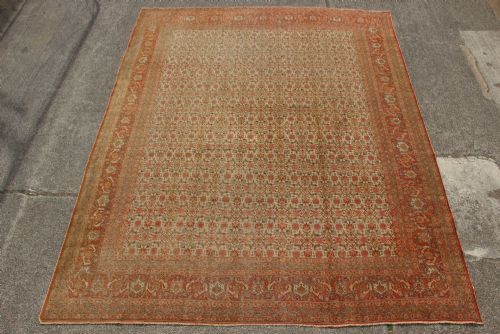
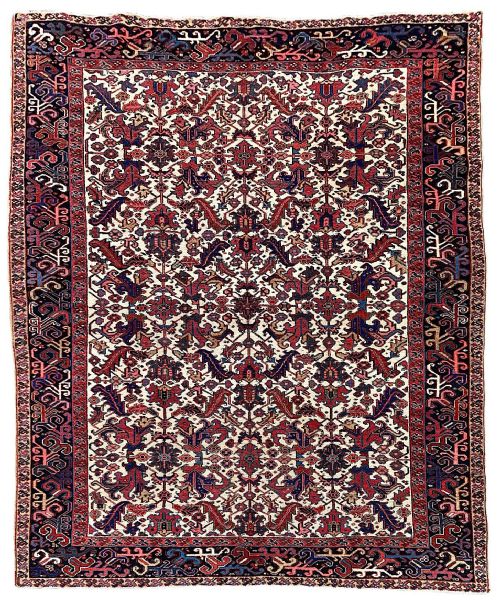
These antique oriental floor covering pieces are woven textiles that ground a room with distinct regional designs and rich history.
Antique Oriental Floor Covering
When you search for an antique oriental floor covering, you encounter a selection of woven carpets and rugs originating from Persian, Caucasian, and Ottoman weaving centres. The pieces on this page span from the nineteenth century into the early decades of the twentieth century, including large palace-sized carpets and smaller tribal formats.
Most examples belong to recognised regional traditions such as Heriz, Tabriz, Oushak, and Kashan, each displaying distinct medallion layouts or all-over patterns. Alongside room-sized floor coverings, the selection contains smaller tribal rugs and woven bag faces adapted for domestic interiors.
Materials and construction methods
The pieces listed record construction primarily in wool and cotton, with certain items noting hand-spun wool and hand-knotted techniques. Weavers utilised natural dye sources to achieve the deep tones seen across Persian and Turkish workshops.
Foundation threads of cotton or wool support dense pile surfaces designed to withstand generations of use. Hand-weaving methods ensure each carpet maintains structural integrity while displaying individual nuances in knotting and border execution.
Several listings include nomadic bag faces originally woven for practical storage on animal backs, now repurposed as decorative interior cushions.
Distinctions in weaving quality
Quality in an antique oriental floor covering rests on the precision of the knot density and the clarity of the design motifs. Finer wool yields a softer handle and a sharper definition in complex medallion and floral schemes.
The balance of the natural dye palette and the integrity of the original borders also determine the standing of a piece. Examples retaining their initial proportions and uncompromised pile edges occupy the upper tier of the range.
Benlian·Mokhtashem
The Antique Oriental Floor Covering Glossary
- Medallion
- A central ornamental design motif placed in the middle of the carpet field. It serves as the focal point for many Persian and Anatolian weaving traditions.
- Pile
- The vertical or slanted loops of yarn that form the usable surface of the carpet. This layer is created by knotting wool or silk onto the warp and weft foundation.
- Warp
- The stationary lengthwise threads stretched on the loom before weaving begins. The pile knots are tied around these parallel foundation lines.
- Weft
- The horizontal threads passed alternately over and under the warp threads to hold the knots in place. This structure gives the textile its lateral stability.
- Tribal
- A descriptor for rugs produced by nomadic or village groups rather than city workshops. These pieces often feature geometric patterns and expressive local colour choices.
Antique Oriental Floor Covering: Frequently Asked Questions
How do I clean an antique oriental floor covering?
Gentle surface brushing and professional specialist cleaning are essential for preserving the wool pile and natural dyes. Avoid harsh chemical treatments and excessive water immersion.
Regular rotation prevents uneven wear patterns from foot traffic and sunlight exposure in domestic settings.
Where were these carpets originally made?
The pieces originate from traditional weaving centres across Persia, the Caucasus, and the Ottoman Empire. Specific towns and regions such as Tabriz, Heriz, and Oushak developed distinct design vocabularies.
Nomadic groups and village workshops in regions like Kerman also produced recognisable tribal rugs and cushions.
How do I tell regional styles apart?
Regional attribution relies on examining the specific geometry of the central medallions, the drawing of floral motifs, and the border arrangements. Persian city carpets often feature curved vines and intricate floral sprays.
Caucasian and tribal pieces tend to utilise sharper, geometric polygons and bolder primary colour palettes.
Are these carpets suitable for heavy daily use?
The durable wool construction and sturdy cotton foundations allow these textiles to handle normal foot traffic in living areas. Placing a quality underlay beneath the carpet prevents slippage and reduces friction against the floor.
Placing them out of direct, intense sunlight preserves the depth of the historical dyes.