
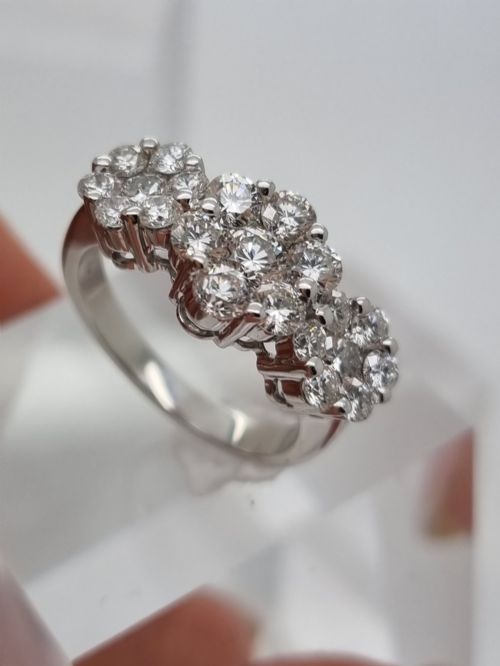
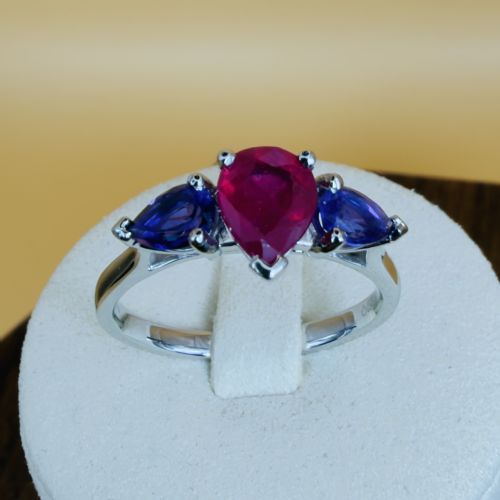
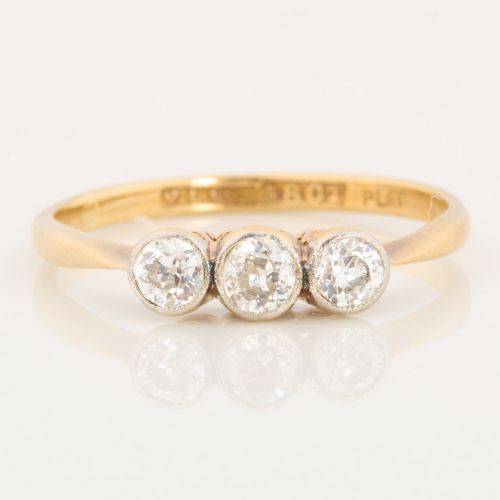
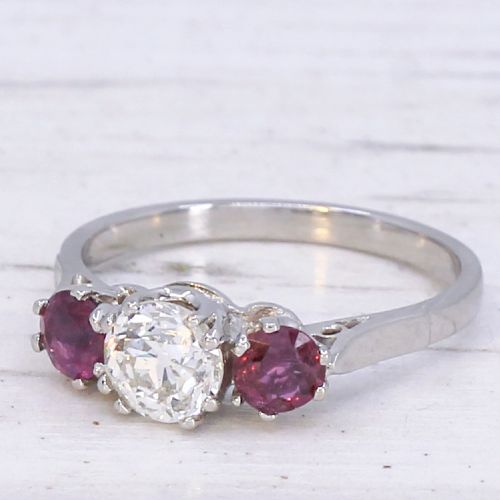


Vintage Platinum Trilogy Ring
A vintage platinum trilogy ring brings together three stones symbolising past, present, and future in lasting precious metal.
Vintage Platinum Trilogy Ring
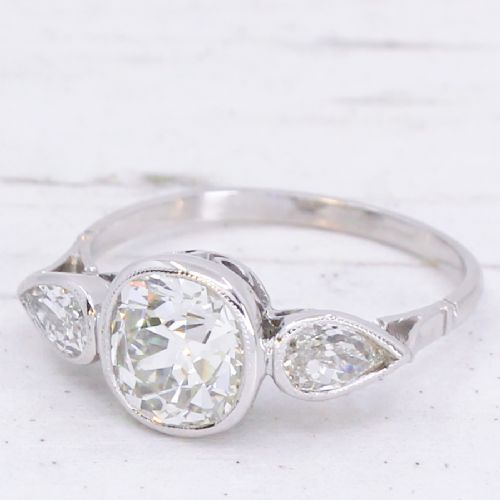
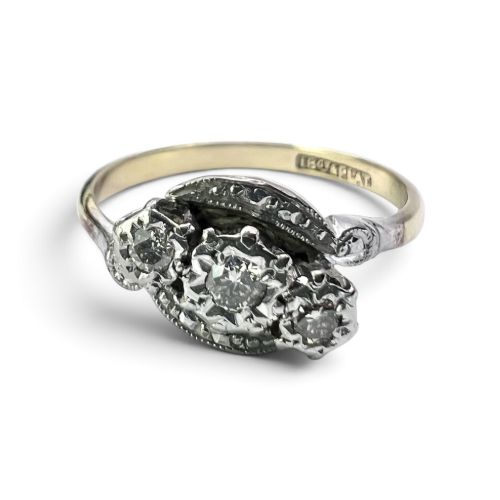
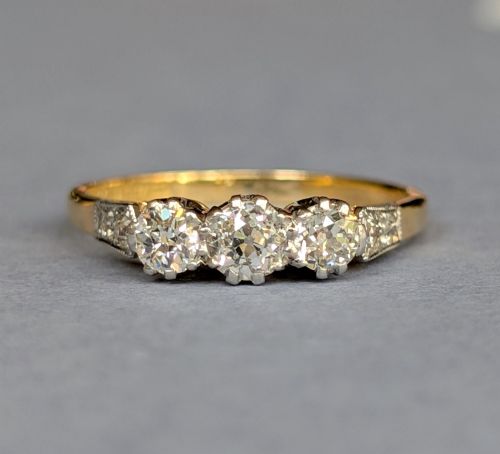
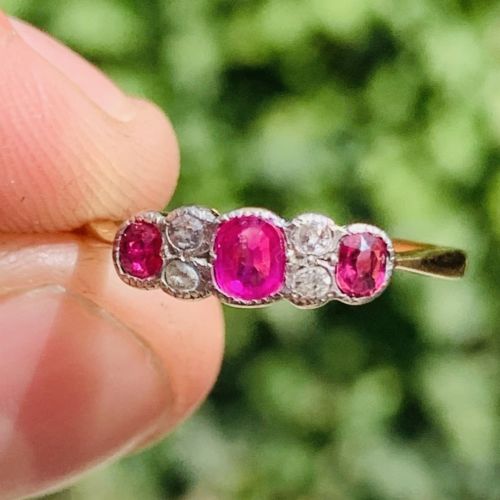
The most common formations on this page pair central diamonds with side stones, or feature vibrant rubies, sapphires, and emeralds flanked by diamonds. Styles range from linear Art Deco designs to twist settings and Edwardian configurations.
Buyers seek these rings for their symbolic three-stone arrangement and durable platinum settings, which securely hold old cut, transitional cut, or baguette diamonds alongside coloured gems.
How they were made
Platinum emerged as the preferred metal for fine rings during the Edwardian and Art Deco periods due to its strength, which allowed jewellers to create delicate, secure settings with minimal metal obstruction. Artisans combined platinum with 18ct gold shanks, utilising the contrasting tones to highlight the mounted gems.
Stones were shaped by hand, resulting in old cut, transitional cut, and baguette diamonds alongside cushion and emerald cut coloured stones. Settings relied on precise claw work and channel designs to maximise light entry into each of the three stones.
Materials recorded across the inventory include platinum, 18ct gold, diamonds, sapphires, rubies, and emeralds.
What varies in quality
Quality in a vintage platinum trilogy ring rests upon the clarity, colour, and cut of the three central stones, alongside the integrity of the metalwork. Hand-cut old stones display individual character, while uniform proportions indicate meticulous lapidary work.
The precision of the setting work separates ordinary pieces from superior examples, visible in the symmetry of the claw placement and the crisp geometric lines typical of Art Deco designs.
The Vintage Platinum Trilogy Ring Glossary
- Trilogy ring
- A ring featuring three stones set in a row, traditionally representing the past, present, and future.
- Platinum
- A dense, durable, and naturally white precious metal widely used in Edwardian and Art Deco jewellery for secure stone settings.
- Old cut
- A vintage diamond cutting style characterised by a high crown, small table, and deep pavilion, designed to catch candlelight.
- Art Deco
- A design style from the 1920s and 1930s defined by geometric symmetry, clean lines, and stylized motifs.
- Transitional cut
- A diamond cut used roughly between 1918 and the 1930s that bridges the older antique cuts and modern brilliant cuts.
Vintage Platinum Trilogy Ring: Frequently Asked Questions
How do I identify an Art Deco trilogy ring?
Art Deco trilogy rings typically display strong geometric lines, symmetry, and architectural motifs characteristic of the 1920s and 1930s. Jewellers frequently incorporated baguette cut diamonds or calibre-cut coloured gems alongside central stones.
The platinum settings from this era are often intricately pierced or millegrain decorated, emphasising sharp angles and streamlined silhouettes compared to softer Edwardian styles.
Are these rings suitable for daily wear?
Platinum is an exceptionally durable and strong metal that resists wear well, making it suitable for everyday use. The secure settings typical of these vintage pieces hold the stones firmly in place.
Owners should still take standard precautions, such as removing the ring during heavy manual work or swimming, to protect older claws and softer gemstones like emeralds.
What is the difference between old cut and modern diamonds?
Old cut diamonds were shaped by hand before modern machinery standardised cutting angles. They feature smaller tables, higher crowns, and larger facets that produce a distinctive, softer glow under ambient light.
Modern brilliant cut diamonds are engineered to maximise direct return of light through precise mathematical proportions, creating a different type of sparkle.