


1920s Diamond Trilogy Ring
A 1920s diamond trilogy ring brings together three brilliant stones in a classic setting that celebrates past craftsmanship.
1920s Diamond Trilogy Ring
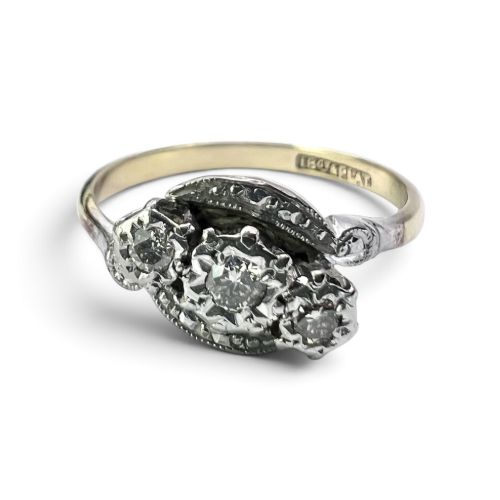
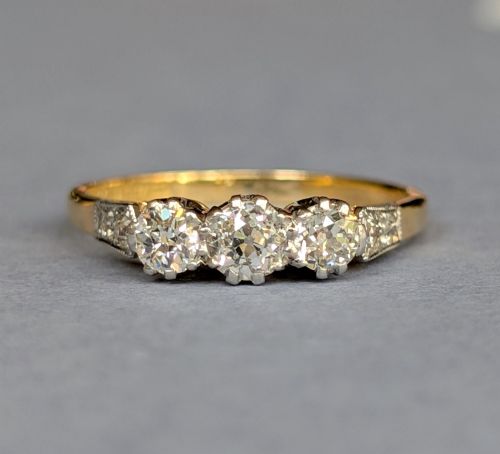
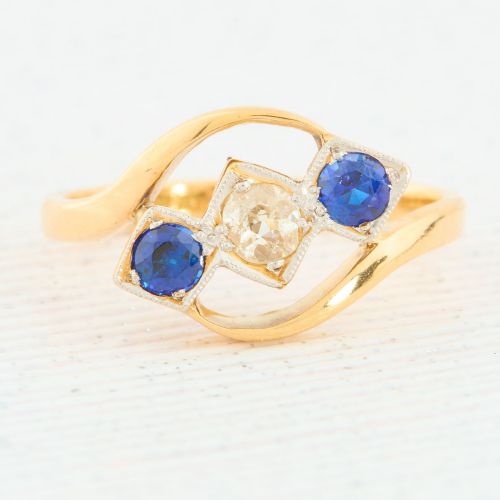
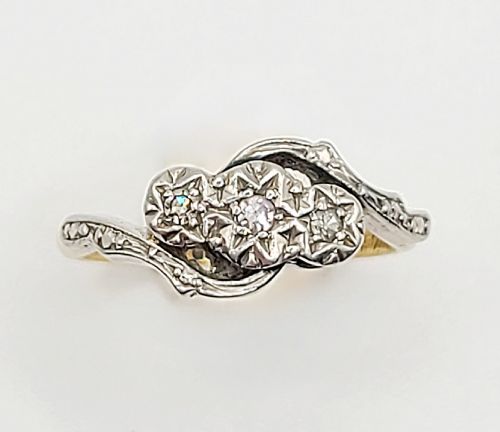
A 1920s diamond trilogy ring displays three stones arranged side by side on a precious metal band, embodying the Art Deco style of the period. These rings span periods from the 19th Century through the 1920s and 1930s, often pairing diamonds with sapphires.
The most common version met on this page is the Art Deco three stone ring set in platinum and 18ct gold or 18ct white gold. Stones range from smaller accents to substantial old cut diamonds and Burmese sapphires.
Makers and jewellers of the era utilised distinct platinum settings, sometimes incorporating baguette cuts or star motifs around the central stones. Rings appear in various sizes, with options such as 9ct gold and 15ct gold also represented.
How they were made
Craftsmen during this era combined platinum with 18ct yellow or white gold to construct sturdy mountings that securely held old cut diamonds and sapphires. Platinum settings allowed for delicate claw or bezel arrangements while maintaining structural integrity.
Stones such as transitional cuts and old cut diamonds were shaped by hand, giving each ring an individual character. Gold shanks were cast and joined to platinum heads, or entire settings were forged from solid platinum.
1920s Diamond Trilogy Ring Retail Price Guide 2026
Typical asking prices for 1920s diamond trilogy ring among the pieces listed under this phrase on Sellingantiques today, from the lower quarter to the upper quarter. They describe what is for sale here now, not the wider market.
Listings feature items from the 19th Century, 1920, and 1930, utilising diamond, platinum, 18ct gold, sapphire, and 9ct gold.
What varies in quality
The standard of a ring rests on the proportion and matching of the central stones alongside the crispness of the platinum setting work. Superior examples feature well-matched old cut diamonds with high clarity and balanced carat weights.
The precision of the metalwork distinguishes finer pieces, particularly where platinum meets 18ct gold or 18ct white gold in intricate swirl or basket designs. Well-preserved settings show minimal wear to the claws and retain sharp geometric lines typical of the Art Deco aesthetic.
The 1920s Diamond Trilogy Ring Glossary
- Trilogy ring
- A ring featuring three primary stones, traditionally symbolising the past, present, and future. These are also frequently referred to as three stone rings.
- Old cut diamond
- A vintage diamond cutting style characterised by a small table, high crown, and large culet, designed to catch candlelight. These stones display distinctive facets compared to modern brilliant cuts.
- Platinum
- A dense, durable white metal widely utilised in the 1920s for securing gemstones. Its strength allowed jewellers to create fine, delicate settings without risking stone loss.
- Art Deco
- A design movement spanning the 1920s and 1930s defined by geometric symmetry, clean lines, and stylised motifs. This style heavily influences the mountings of these rings.
- Transitional cut
- A diamond cut used during the period of transition between old European cuts and modern round brilliants. It retains high crown proportions while introducing more uniform facet symmetry.
1920s Diamond Trilogy Ring: Frequently Asked Questions
What is a 1920s diamond trilogy ring?
A 1920s diamond trilogy ring is a vintage piece featuring three stones, usually diamonds or a combination of diamonds and sapphires, set across the finger.
These rings are strongly associated with the Art Deco period and utilise combinations of platinum and gold.
How do I care for my ring?
Living with a vintage ring involves gentle cleaning with warm soapy water and a soft brush to remove everyday debris from the settings.
It is wise to remove the ring during heavy manual work to protect the platinum and gold claws holding the stones.
Are these rings suitable for daily wear?
Platinum and 18ct gold provide a durable foundation for everyday use, making these rings robust enough for regular wear.
Checking the security of the stones periodically ensures the claw settings remain firm over time.
How can I tell the period?
The period is identified through characteristic Art Deco design elements, gemstone cutting styles like old cuts, and hallmark stampings on the metal band.
Many examples combine platinum settings with 18ct yellow or white gold, typical of manufacturing practices from the 1920s and 1930s.