


Platinum Diamond Trilogy Ring
A platinum diamond trilogy ring holds three stones representing past, present, and future, combining enduring metal with geometric flair.
Platinum Diamond Trilogy Ring
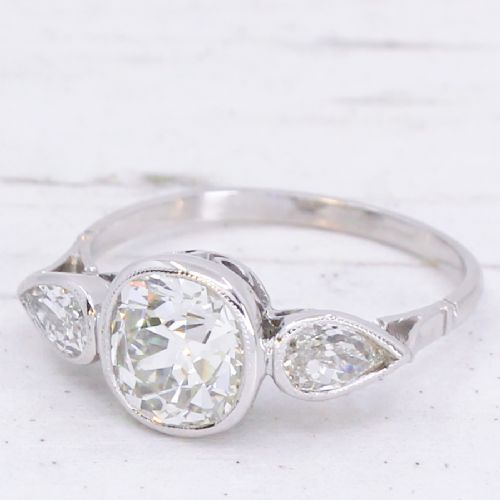
A platinum diamond trilogy ring brings together three distinct stones on a single band, a form deeply associated with the Art Deco period and the early twentieth century. These pieces most frequently emerge from the 1920s and 1930s, alongside examples from the Edwardian era and mid-century designs.
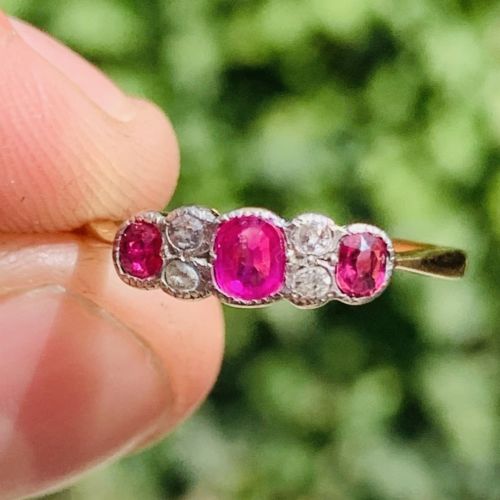
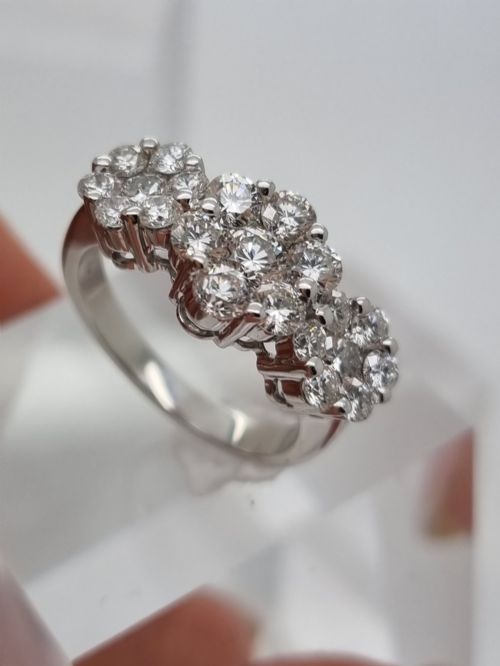
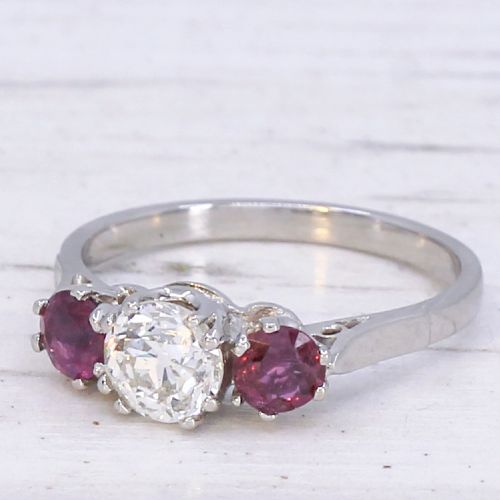
The phrase denotes a three-stone configuration where diamonds take centre stage, occasionally flanked by or alternating with coloured gemstones such as sapphire, ruby, emerald, aquamarine, pink sapphire, tourmaline, and opal. The central stones range from old cut and European cut diamonds to geometric cuts set closely together.
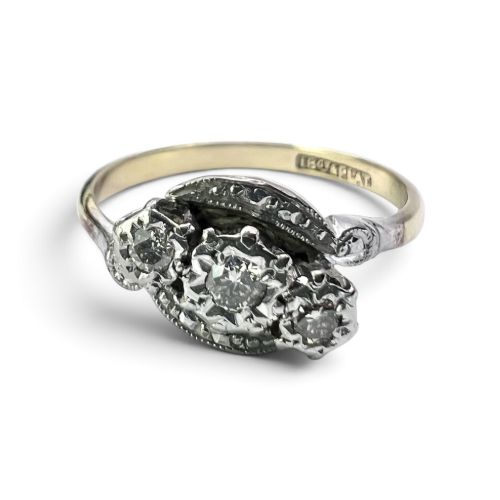
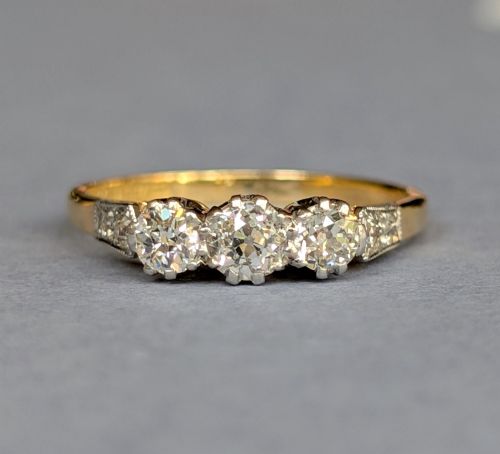
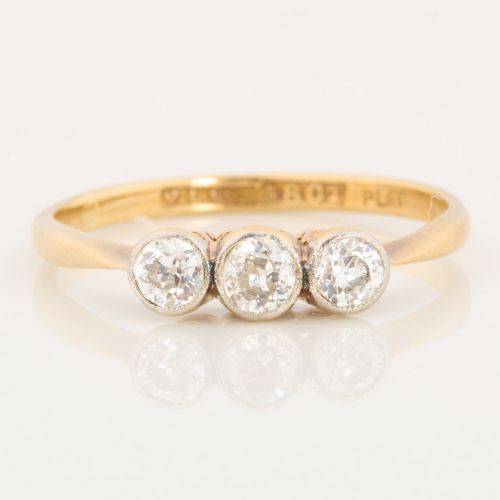
Most items on this page pair platinum settings with bands of platinum or 18ct yellow and white gold. Collectors encounter classic straight trilogy layouts alongside twist rings, illusion settings, and geometric shoulder designs.
Materials and construction
Craftsmen utilised durable platinum to securely house diamonds and coloured stones, often mounting the bright white metal over 18ct gold or 9ct gold bands. Platinum offered the structural strength required for intricate Art Deco geometric patterns and fine millegrain edges without adding bulk.
Stones were shaped by hand using traditional techniques, resulting in old cut, European cut, Swiss cut, and emerald cut facets that catch light softly. Settings frequently incorporated illusion plates to visually enlarge the appearance of the central diamonds.
Platinum Diamond Trilogy Ring Retail Price Guide 2026
Typical asking prices for platinum diamond trilogy ring among the pieces listed under this phrase on Sellingantiques today, from the lower quarter to the upper quarter. They describe what is for sale here now, not the wider market.
Listings feature platinum combined with 18ct gold, 9ct gold, and white gold across Art Deco and mid-century styles.
Distinctions in quality
The calibre of a piece rests upon the harmony of the three stones and the precision of the metalwork. Superior examples display closely matched diamond clarity and colour, or deliberate, vibrant pairings of emeralds, sapphires, and rubies.
Execution of the platinum setting defines the upper tier, where delicate pierced galleries, sharp geometric lines, and secure claw or bezel arrangements remain intact after decades of wear.
The Platinum Diamond Trilogy Ring Glossary
- Trilogy ring
- A ring featuring three primary gemstones set in a row, traditionally symbolising the past, present, and future. This layout appears frequently in engagement and anniversary jewellery from the early twentieth century.
- Old cut diamond
- A hand-faceted diamond cut before modern machine precision became standard, typically possessing a smaller table, higher crown, and a distinctive open culet. These stones glow softly under ambient light rather than throwing sharp prismatic flashes.
- Illusion setting
- A metal mounting technique designed to make a diamond appear larger by surrounding the stone with a reflective plate or faceted bezel. This method was widely utilised in Art Deco rings to maximise visual impact.
- Millegrain
- A decorative border of tiny, raised metal beads running along the edges of platinum settings. It provides a refined, textured finish typical of Edwardian and Art Deco fine jewellery.
Platinum Diamond Trilogy Ring: Frequently Asked Questions
What is a platinum diamond trilogy ring?
A platinum diamond trilogy ring is a three-stone ring featuring diamonds set in durable platinum, often accompanied by gold shanks.
These pieces gained immense popularity during the Art Deco and Edwardian eras, prized for their symbolic three-stone design.
How do I style an antique trilogy ring?
Antique trilogy rings pair effortlessly with plain wedding bands or contemporary stacking rings due to their low profile.
Their geometric platinum settings allow them to transition easily from daily wear to evening attire.
How can I tell the period of a trilogy ring?
Periods are identified through specific design motifs, such as geometric platinum filigree from the 1920s and 1930s or flowing Edwardian twist bands.
Metal combinations, like platinum heads on 18ct yellow gold bands, also point directly to early twentieth-century manufacturing practices.
Are coloured gemstones common in trilogy rings?
Coloured gemstones appear regularly alongside diamonds in vintage trilogy rings, including sapphires, rubies, emeralds, and aquamarines.
These stones often flank a central diamond or form the primary trio with diamond accents.