


Pink Gemstone Ring
A pink gemstone ring brings together historical periods from the Victorian era to the mid-century with sapphires, diamonds, and precious metals.
Pink Gemstone Ring
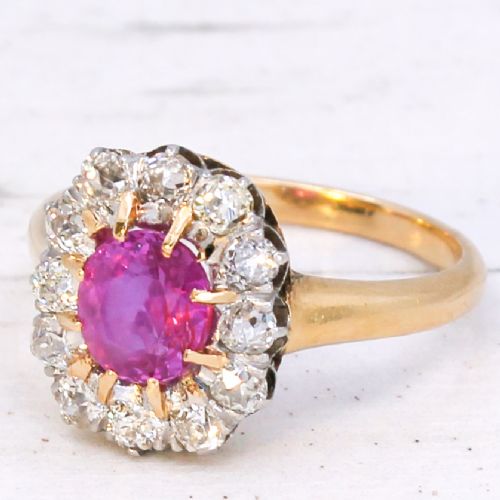
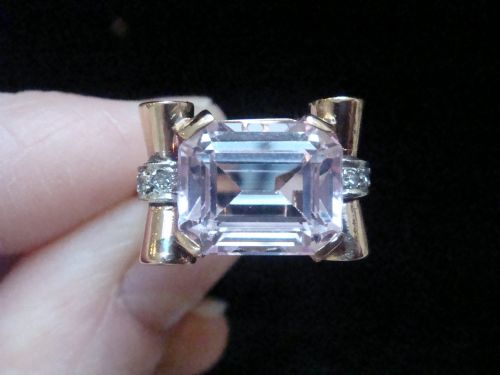
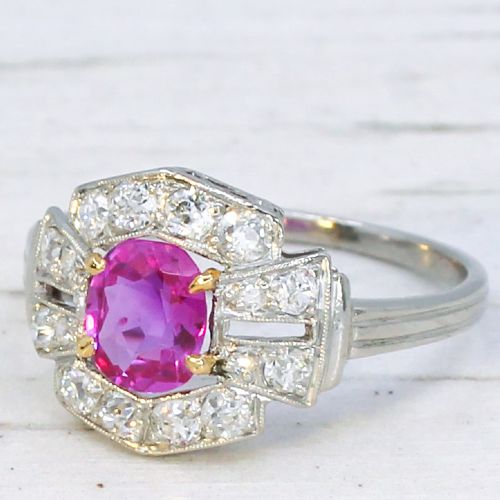
A pink gemstone ring spans a timeline from the late nineteenth century through Edwardian, Art Deco, Retro, and mid-century periods. The examples found here take forms such as cluster rings, solitaire rings, trilogy rings, and cocktail rings.
The most common versions met on this page combine pink sapphires with diamonds, mounted in platinum or gold settings. Pieces also feature alternative stones like kunzite, tourmaline, spinel, coral, and ruby set within yellow gold, white gold, or platinum bands.
How they were made
These rings utilise precious metals including platinum, 18ct gold, 15ct gold, 14ct gold, and 18kt yellow gold. Goldsmiths shaped these metals into robust settings designed to hold faceted and cut gemstones securely.
Gemstones such as natural pink sapphires, rubies, kunzite, tourmalines, and spinels are paired with diamonds and seed pearls. Master jewellers arranged these stones in cluster formations, multi-stone rings, and solitaire designs.
Pink Gemstone Ring Retail Price Guide 2026
Typical asking prices for pink gemstone ring among the pieces listed under this phrase on Sellingantiques today, from the lower quarter to the upper quarter. They describe what is for sale here now, not the wider market.
Materials utilised across these rings include platinum, 18ct gold, 15ct gold, and yellow gold paired with sapphires, diamonds, spinels, and pearls.
What varies in quality
Quality rests in the origin and characteristics of the central stones, particularly unheated Burmese and Ceylon sapphires alongside natural diamonds. The clarity, cut, and carat weight of these pink gems dictate the distinction of each piece.
The sophistication of the metalwork, whether platinum mounting or intricate gold cluster arrangement, defines the craftsmanship. Heavier gold weights and detailed period designs elevate individual rings within the range.
The Pink Gemstone Ring Glossary
- Cluster ring
- A ring design featuring a central gemstone surrounded by a border of smaller stones, typically diamonds or pearls.
- Solitaire ring
- A piece of jewellery centred around a single prominent gemstone without accompanying side stones.
- Trilogy ring
- A ring set with three stones in a row, traditionally symbolising the past, present, and future.
- Platinum
- A dense, durable, and naturally white precious metal frequently utilised in Art Deco and vintage jewellery settings.
- Unheated sapphire
- A natural gemstone that has undergone no artificial heat treatment to enhance its colour or clarity.
Pink Gemstone Ring: Frequently Asked Questions
How do I care for a vintage pink gemstone ring?
Precious metals and historical gemstones require gentle cleaning with warm soapy water and a soft cloth rather than harsh chemical dips. Regular checks by a jeweller ensure the claws holding your pink sapphire or diamond remain secure.
Store your ring in a separate fabric-lined compartment to prevent harder stones like diamonds from scratching softer materials or pearls.
Can I wear a pink gemstone ring every day?
Sapphires, rubies, and diamonds possess high durability suitable for daily wear, though older platinum and gold settings benefit from mindful handling during manual tasks. Rings featuring pearls or softer tourmalines require greater care to avoid impact damage.
Removing your ring before sleeping, gardening, or heavy lifting preserves the integrity of delicate antique claw settings.
How do I identify the period of my ring?
Art Deco pieces display geometric lines and platinum settings, whereas Victorian and Edwardian examples often incorporate intricate gold work, seed pearls, or lower carat yellow gold. Hallmarks stamped inside the band provide official assay office stamps and date letters.
Comparing the cut of the stones, such as rose cut diamonds versus modern brilliant cuts, also indicates the era of manufacture.
What is the difference between a sapphire and a tourmaline?
Sapphires are a remarkably hard variety of corundum that withstand everyday wear exceptionally well and appear in various pink tones. Tourmalines are a distinct mineral group offering vibrant pink hues with different crystalline structures.
Gemstone reports and specialist examination determine the exact mineral species when visual appearance alone proves inconclusive.