
Diamond Halo Cluster Ring
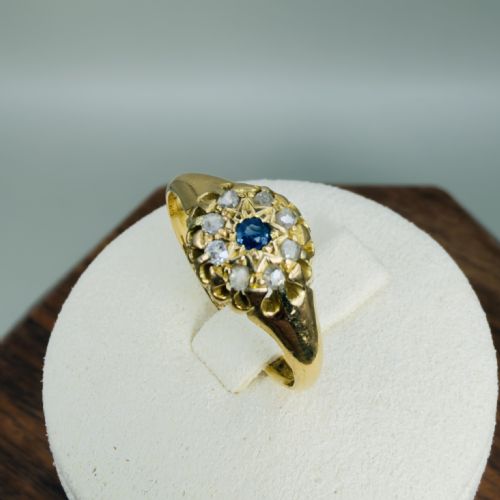
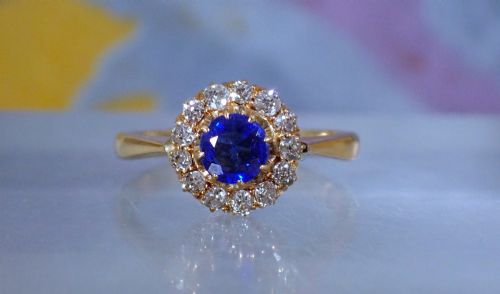
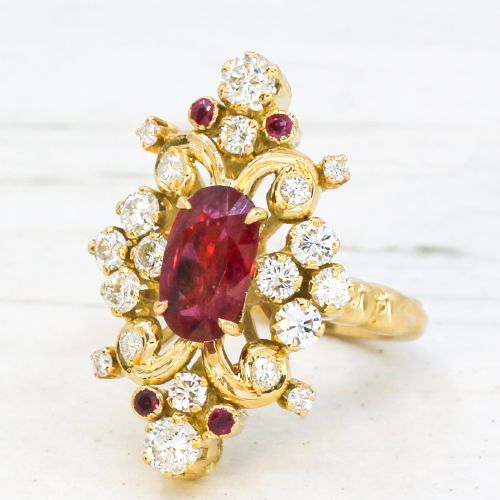
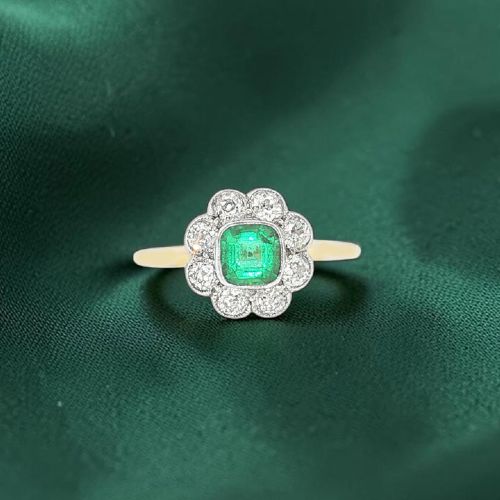
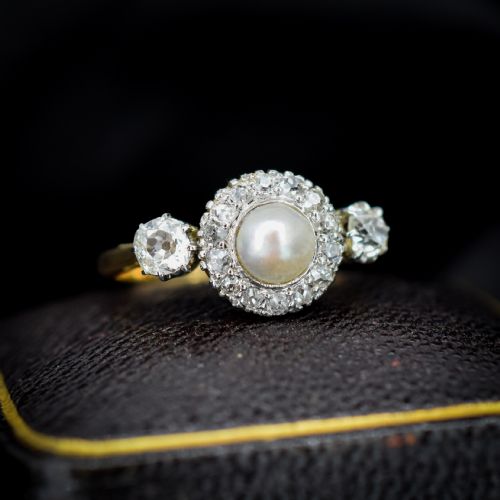
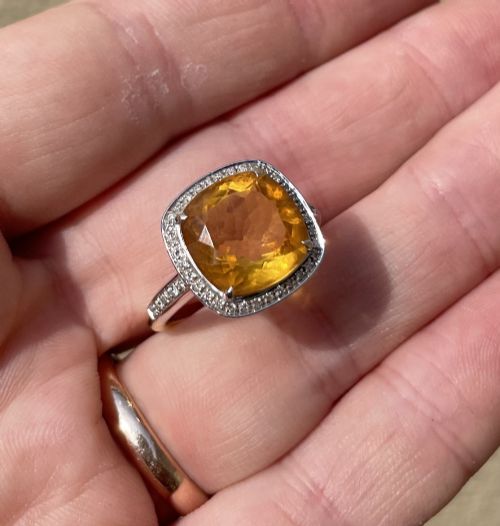
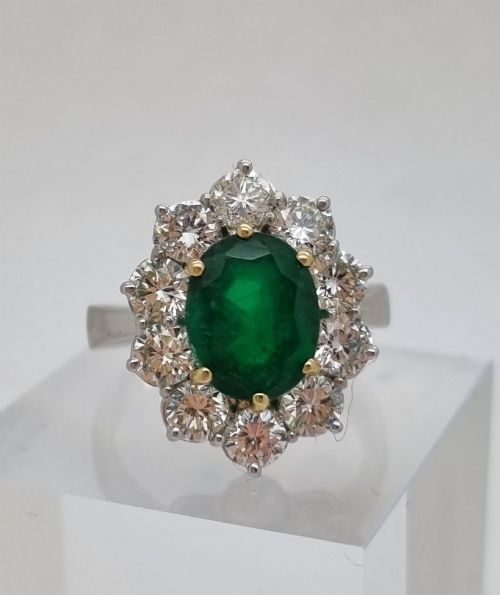
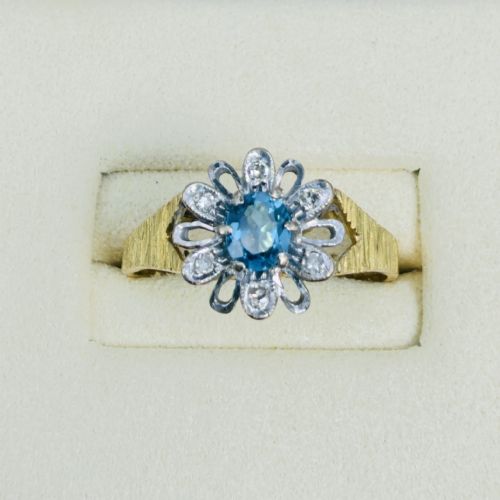
A diamond halo cluster ring frames a central gemstone with concentric sparklers, offering enduring brilliance and geometric presence.
Diamond Halo Cluster Ring
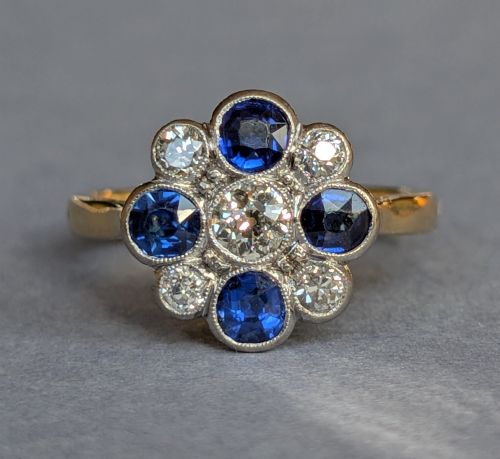
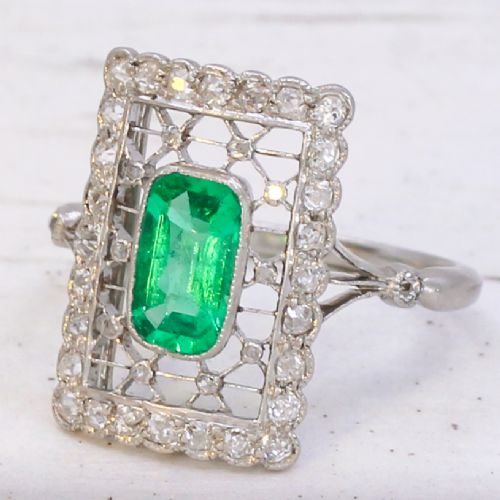
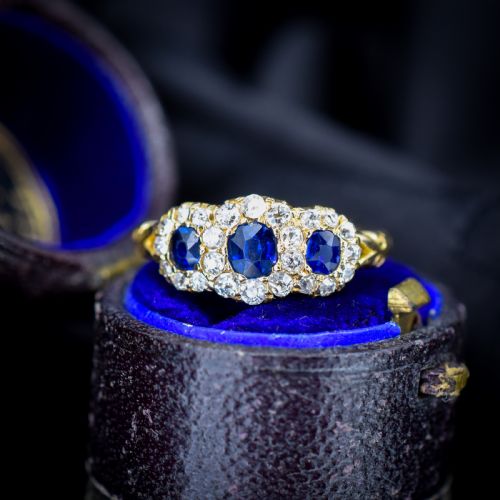
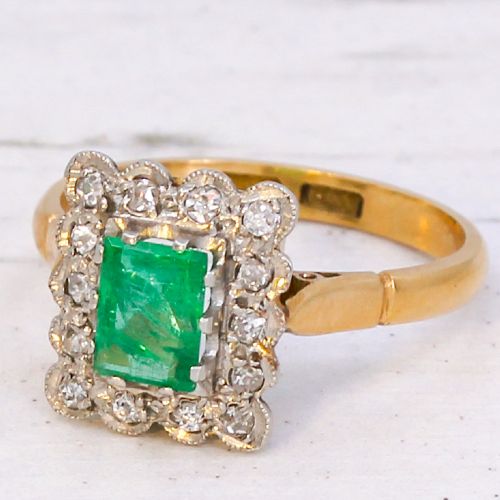
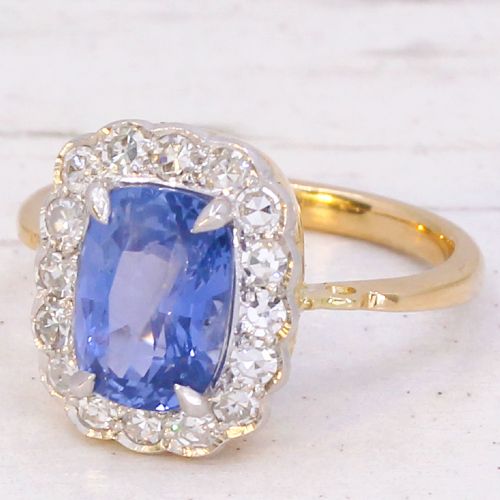
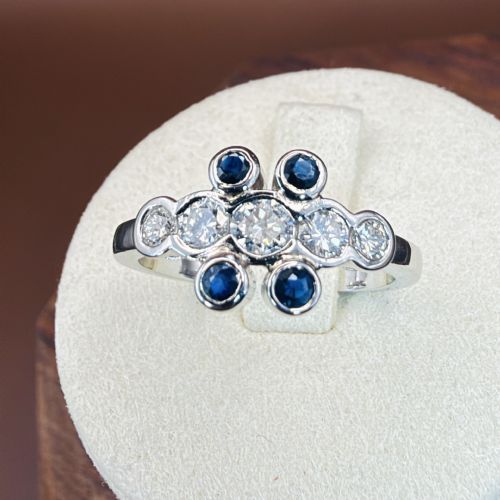
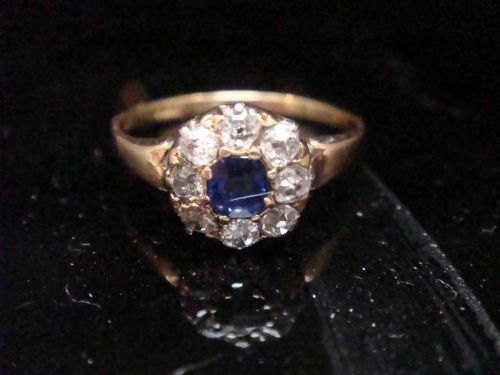
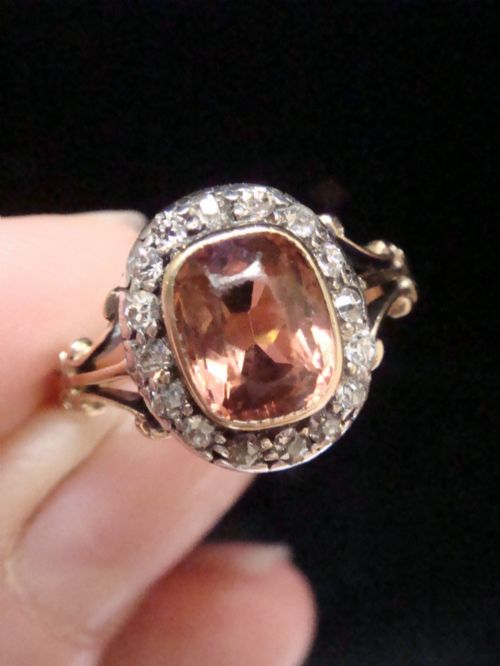
A diamond halo cluster ring centres on a principal stone, whether diamond, sapphire, pink sapphire, aquamarine, opal, coral or tourmaline, surrounded by a border of smaller diamonds. These pieces span several decades, emerging in distinct design movements from the early twentieth century through the mid-century modern period.
Buyers encountering this selection will find examples originating from the Edwardian era, the Art Deco period, and the nineteen-fifties and nineteen-sixties. The forms encompass geometric sapphire mountings and oval aquamarine clusters alongside heart and round configurations.
The aesthetic unites a prominent centre with the intense scintillation of surrounding smaller stones, creating substantial finger coverage without relying solely on a single solitaire diamond. Such rings serve primarily as engagement bands or statement jewellery.
Materials and construction
Metals employed in these mountings include platinum, eighteen-karat white gold, eighteen-karat yellow gold, and nine-karat gold, providing durable foundations for stone setting. Platinum offers a crisp, bright setting that enhances white diamonds, whilst yellow and white gold provide traditional warmth or modern contrast.
Gems are secured using traditional claw, bezel or pave techniques, allowing maximum light entry into old cut, brilliant cut and various fancy cut central stones. The surrounding halo stones are closely aligned to create a continuous border of reflected light around the focal gem.
Diamond Halo Cluster Ring Retail Price Guide 2026
Typical asking prices for diamond halo cluster ring among the pieces listed under this phrase on Sellingantiques today, from the lower quarter to the upper quarter. They describe what is for sale here now, not the wider market.
The site records show pieces spanning the Edwardian period, nineteen-thirty, nineteen-fifty, and nineteen-sixty, utilising platinum, yellow gold, and white gold.
Distinctions in quality
Quality in these clusters rests upon the visual harmony between the central stone and its surrounding halo, where matching proportions create a balanced silhouette. The saturation and clarity of coloured centre stones, such as Burmese sapphires or pink sapphires, significantly influence the character of the piece.
The precision of the metalwork and the uniformity of the surrounding diamond border separate standard examples from finer creations. Metal settings that hold smaller stones securely without overwhelming them demonstrate superior goldsmithing.
The Diamond Halo Cluster Ring Glossary
- Halo cluster
- A design featuring a central gemstone encircled by a ring of smaller accent stones, typically diamonds. This arrangement amplifies the perceived size and brilliance of the focal gem.
- Old cut
- A diamond cutting style prevalent in earlier periods, characterised by a smaller table, higher crown and open culet. These stones exhibit a distinctive, softer scintillation under candlelight.
- Art Deco
- A design style spanning the nineteen-twenties and thirties, noted for geometric precision, symmetry and linear patterns. Jewellery from this period often utilises platinum alongside calibre-cut coloured gems.
- Unheated sapphire
- A natural corundum gemstone that has undergone no thermal enhancement to improve its colour or clarity. Such stones command particular interest from collectors for their untouched origin.
Diamond Halo Cluster Ring: Frequently Asked Questions
What periods do these rings come from?
The available pieces and archive records span the Edwardian era, the Art Deco period of the nineteen-thirties, and mid-century years up to nineteen-sixty.
Design characteristics naturally shift across these decades, moving from ornate Edwardian motifs to geometric Art Deco lines and simpler mid-century settings.
What metals are used in these rings?
Constructions utilise platinum, eighteen-karat white gold, eighteen-karat yellow gold, and nine-karat gold.
Platinum provides a strong, bright white finish favoured in earlier twentieth-century work, whilst various golds offer alternative warmth and durability.
Are all centre stones diamonds?
Whilst many examples feature a central diamond, numerous pieces showcase coloured gemstones including sapphires, pink sapphires, aquamarines, opals, corals and tourmalines.
These coloured centre stones are invariably bordered by a diamond halo to contrast hue with white sparkle.
How should I wear an antique cluster ring?
These rings suit daily wear provided appropriate care is taken with older settings and softer centre stones like opal or coral. Regular professional checks of the claws ensure the halo and centre stones remain secure.
Their substantial profile means they often function effectively as standalone engagement or statement pieces on the hand.