




Pink Sapphire Ring
A pink sapphire ring brings together saturated corundum and historic mountings, offering an alternative to traditional diamond centerpieces.
Pink Sapphire Ring
A pink sapphire ring spans periods from the late Victorian era through the Edwardian period and the Art Deco years into the mid-twentieth century. Buyers encounter cluster configurations, three-stone trilogy layouts, and simple solitaires set upon precious metal bands.
The materials paired with these gems include platinum, yellow gold, white gold, and rose gold alongside diamonds. Surviving examples demonstrate origins such as Ceylon, Burma, and Mogok, noted in historical records for distinct saturation levels.
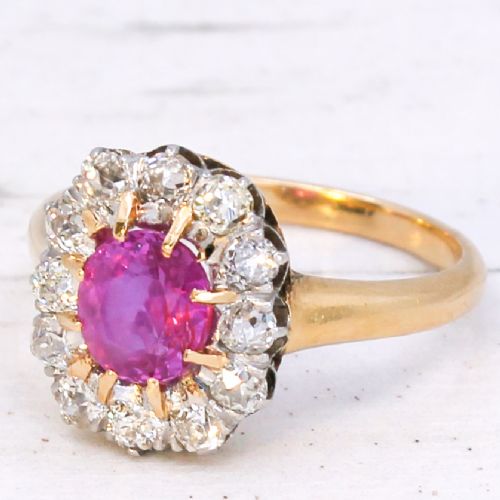
Cluster formations dominate the selection, surrounding the central pink corundum with a border of sparkling diamonds. Twist rings and multi-stone configurations also appear, combining pink sapphires with blue sapphires or rose-cut diamonds.
Materials and construction
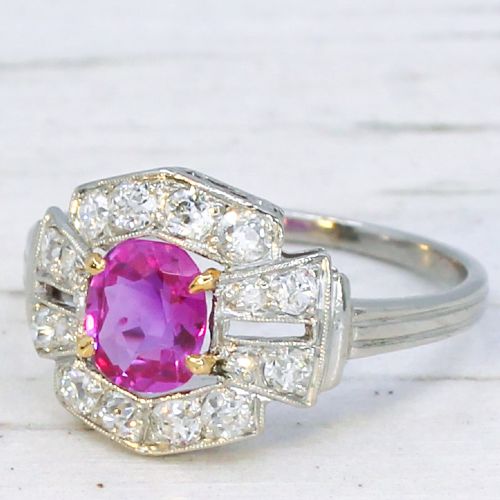
Goldsmiths utilised platinum extensively during the Art Deco period to construct secure prong and bezel settings that held central pink sapphires alongside baguette or old-cut diamonds. Yellow and white gold appeared across Victorian, Edwardian, and mid-century designs, providing durable foundations for daily wear.
Gemstones underwent manual cutting processes, resulting in old mine cuts, rose cuts, and baguette cuts that maximised brilliance within period-appropriate proportions. Metalwork often featured delicate millegrain edges and open-work galleries beneath the main stone clusters.
Pink Sapphire Ring Retail Price Guide 2026
Typical asking prices for pink sapphire ring among the pieces listed under this phrase on Sellingantiques today, from the lower quarter to the upper quarter. They describe what is for sale here now, not the wider market.
Some Victorian twist rings paired pink and blue sapphires together, engaging in secret botanical messaging long before modern engagement trends.
Distinctions in quality
The value and desirability of a pink sapphire ring depend on the natural intensity of the corundum colour and whether the stone remains unheated. Stones exhibiting vivid saturation without artificial enhancement command greater attention from collectors.
Craftsmanship standards show in the precision of the metal setting, the symmetry of the surrounding diamond halo, and the preservation of original hallmarks. Heavier platinum and gold mountings with intact millegrain detail indicate superior period execution.
The Pink Sapphire Ring Glossary
- Millegrain
- A decorative technique featuring a line of tiny raised metal beads along the edges of a setting. It was especially popular in Edwardian and Art Deco jewellery.
- Trilogy ring
- A mounting featuring three main gemstones arranged in a row, often interpreted to represent the past, present, and future. They frequently pair a pink sapphire centre with diamond side stones.
- Unheated sapphire
- A natural gemstone that has undergone no thermal treatments to improve its colour or clarity. Certification often notes this untouched origin.
- Cluster ring
- A design where a central gemstone is encircled by a border of smaller stones, typically diamonds. This arrangement maximises visual impact on the hand.
Pink Sapphire Ring: Frequently Asked Questions
How do I identify an Art Deco pink sapphire ring?
Art Deco pieces typically display geometric symmetry, platinum construction, and precise step-cut diamonds like baguettes flanking the central stone.
The overall aesthetic shifts away from flowing Edwardian curves toward clean, architectural lines.
What does an unheated sapphire mean?
An unheated stone has not passed through high-temperature kilns to alter its natural colouration or improve internal clarity.
Collectors prize these untouched specimens for their geological rarity and natural formation history.
Can I resize an antique pink sapphire ring?
Most gold and platinum bands can be adjusted by a skilled bench jeweller without disturbing the primary gemstone setting.
Intricate gallery work or side engravings require careful evaluation to preserve the historical integrity of the piece.