
Gemstone Cocktail Ring
A gemstone cocktail ring commands attention with oversized stones and bold settings designed to catch the eye across a crowded room.
Gemstone Cocktail Ring
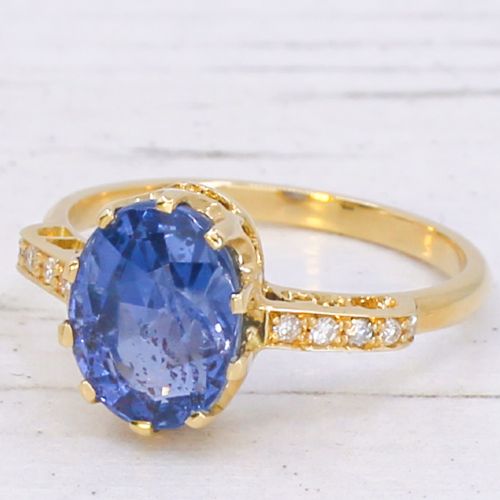
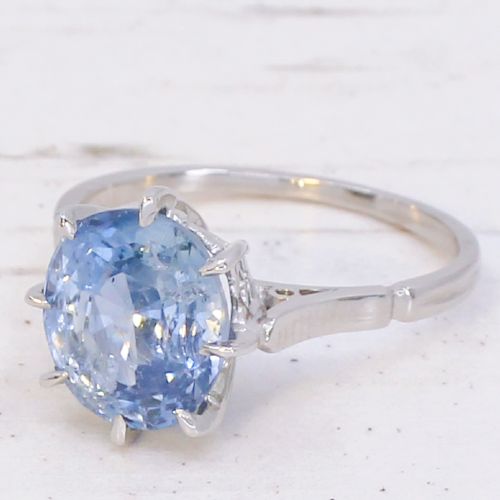
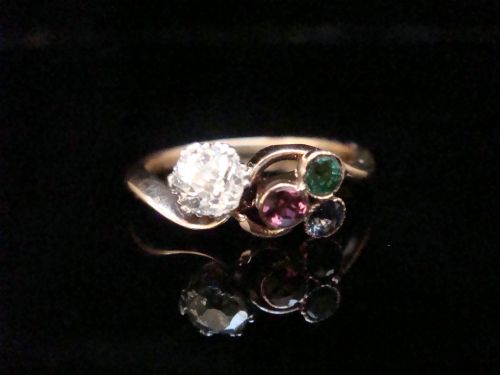
A gemstone cocktail ring brings together prominent central stones and decorative clusters spanning several decades of jewellery design. These striking pieces showcase vibrant coloured minerals set in precious metals, designed originally for evening wear and social gatherings.
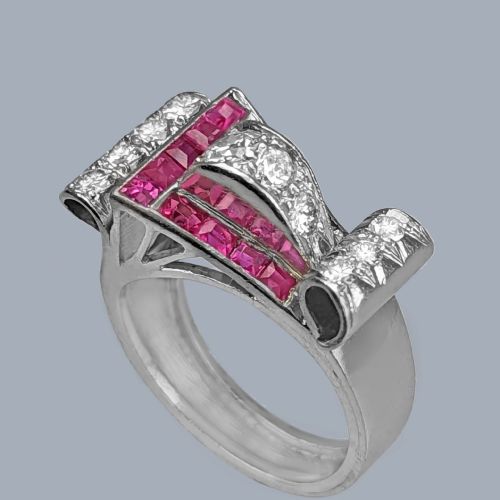
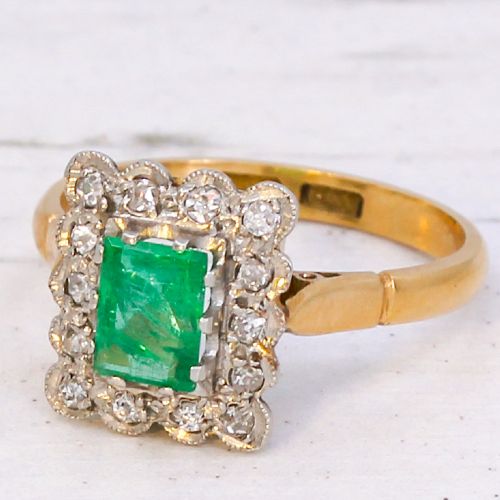
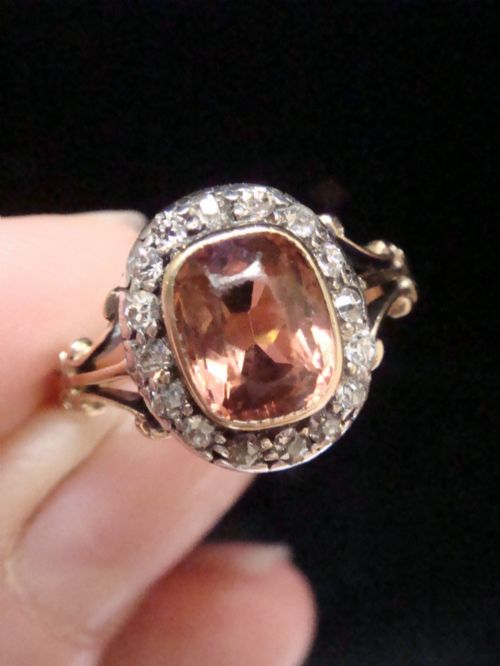
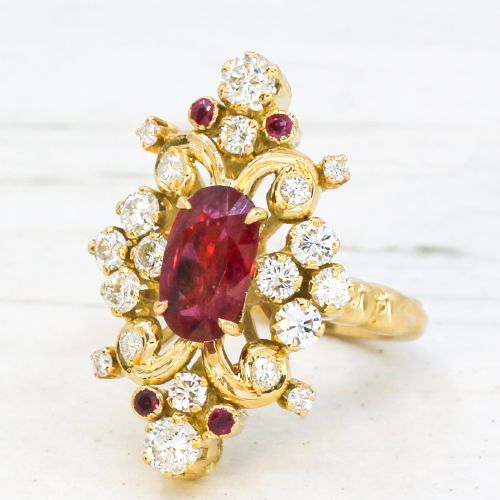
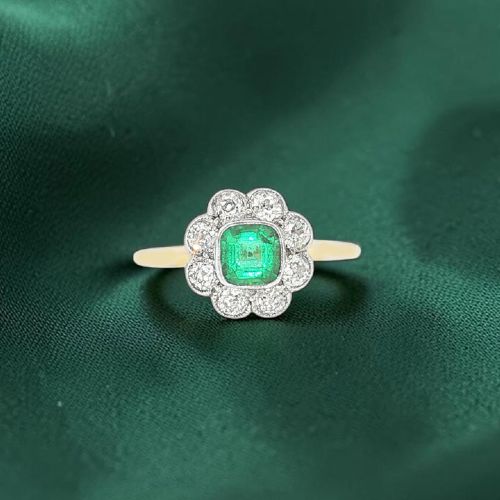
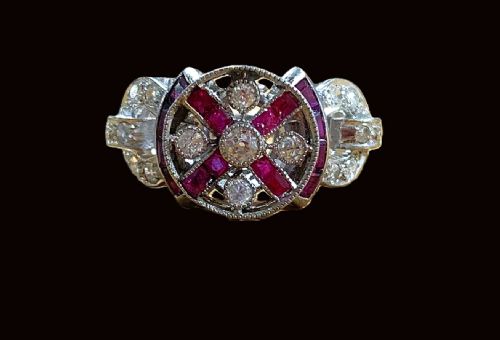
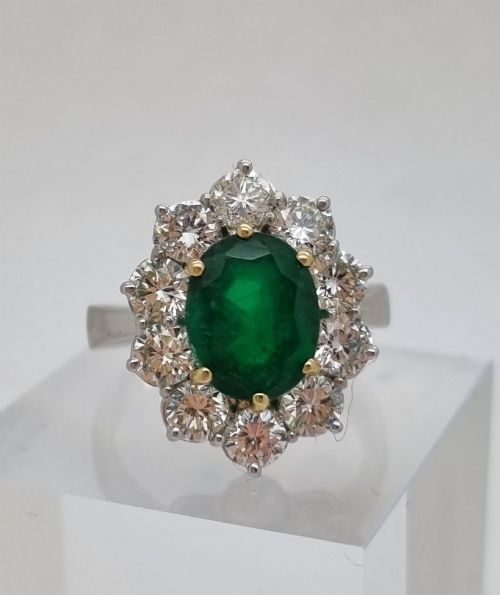
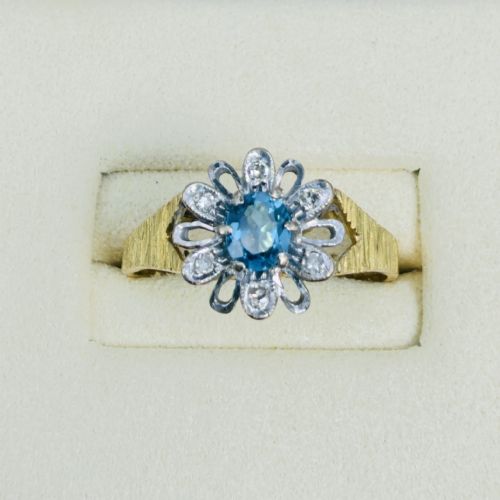
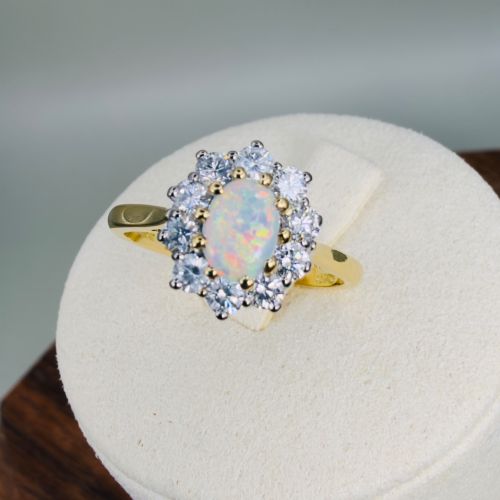
The selection here draws primarily from the Victorian and Edwardian eras, progressing through the geometric lines of Art Deco and the robust forms of the mid-twentieth century. Cluster rings and floral arrangements dominate the selection, often pairing substantial sapphires, rubies, or emeralds with sparkling diamond borders.
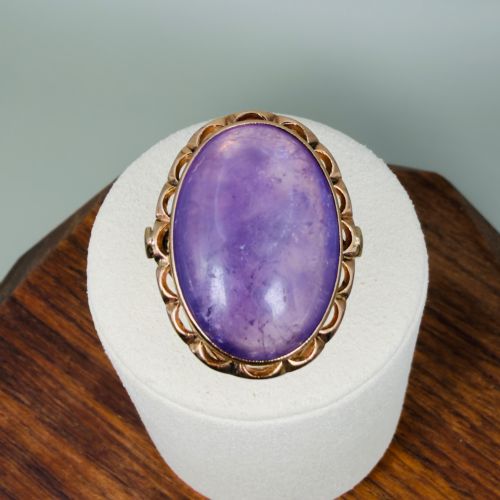
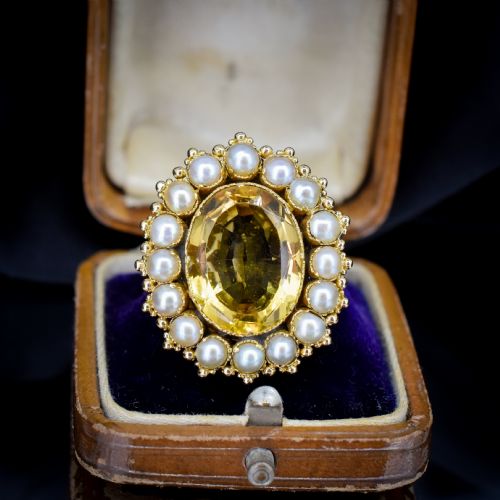
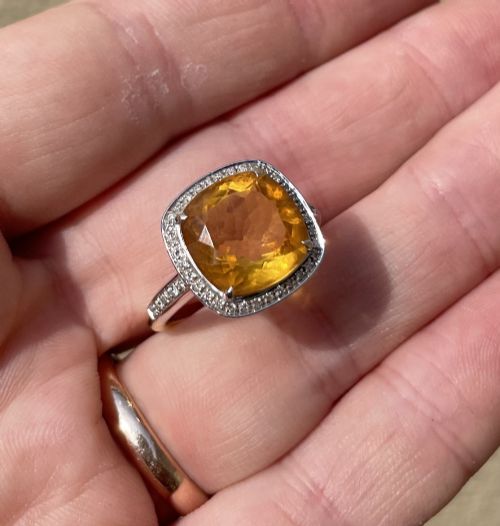
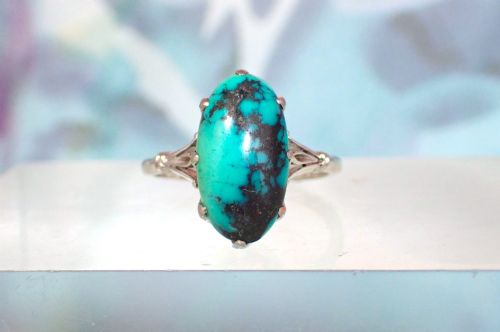
Buyers will encounter variations ranging from delicate antique Edwardian creations to substantial mid-century mounts housing large aquamarines, citrines, or jade cabochons. Each piece reflects the aesthetic priorities of its decade, from intricate platinum work to heavier yellow and white gold settings.
How they were made
Master jewellers employed platinum and various karats of yellow, white, and rose gold to construct secure mounting frameworks for large, heavy stones. Precious metals were worked by hand or cast to create intricate gallery work, millegrain edges, and robust prong settings that could support substantial weight.
Gemstones such as rubies, sapphires, and emeralds were shaped into oval, cushion, pear, and cabochon cuts to maximise their optical properties and colour saturation. Old cut diamonds frequently surround the primary coloured stones, contributing distinct facet patterns unique to pre-modern cutting techniques.
Listings span from the 19th century through the 1970s, featuring platinum and various karats of gold.
What varies in quality
Quality rests significantly on the natural origin, treatment status, and optical depth of the central coloured gemstone. Unheated stones with superior saturation and clarity command greater admiration than heavily treated or included alternatives.
The precision of the metalwork and the matching of surrounding diamonds define the overall calibre of the construction. Superior pieces demonstrate meticulous stone setting where every prong secures its gem firmly without obscuring its natural contours.
The Gemstone Cocktail Ring Glossary
- Cluster ring
- A ring featuring a prominent central gemstone encircled by a ring of smaller stones, typically diamonds.
- Cabochon
- A gemstone shaped and polished with a smooth, rounded domed surface rather than faceted planes.
- Old cut diamond
- A hand-cut diamond shape common in antique jewellery, characterised by a smaller table and larger culet.
- Millegrain
- A decorative jewellery technique creating a textured border of tiny metal beads along the edges of a setting.
- Unheated
- A gemstone that has undergone no thermal enhancement to improve its natural colour or clarity.
Gemstone Cocktail Ring: Frequently Asked Questions
How do I wear a cocktail ring?
A gemstone cocktail ring works best on the middle or ring finger where its substantial size and prominent central stone can be fully appreciated. These pieces were historically created for evening events, but modern styling allows them to elevate everyday attire.
Because these rings feature large protruding settings and delicate accent stones, it is wise to remove them during manual tasks or heavy physical exercise to protect the metalwork.
Are these gemstones natural?
The inventory includes numerous natural stones such as unheated sapphires, rubies, and emeralds, alongside citrines, aquamarines, and amethysts. Many listings specify untreated origins or geographic sources like Ceylon and Burma.
Verification of stone origin often relies on historical context, gemstone certifications, or characteristic inclusions visible under magnification. Each period brings distinct geological traits and cutting styles that help confirm authenticity.
How do I date a cocktail ring?
Dating a ring involves examining the metal types, gemstone cuts, and overall manufacturing style. Edwardian pieces often display delicate platinum work, while Art Deco items favour strict geometric symmetry.
Mid-century and later vintage pieces frequently utilise heavier gold mounts and bolder floral or cluster motifs. Hallmarks stamped inside the band can also provide specific assay office marks and production years.