
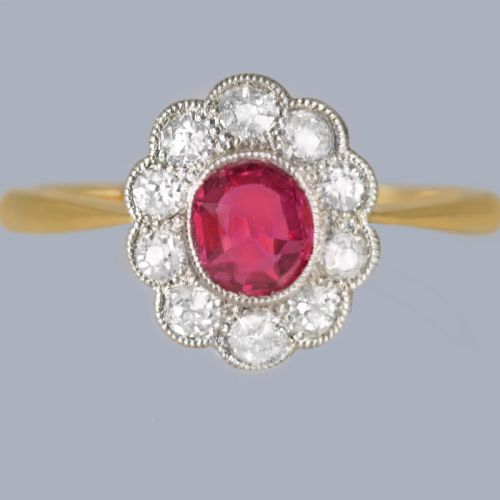
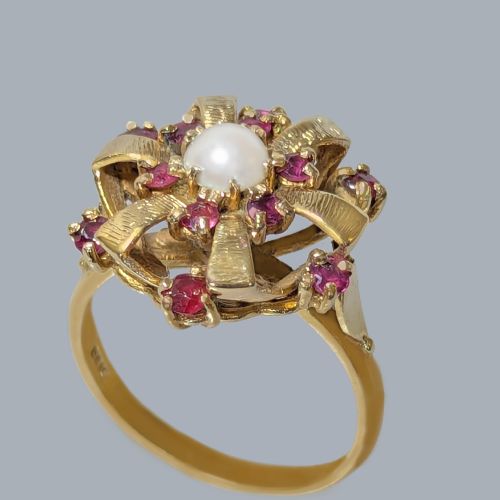


Red Gemstone Cocktail Ring
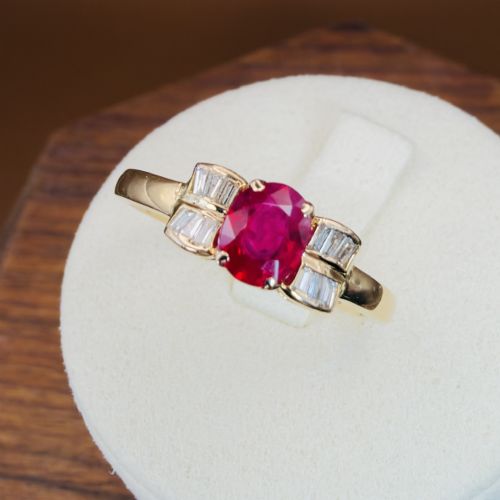
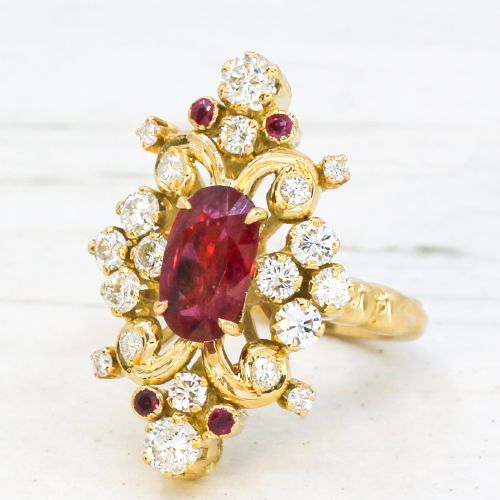
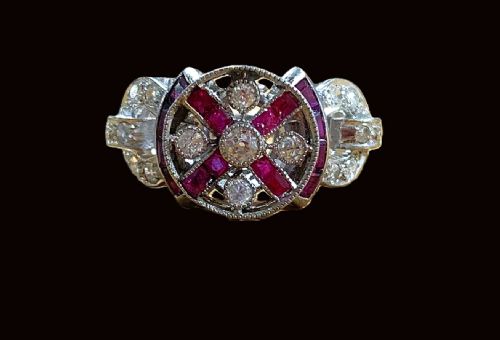
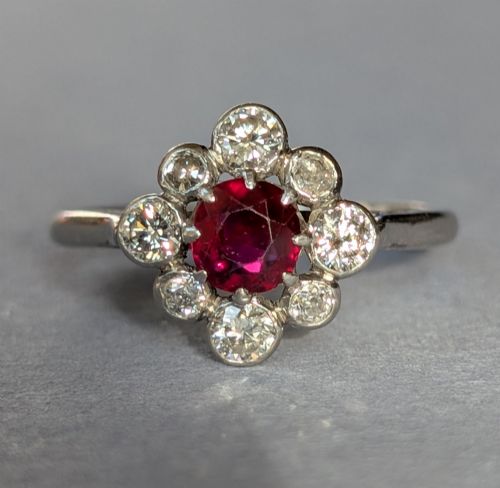
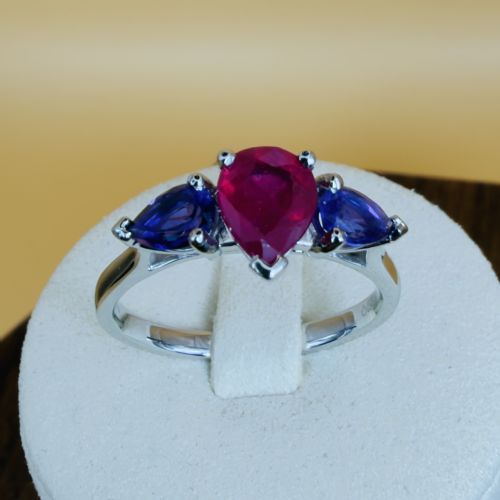
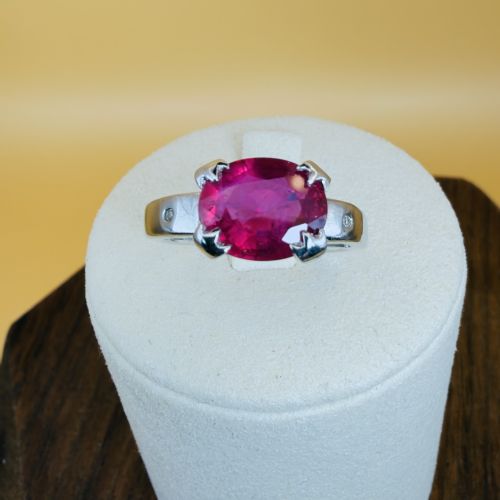
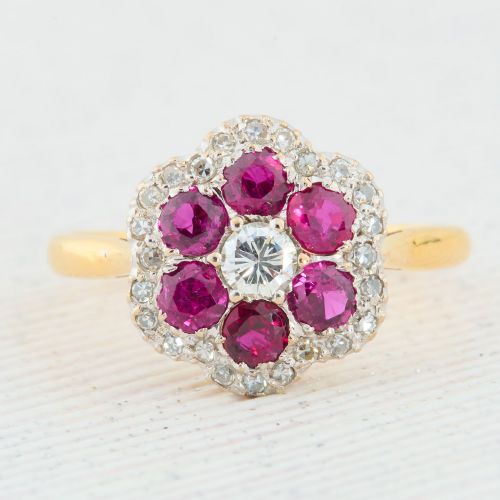
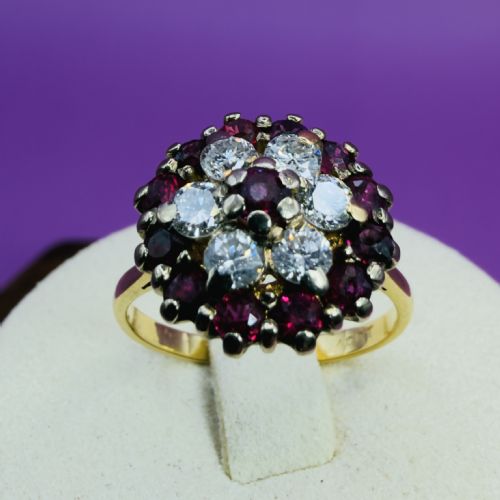
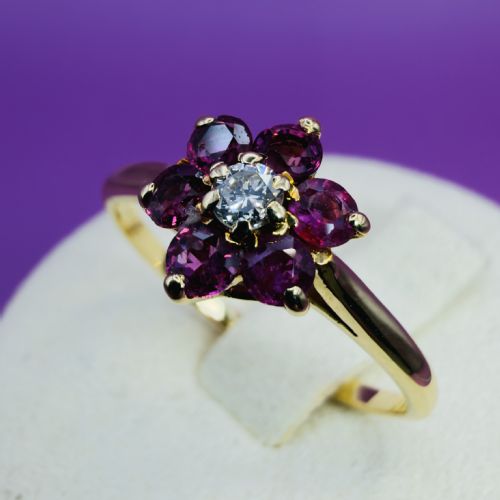
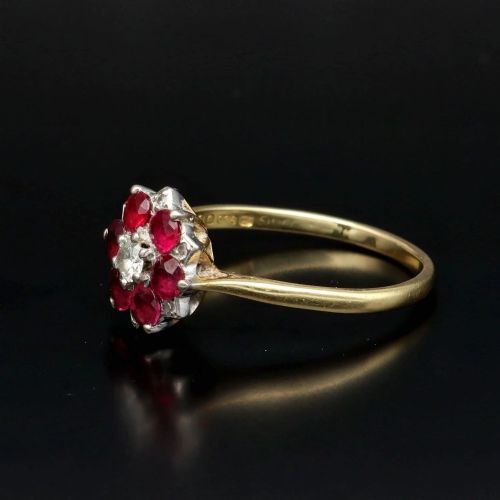
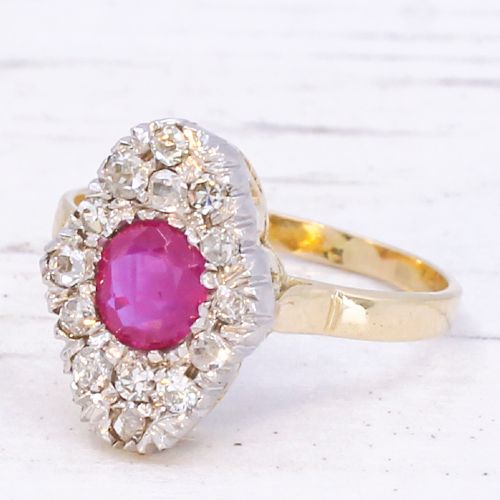
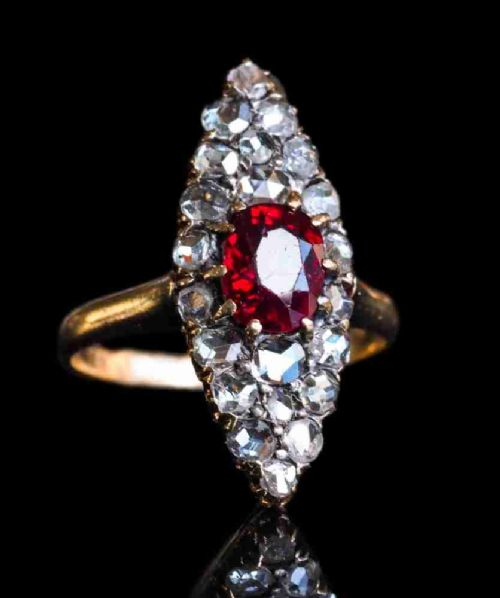
A red gemstone cocktail ring makes a bold statement on the hand, drawing the eye with deep crimson stones set alongside brilliant diamonds.
Red Gemstone Cocktail Ring
A red gemstone cocktail ring spans decades of design, appearing frequently in mid-century cluster formations and geometric Art Deco layouts. These pieces place vivid red stones centre stage, often framed by contrasting diamonds in yellow gold, white gold, or platinum. The selection ranges from substantial Victorian and Edwardian creations to sleek retro tank styles from the mid-twentieth century.
Materials and Construction
Goldsmiths utilised precious metals including 18ct yellow gold, 18ct white gold, platinum, and occasionally silver to build the secure settings required for large statement stones. Gemstones such as ruby and garnet provide the primary red coloration, paired frequently with brilliant, rose, or old-cut diamonds.
Techniques relied upon precision claw settings, bezel mounts, and intricate cluster arrangements to maximise light entry through the stones. Heavier mountings from the mid-century period contrast with the delicate millegrain edges and openwork galleries found in earlier antique examples.
Red Gemstone Cocktail Ring Retail Price Guide 2026
Typical asking prices for red gemstone cocktail ring among the pieces listed under this phrase on Sellingantiques today, from the lower quarter to the upper quarter. They describe what is for sale here now, not the wider market.
Listings span several eras from the Victorian period through the 1960s, utilising platinum, silver, and gold alongside rubies, garnets, and diamonds.
Distinctions in Quality
The calibre of a red gemstone cocktail ring rests heavily on the natural origin, clarity, and saturation of the central red stone, alongside the weight and cut of any accompanying diamonds. Burmese and Mogok rubies command particular attention for their inherent depth of colour, whereas garnets offer an alternative warm hue.
Execution and metal choice also define the tier of a piece, with heavy platinum or solid 18ct gold settings providing greater structural integrity than lighter alloys. Fine hand-finished details in the gallery work and secure stone placement separate standard commercial output from superior examples.
The Red Gemstone Cocktail Ring Glossary
- Cluster ring
- A ring design featuring a central gemstone surrounded by a cluster of smaller stones, typically diamonds.
- Navette
- A boat-shaped gemstone setting that tapers to points at both ends, also known as a marquise shape.
- Millegrain
- A decorative jewellery technique involving a line of tiny raised metal beads along the edges of a setting.
- Old-cut diamond
- A vintage diamond cut characterised by a small table, high crown, and large culet, hand-faceted before modern standards.
Red Gemstone Cocktail Ring: Frequently Asked Questions
What defines a cocktail ring?
A cocktail ring is a large, statement piece of jewellery designed to catch the eye during evening social gatherings. These rings typically feature oversized central gemstones and bold surrounds.
Historically associated with the mid-twentieth century, they prioritise visual impact and elaborate artistry over understated daily wear.
How do I care for my ring?
Cleaning requires warm soapy water and a soft brush to remove everyday oils from beneath the stone settings. Avoid harsh chemical dips, particularly if the piece contains softer gems or pearls.
Regular professional checks help ensure that claws holding larger rubies or garnets remain secure over decades of use.
How can I tell the period?
Dating relies on observing structural motifs, such as the geometric symmetry of 1920s and 1930s Art Deco pieces versus the organic floral clusters of the Edwardian era. Hallmarks stamped inside the band also provide official markers for metal purity and assay office origins.
Gemstone cutting styles offer further clues, as hand-cut stones often precede standard machine-cut facets.
Can I wear these daily?
Harder red gemstones like ruby possess high durability suitable for regular wear, provided the mounting remains robust. Lighter or softer stones require more mindful handling to prevent scratching during heavy manual tasks.
Checking the security of the central setting ensures the stone stays firmly anchored through routine daily activities.