
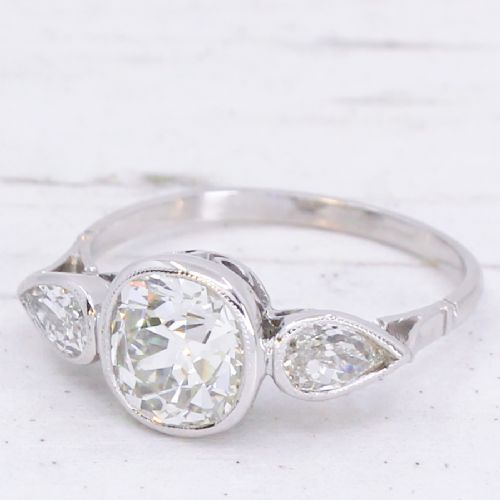
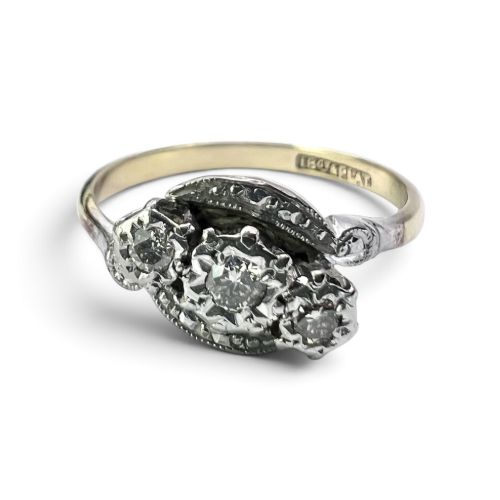
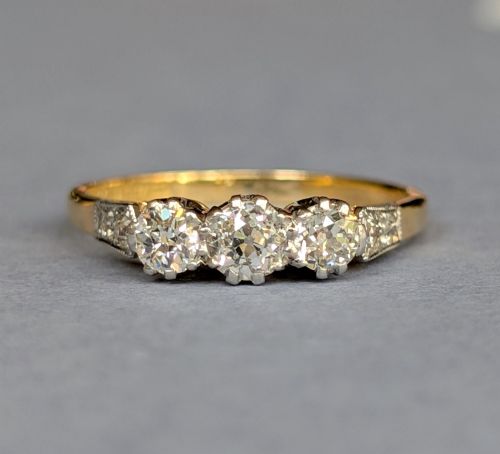
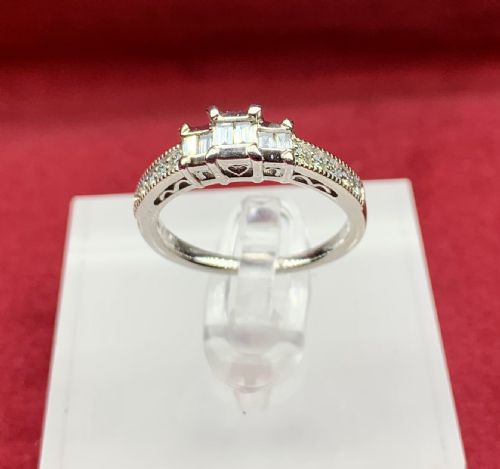
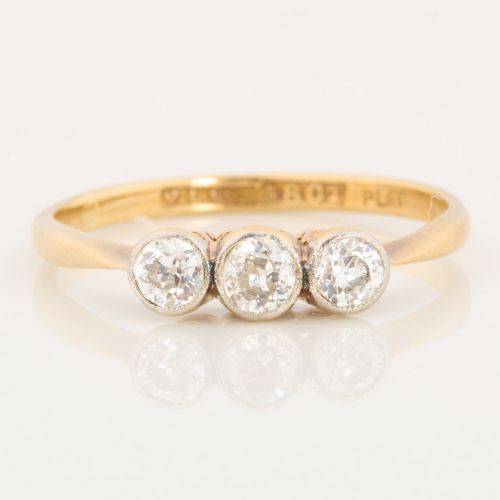
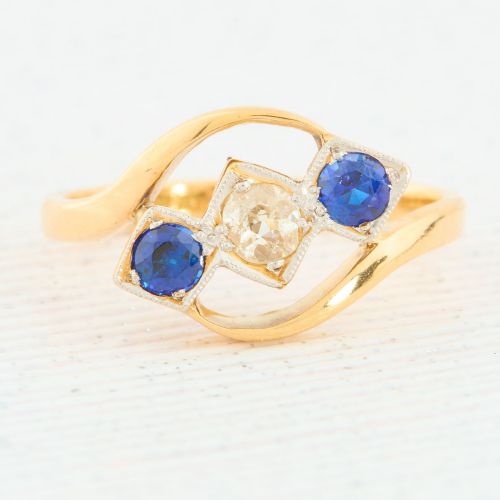
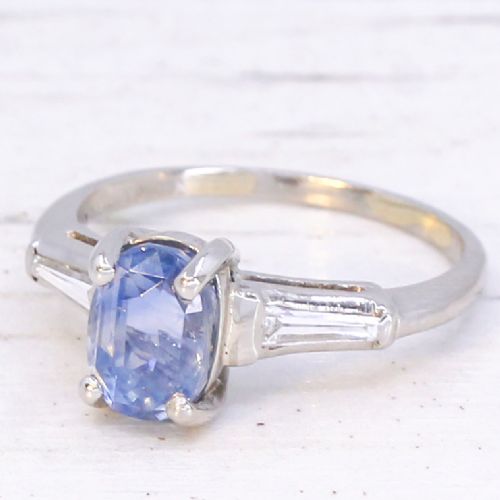


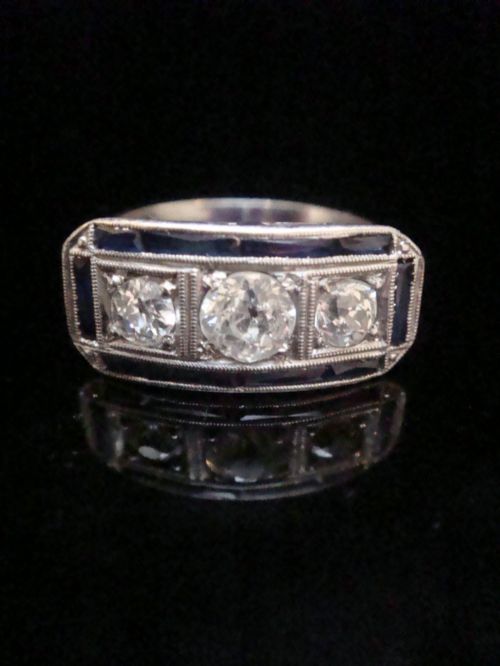


Art Deco Three Stone Ring
An art deco three stone ring brings geometric grace and enduring symbolism to the hand through classic tripartite design.
Art Deco Three Stone Ring
Originating heavily from the interwar period, these rings reflect the clean lines and architectural motifs characteristic of the design ethos of the era. The surviving examples demonstrate how jewellers balanced symmetry with expressive geometric detailing during the height of the style.
How They Were Made
Goldsmiths utilised platinum and various grades of gold, including 18ct yellow gold, 18ct white gold, and 9ct gold, to fabricate the secure metal mounts that hold the stones. Platinum gained immense popularity during this period for its strength, allowing artisans to create delicate yet robust settings that maximised light entry into the diamonds.
Gemstones feature characteristic period cuts, notably old cushion cuts, old pear cuts, and old mined cuts, alongside baguette and step cuts for accent stones. These stones were shaped by hand, giving each facet a distinct character that differentiates them from modern machine-cut gems.
Art Deco Three Stone Ring Retail Price Guide 2026
Typical asking prices for art deco three stone ring among the pieces listed under this phrase on Sellingantiques today, from the lower quarter to the upper quarter. They describe what is for sale here now, not the wider market.
What Varies in Quality
The overall harmony of proportion between the central stone and its two flanking gems dictates visual balance across the piece. Superior examples display careful graduation in stone sizes and complementary colour saturation in mounted sapphires, emeralds, or rubies.
The precision of the metalwork, particularly hand-pierced gallery work and secure claw or bezel settings, separates standard production from finer workshop output. Artisans who achieved crisp geometric lines without compromising structural integrity produced the most enduring pieces.
Bravingtons·Birks
The Art Deco Three Stone Ring Glossary
- Trilogy ring
- A ring featuring three primary gemstones set in a row, often symbolising the past, present, and future. This term is frequently used interchangeably with a three stone configuration.
- Old cut diamond
- A diamond cut by hand before modern symmetrical standards were established in the twentieth century, recognised by a smaller table and higher crown.
- Platinum
- A dense, silvery-white precious metal prized in interwar jewellery for its exceptional tensile strength and ability to hold intricate secure settings.
- Baguette cut
- A step-cut rectangular gemstone shape characterised by long, straight parallel facets, commonly utilised for accent stones in geometric mounts.
- Crossover ring
- A ring design where the band or stone settings sweep past each other in a dynamic curving motion rather than sitting in a straight horizontal line.
Art Deco Three Stone Ring: Frequently Asked Questions
What is an art deco three stone ring?
An art deco three stone ring is a piece of period jewellery featuring three prominent gems set horizontally across the finger. These rings typically date from the 1920s and 1930s.
The design focuses on geometric symmetry, often pairing diamonds with coloured stones like sapphires or emeralds. They were widely worn as engagement rings or dress rings during the interwar period.
How do I care for my antique ring?
Caring for an antique ring involves gentle cleaning with warm soapy water and a soft brush to remove everyday oils. Avoid harsh chemical dips that might damage softer stones or fragile metal alloys.
It is also wise to remove the ring during heavy manual work to protect the historical setting. Regular inspection by a professional jeweller ensures the claws remain secure.
Are these rings suitable for daily wear?
Many of these rings were built to withstand daily use, particularly those constructed with durable platinum and 18ct gold settings. However, antique pieces require a mindful approach compared to modern jewellery.
Checking the security of the stones periodically allows you to enjoy wearing the ring safely. Softer gems like emeralds need slightly more care than diamonds.