


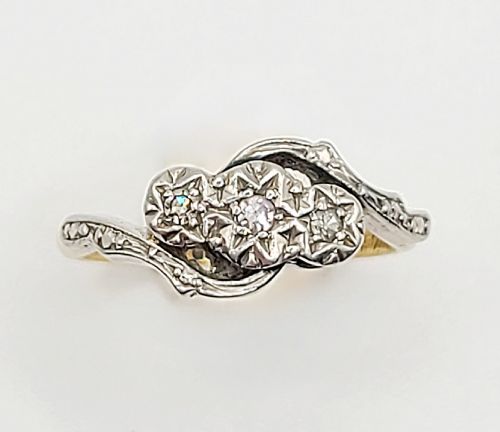


Art Deco Illusion Setting Ring
An art deco illusion setting ring concentrates light through platinum work to frame a diamond within a larger geometric footprint.
Art Deco Illusion Setting Ring
When you search for an art deco illusion setting ring, you encounter pieces spanning the 1920s, 1930s, and 1940s that combine precious metals and diamonds into distinct geometric presentations. These items are primarily rings configured as solitaires or trilogies designed to create a larger visual impact for the central stone.
The versions you are most likely to meet on this page pair platinum settings with bands of 18ct gold, 18ct yellow gold, 9ct gold, or palladium. The grouping demonstrates classic period characteristics across solitaire engagement rings and multi-stone cluster or swirl layouts.
Materials and construction methods
The construction relies heavily on combining platinum with gold or palladium to provide both the bright white metal surface required for the illusion head and the structural support of the band. Platinum is frequently used to bezel or facet the diamonds, enhancing their apparent size.
Makers utilised 18ct gold, 9ct gold, and palladium for the shanks and supporting galleries. The stones are secured using traditional claw and platinum-topped illusion plates that reflect surrounding light inward.
Separating top tier examples from standard pieces
Quality variation rests in the precision of the platinum metalwork and the integration between the illusion setting and the supporting gold shank. Sharper geometric facets and seamless dual-metal joins distinguish superior examples.
The proportion and weight of the precious metals, alongside the clarity and cut of the diamond components, dictate the overall calibre of the piece without relying on superficial embellishment.
The Art Deco Illusion Setting Ring Glossary
- Illusion setting
- A mounting technique that uses a faceted or plate-like metal surround to make a central diamond appear substantially larger than its actual carat weight. This method defines the primary aesthetic of these rings.
- Solitaire
- A ring featuring a single prominent diamond. In this collection, they frequently pair an illusion head with an 18ct gold or platinum shank.
- Trロジー
- A three-stone ring layout representing past, present, and future. These examples integrate platinum settings across multiple diamonds.
Art Deco Illusion Setting Ring: Frequently Asked Questions
What is an illusion setting ring?
An illusion setting ring uses a specially shaped metal plate around a diamond to magnify its visual presence. This technique became popular during the interwar years to create larger geometric profiles.
These pieces combine white metals like platinum with yellow gold bands to achieve high contrast. The design makes the central stone catch the eye from a distance.
How do I date these rings?
Dating relies on stylistic markers from the 1920s, 1930s, and 1940s, alongside material combinations such as platinum on 18ct gold or 9ct gold. Geometric shapes and specific illusion plates point directly to these decades.
Examining the shank construction and metal purity stamps further clarifies the period of manufacture. Each era introduced subtle shifts in how platinum and gold were paired.
Are these rings suitable for daily wear?
These antique rings suit daily wear provided you respect their age and delicate platinum illusion work. Regular checks by a jeweller help ensure the stones remain secure in their settings.
Removing the ring during heavy manual tasks protects the gold bands and platinum heads from unnecessary wear. Proper care preserves the original metal geometry over decades.