
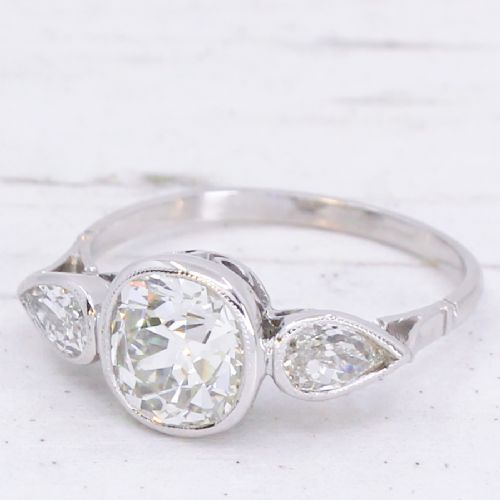
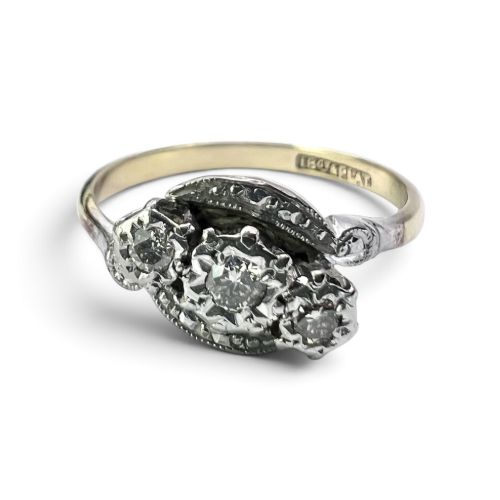
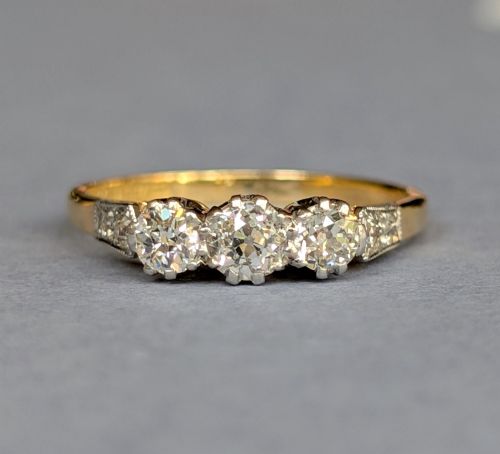
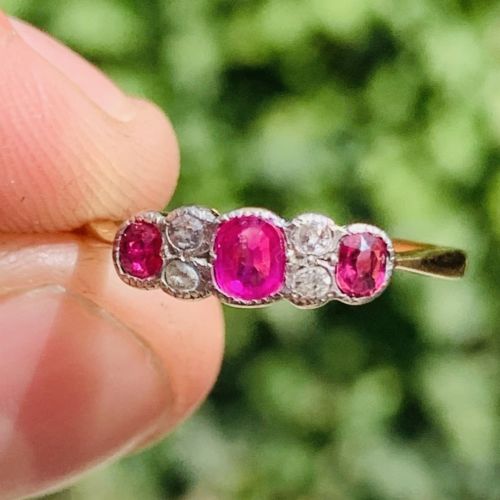
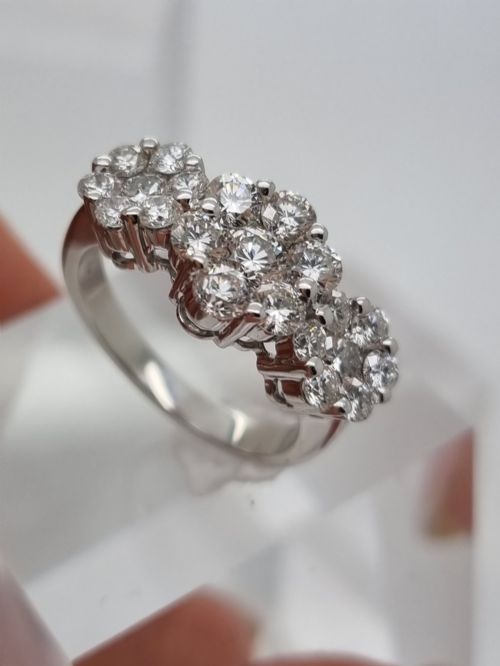
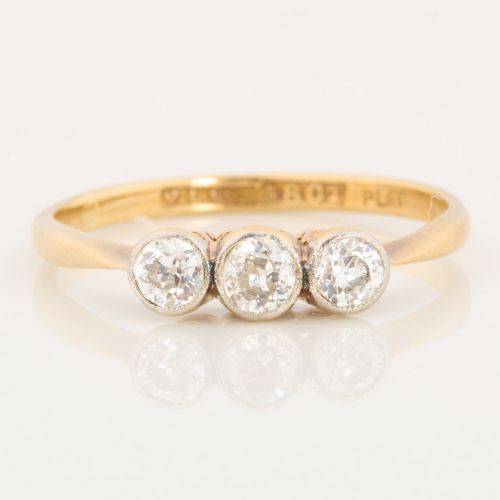
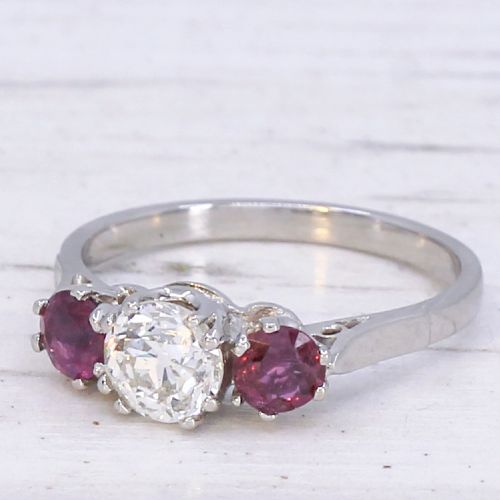


Platinum Trilogy Engagement Ring
A platinum trilogy engagement ring carries three stones symbolising past, present and future, most often seen here from the Art Deco and Edwardian periods.
Platinum Trilogy Engagement Ring
The selections available here rely heavily on durable platinum settings paired with either platinum or 18ct yellow and white gold bands. Alongside pure diamond configurations, many incorporate natural sapphire, Burmese ruby or Colombian emerald side stones.
Makers and designers of these decades favoured geometric lines or delicate scrolling galleries to mount the stones securely. Such three-stone layouts offer considerable visual presence on the finger while maintaining comfortable everyday wear.
How they were made
Jewellers utilised dense platinum to construct slender, robust claws and intricate pierced galleries that maximised light entry into the diamonds and coloured gemstones. This metal allowed artisans to create remarkably fine secure settings without sacrificing structural integrity.
Stones were cut by hand during these earlier periods, resulting in old cushion, old European, transitional or baguette cuts with distinct facet patterns. These traditional cutting techniques give each central gem a unique soft scintillation compared to modern brilliant cuts.
Gemstone combinations pair diamonds with unheated sapphires, Burmese rubies, Colombian emeralds and natural pearls.
What varies in quality
The overall standard depends heavily on the matching and natural saturation of the gemstones, particularly in sapphire, ruby and emerald combinations alongside old cut diamonds. Superior pieces display harmonious proportions between the central stone and the two outer attendants.
BIRKS
The Platinum Trilogy Engagement Ring Glossary
- Trilogy ring
- A ring set with three stones, traditionally representing the past, present and future of a relationship.
- Millegrain
- A decorative technique featuring a row of tiny raised metal beads along the edges of a platinum setting.
- Old cut diamond
- A diamond cut by hand before the mid-twentieth century, characterised by a smaller table, higher crown and open culet.
- Transitional cut
- A diamond cut utilised roughly between 1918 and the 1940s, bridging the older antique styles and modern brilliant cuts.
Platinum Trilogy Engagement Ring: Frequently Asked Questions
What does a trilogy ring symbolise?
A trilogy ring traditionally represents the past, present and future of a couple's shared life together. The three stones are chosen to reflect these distinct stages.
This romantic symbolism made the three-stone configuration a popular choice for engagement and anniversary jewellery throughout the early twentieth century.
Are these rings suitable for daily wear?
Platinum is an exceptionally durable and dense metal that securely holds antique stones through decades of regular use. This makes platinum-mounted rings robust enough for everyday engagement wear.
Care should still be taken with softer coloured gems like emeralds, which benefit from mindful removal during heavy manual tasks.
How do I identify an Art Deco trilogy ring?
Art Deco pieces display geometric lines, symmetrical patterns and crisp architectural styling. Platinum was heavily favoured during this period for its strength in creating sleek mountings.
Side stones might include baguette-cut diamonds or calibré-cut sapphires arranged neatly beside the central diamond.