





Edwardian Diamond Trilogy Ring
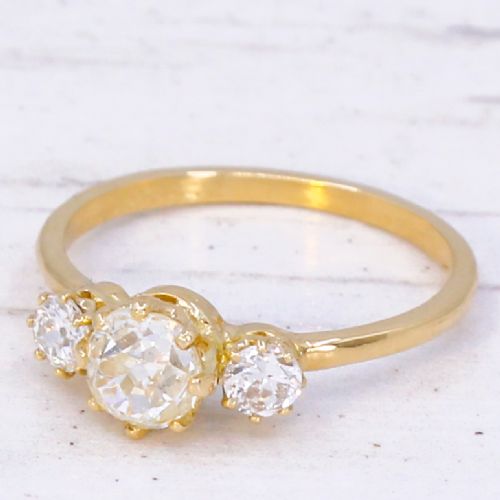
An edwardian diamond trilogy ring brings together three stones symbolising past, present and future, most often set in gold or platinum.
What an edwardian diamond trilogy ring represents
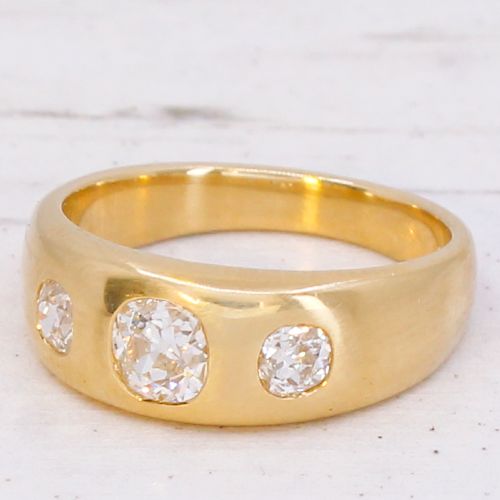
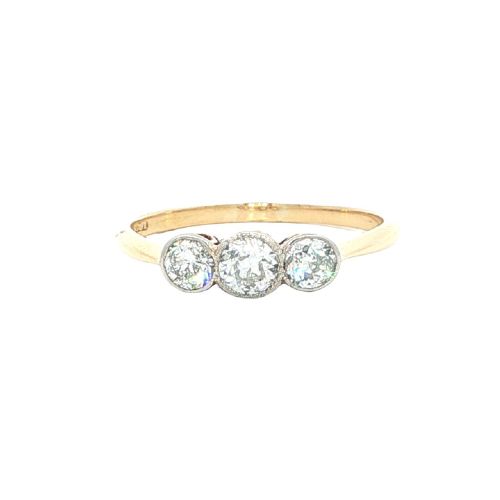
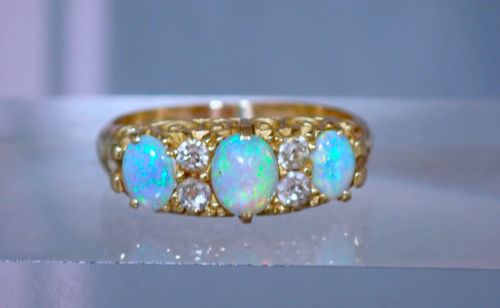
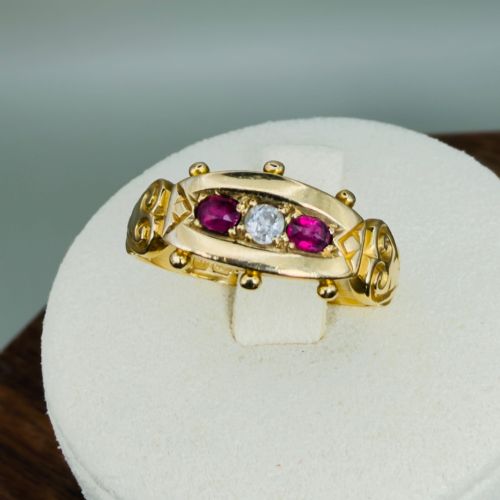
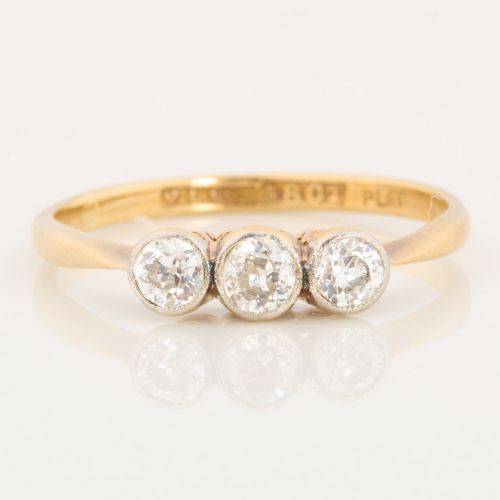
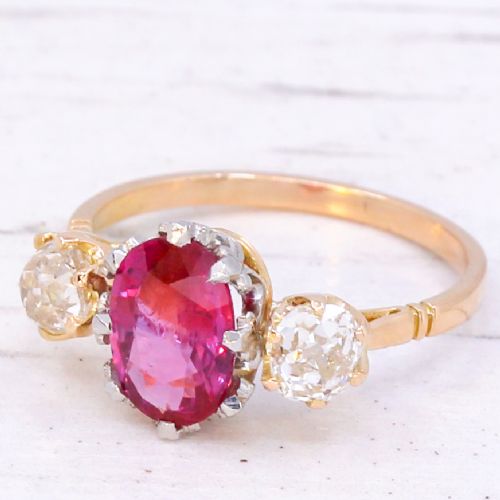
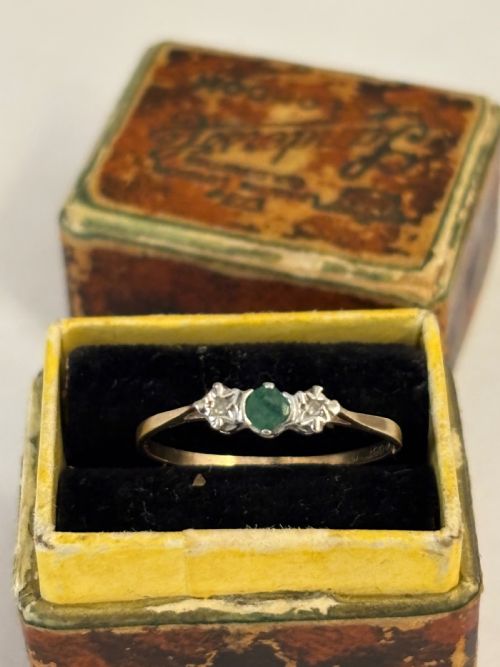
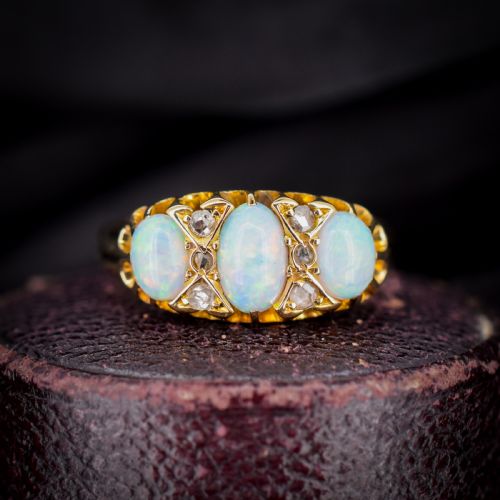
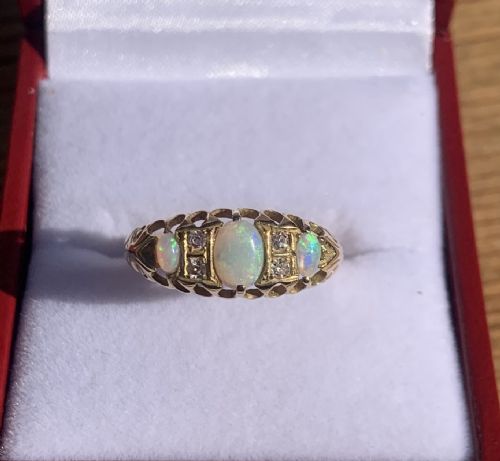
When you search for an edwardian diamond trilogy ring, you find three-stone rings designed in the early decades of the twentieth century. These pieces combine diamonds with coloured gems such as rubies, sapphires and emeralds, or display a trio of diamonds alone.
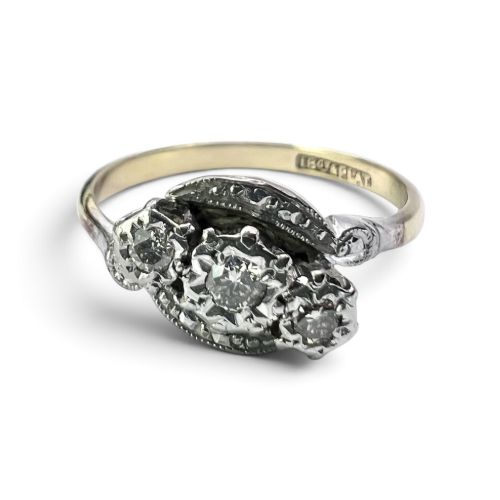
The versions you meet most frequently on this page pair 18ct yellow gold shanks with platinum settings, reflecting the transition in metal choice during the Edwardian period and subsequent Art Deco years. Many examples take traditional forms like the gypsy ring, the twist ring or the straight three-stone line.
Materials and construction
The evidence records goldsmiths working predominantly in 18ct yellow gold and platinum, often combining both metals on a single ring to display white stones against platinum and gold shanks. Stones are cut by hand, yielding old European cuts, old mine cuts and Swiss cuts alongside triangular and mixed cuts.
Setting techniques rely on the hand-working of platinum for claw settings or secure gypsy flush mounts, while twist and crossover designs require precise metal manipulation to curve the shoulders around the central gems.
Retail Price Guide 2026
Typical UK retail prices for edwardian diamond trilogy ring, calculated from the Sellingantiques database of over a million retail prices indexed since 2003. This retail price guide relies exclusively on Sellingantiques data; no external sources or auction records are used, so the figures do not describe the wider market.
Early twentieth-century makers occasionally hid tiny stamped maker marks inside the twist shoulders where only the wearer would spot them.
Distinctions in quality
The standard of a piece rests on the proportion and match of the three stones, where uniformity in cut and colour elevates the visual impact. Hand-cut diamonds with distinct facets create a softer play of light than later machine-cut stones.
Craftsmanship shows in the integrity of the platinum work and the crispness of the hallmarks stamped into the 18ct gold bands, marking regional assay offices such as Birmingham and Chester.
The Edwardian Diamond Trilogy Ring Glossary
- Trilogy ring
- A ring featuring three primary gemstones, traditionally representing the past, present and future. These designs appear frequently in Edwardian and Art Deco jewellery.
- Old cut diamond
- A hand-faceted diamond cut before the standardisation of modern brilliant cuts. These stones typically feature smaller tables and higher crowns.
- Gypsy ring
- A style where stones are flush-set directly into the thick band of the ring. This technique creates a smooth exterior profile.
- Twist ring
- A setting style where the shoulders of the ring cross over or spiral around the stones. It is also known as a crossover or turned ring.
- Platinum
- A dense, durable white metal utilised in Edwardian jewellery for delicate yet secure stone settings. It allows for finer claws than gold.
Frequently Asked Questions
How do I wear a trilogy ring daily?
These rings pair easily with other bands, though the softer old cut diamonds and coloured gems benefit from removal during heavy manual tasks.
Regular checks on the platinum or gold settings help secure the stones against everyday wear.
What stones accompany diamonds in these rings?
Rubies, sapphires and emeralds frequently appear alongside diamonds in the historical record and current listings. Natural rubies and sapphires provide strong colour contrast to the white old cut diamonds.
Emeralds also feature, sometimes in step cuts or triangular forms.
How are periods identified on these rings?
Assay office hallmarks stamped inside the 18ct gold shanks provide precise dates for pieces bearing British marks. Birmingham and Chester offices stamped specific date letters alongside the standard gold standards.
Stylistic cues like platinum-topped gold settings point to the Edwardian and early Art Deco eras.