

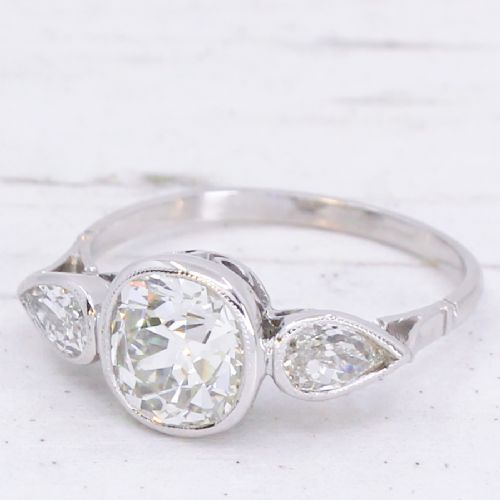
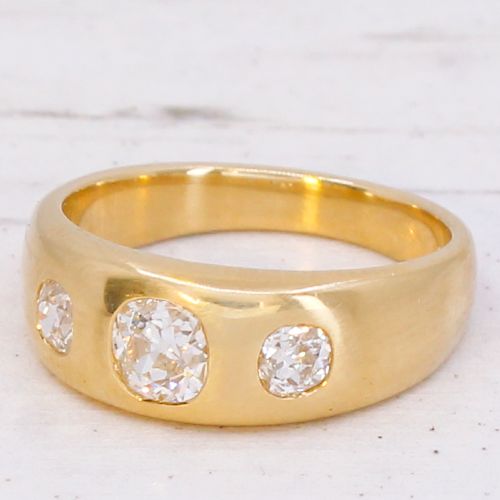
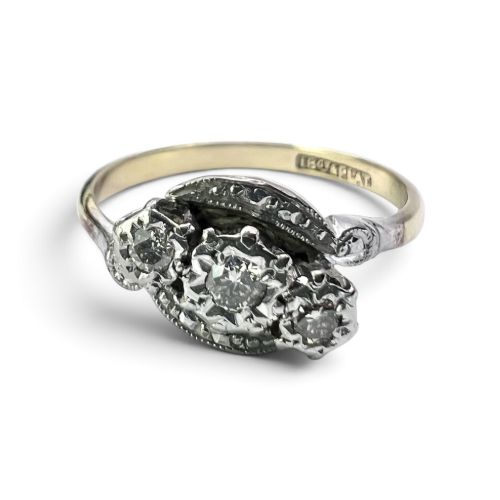
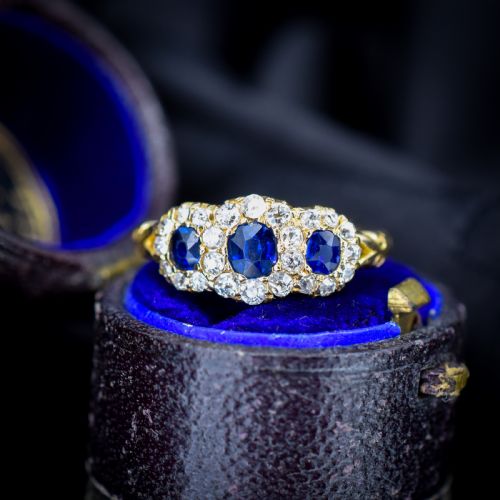
Gold Trilogy Ring
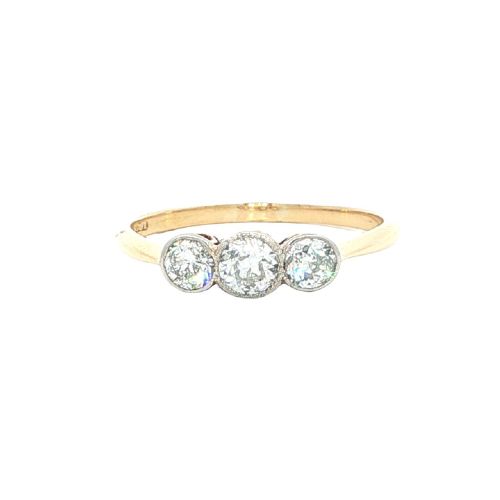
A gold trilogy ring holds three stones for past, present and future, carrying a heavy weight of sentiment in a neat line on the finger.

Forms and Eras
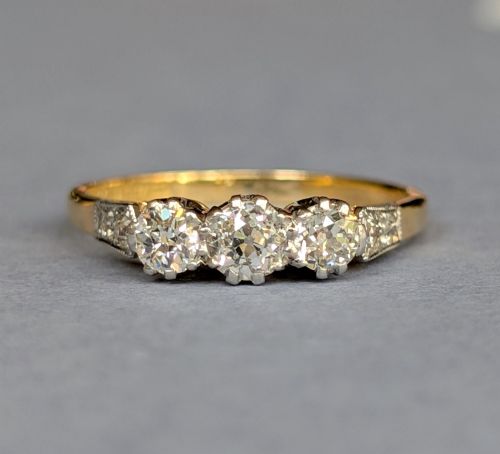
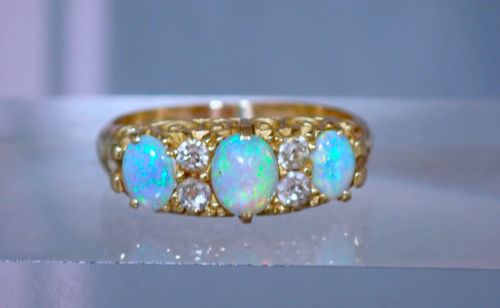
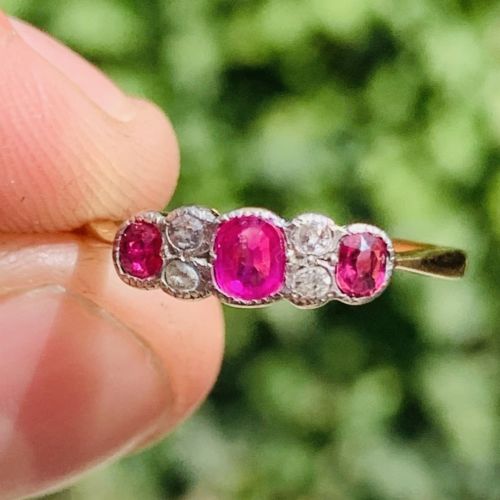
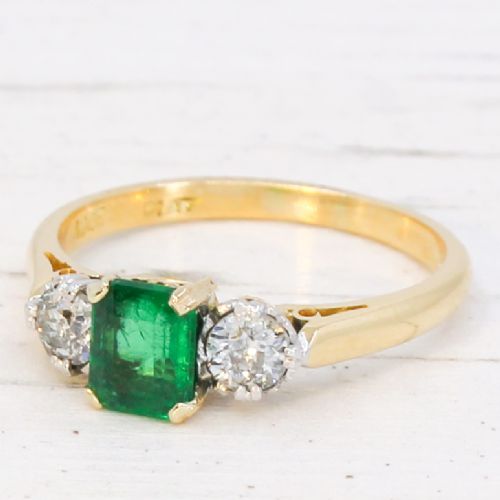
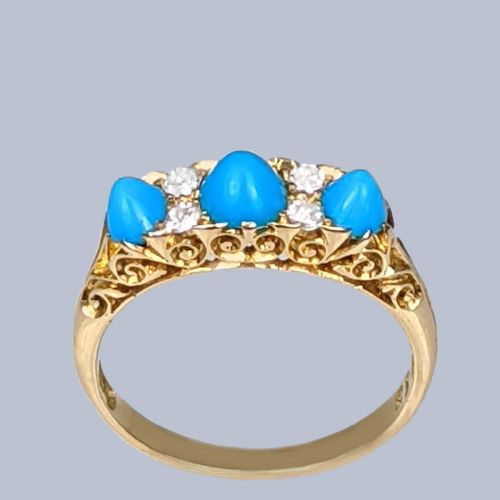
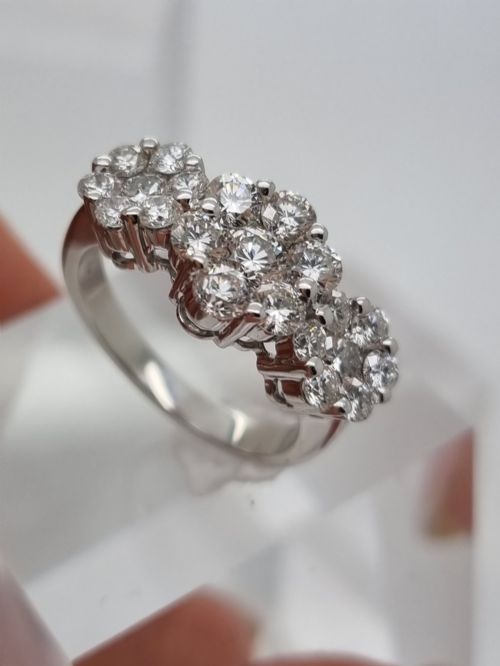
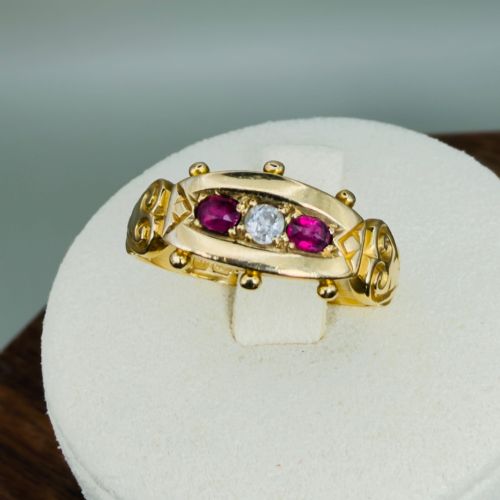
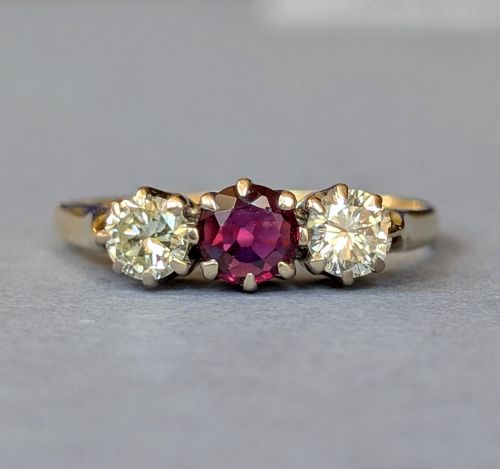
A gold trilogy ring carries three gems in a row, most often diamonds, sapphires, rubies, emeralds or opals set across the hand. You encounter pieces spanning the Victorian, Edwardian, and Art Deco periods, alongside vintage examples from the nineteen-thirties.
The profile ranges from traditional claw settings and illusion mounts to twist designs and low gypsy bands. Stones graduate in size or sit uniform, mounted in yellow gold, white gold, or combinations pairing gold bands with platinum settings.
Metals and Mounts
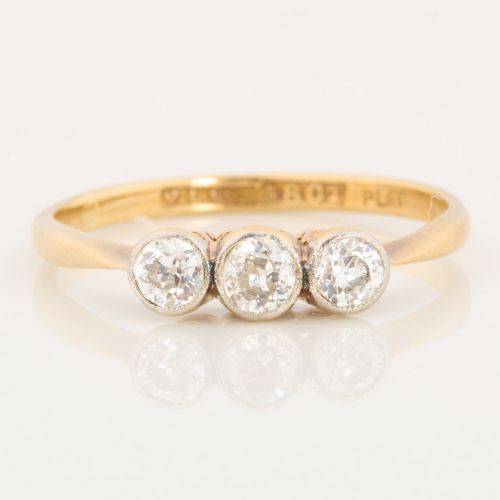
Goldsmiths worked chiefly in eighteen-carat yellow gold and nine-carat gold, frequently combining these with platinum to secure white stones against a bright backdrop. Gemstones display old-cut diamonds alongside rubies, sapphires, emeralds, pearls, turquoise, garnets, amethysts, white sapphires and opals.
Settings rely on hand-beaten claws, platinum illusion plates that enlarge the visual presence of smaller stones, and flush gypsy mountings sunk directly into heavy gold bands.
Design and Execution
The distinction between standard examples and finer work rests on the harmony of the stones and the crispness of the metalwork. Graduated gems matched for colour and clarity elevate a piece, as do pierced galleries and hand-engraved shoulders.
Substantial shank thickness and crisp hallmarks denoting specific assay offices and years provide tangible evidence of careful original manufacture and enduring structural integrity.
The Gold Trilogy Ring Glossary
- Trilogy ring
- A ring set with three stones, traditionally symbolising the past, present and future. They frequently serve as engagement or anniversary tokens.
- Old-cut diamond
- A hand-faceted diamond shape typical of the nineteenth and early twentieth centuries, featuring a smaller table and a higher crown than modern brilliant cuts.
- Illusion setting
- A metal plate surrounding a diamond, often platinum on gold, designed to reflect light and make the stone appear larger than its actual carat weight.
- Gypsy ring
- A style where stones are flush-set directly into a thick, tapered band rather than held in raised claws.
- Twist ring
- A design where the gold band wraps around the stones in a crossover or toi-et-moi configuration.
Frequently Asked Questions
How do I date an antique ring?
Dating relies on hallmarks, metal combinations, and stone-cut styles. Official stamps indicate the assay office and year of testing.
Early twentieth-century pieces often mix yellow gold bands with platinum settings, while Victorian versions frequently utilise eighteen-carat yellow gold throughout with old-cut diamonds.
Are these rings suitable for daily wear?
Gold trilogy rings suit everyday use provided the settings remain secure and the gold band retains adequate thickness. Lower-carat gold and platinum offer strong durability for daily tasks.
Weaker claw settings on antique rings benefit from occasional checks by a jeweller to ensure stones stay firmly anchored.
What stone combinations exist?
Diamonds paired with sapphires, rubies or emeralds form the most common traditional groupings. Alternative pairings include opals, pearls, garnets, turquoise and amethysts.
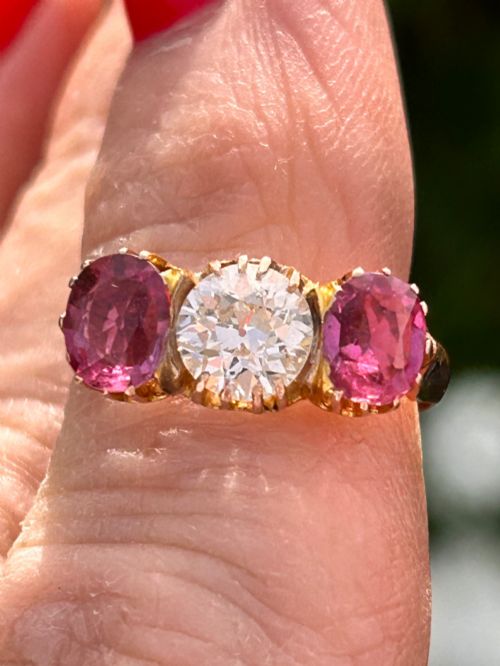
Stones may be all of one kind, such as a trio of diamonds, or mix a central diamond with coloured side stones.