
Emerald and Diamond Ring
An emerald and diamond ring brings together rich green beryl and bright stones in gold or platinum settings.
What the pieces are
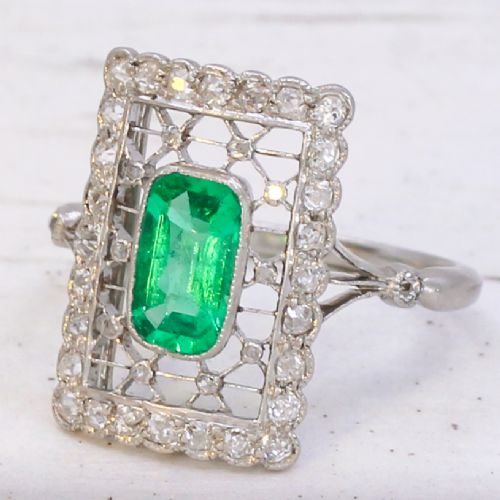
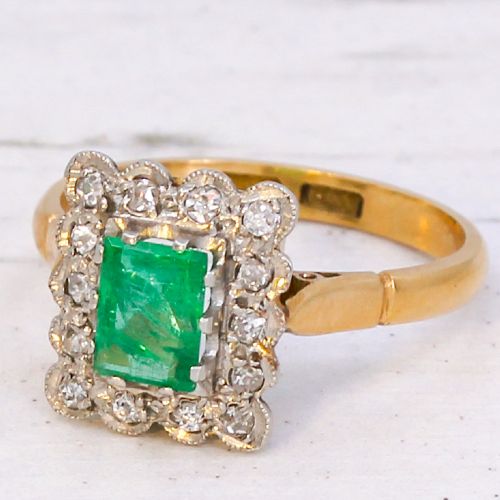
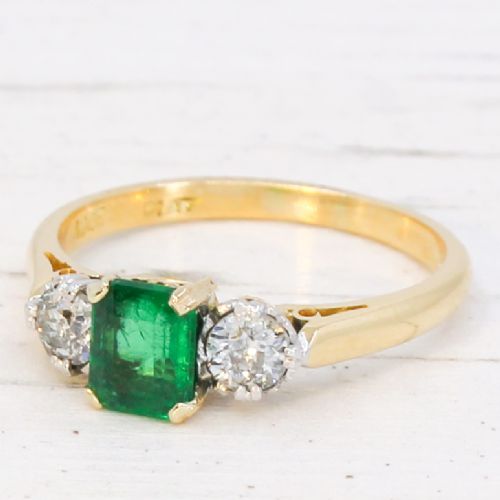
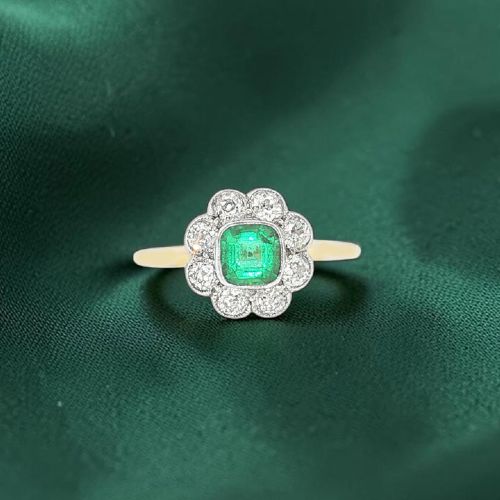
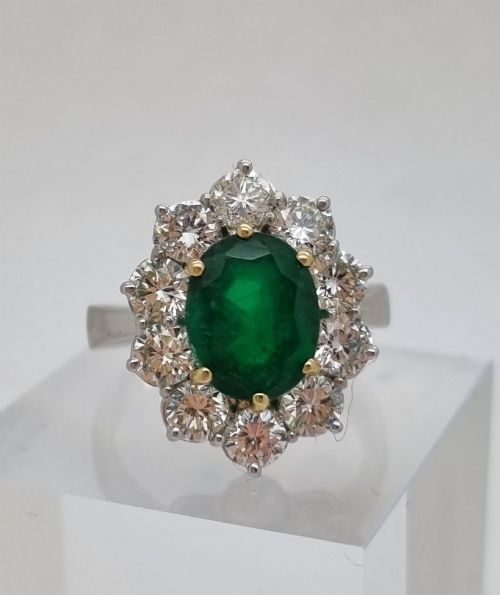
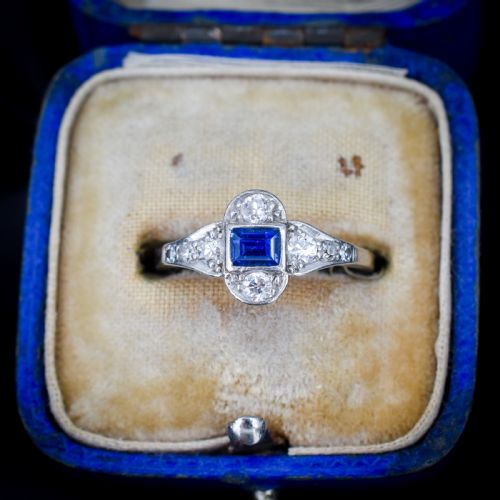
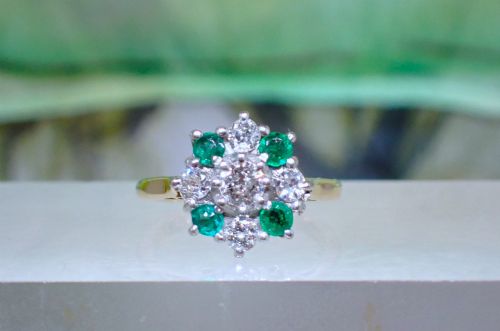
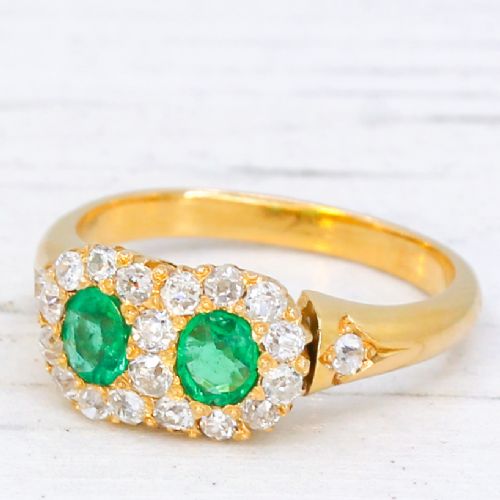
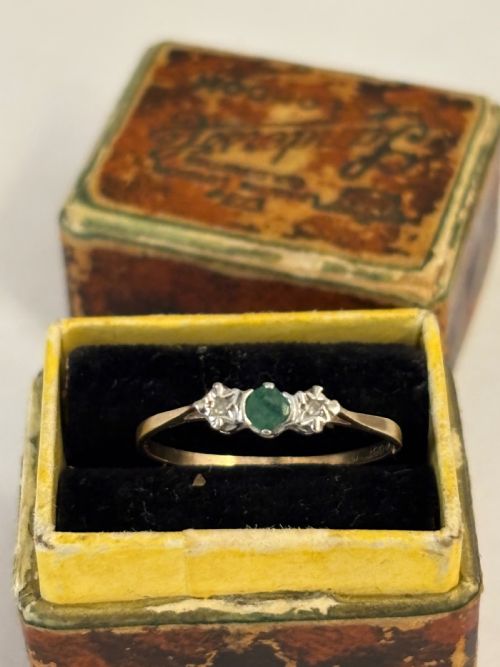
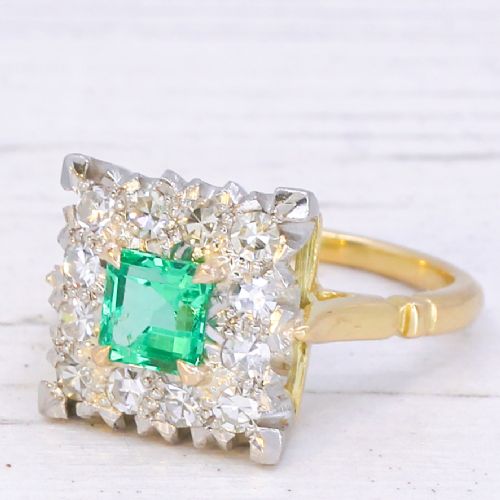
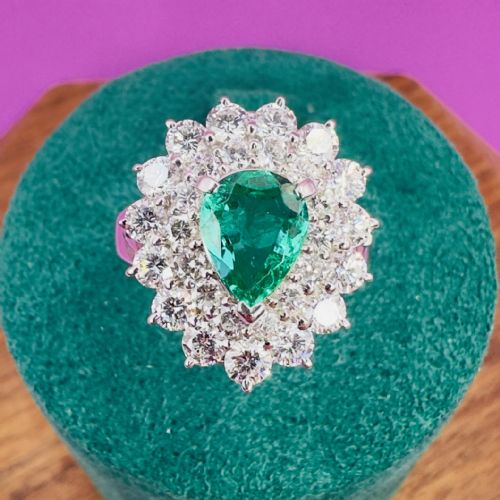
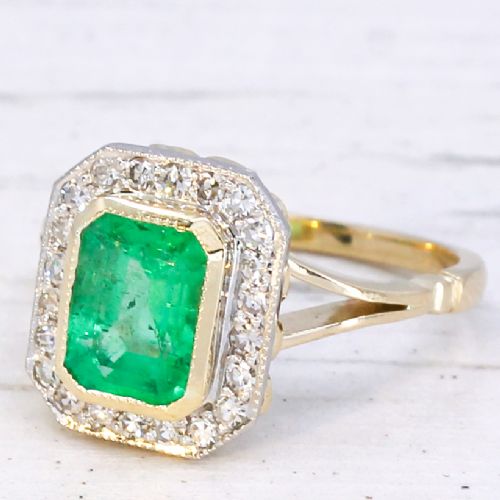
An emerald and diamond ring pairs green beryl with sparkling stones in cluster, trilogy, and dress configurations. The most common form on this page is the cluster ring, where a central green stone sits surrounded by smaller diamonds.
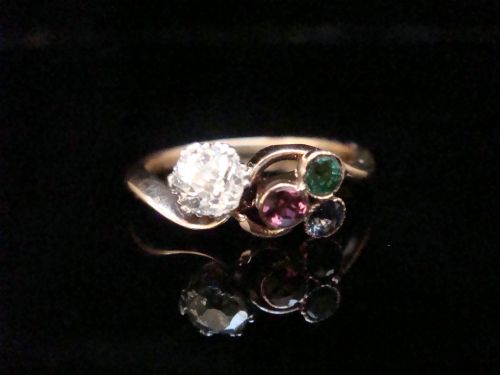
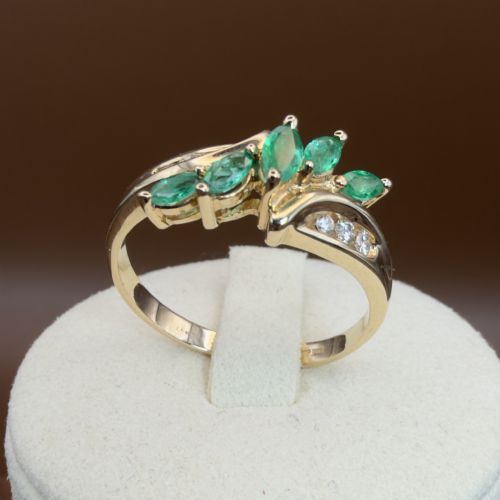
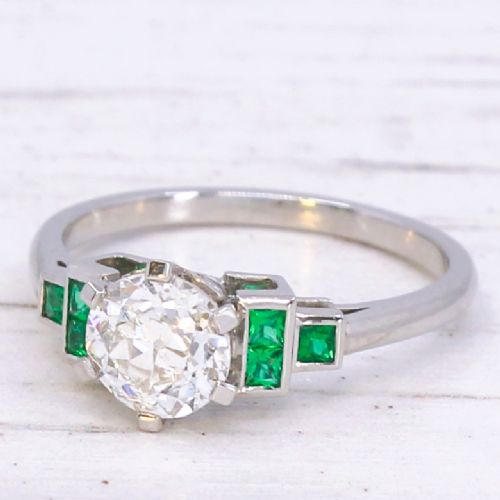
Makers set these gems across multiple decades, spanning Edwardian, Art Deco, and mid-century periods. Yellow gold, white gold, and platinum provide the primary foundations for the stones.
Buyers encounter traditional five-stone rings alongside cocktail and target designs. Colombian origins appear frequently among the recorded stones.
How they were made
Goldsmiths combined platinum, 18ct yellow gold, 18ct white gold, and 9ct gold to mount the gems. Traditional claw settings, bezel mounts, and intricate cluster arrangements secure the emeralds and diamonds.
Master craftsmen shaped the precious metals by hand during the Edwardian and Art Deco periods, utilising durable platinum to hold delicate stone arrangements.
Retail Price Guide 2026
Typical UK retail prices for emerald and diamond ring, calculated from the Sellingantiques database of over a million retail prices indexed since 2003. This retail price guide relies exclusively on Sellingantiques data; no external sources or auction records are used, so the figures do not describe the wider market.
Listings span platinum, 18ct gold, and 9ct gold across Edwardian, Art Deco, and mid-century periods.
What varies in quality
Quality rests in the depth of colour within the emerald and the precision of the diamond cuts, alongside the weight of the precious metal mount. Pieces with significant carat weights and documented Colombian origins stand apart from standard commercial examples.
The architectural complexity of an Art Deco platinum mounting demands superior bench work compared to a simple gold band. Setting integrity and stone matching dictate the overall standard of each piece.
The Emerald and Diamond Ring Glossary
- Cluster ring
- A setting style featuring a central stone encircled by a border of smaller gems. This configuration maximises visual presence on the hand.
- Platinum
- A dense, durable white precious metal favoured in Art Deco jewellery for secure fine settings. It holds intricate wirework without bending.
- Trilogy ring
- A three-stone ring design representing past, present, and future. It typically places a central gem flanked by two matching stones.
- Old cut
- A diamond cut style from the late nineteenth and early twentieth centuries featuring a smaller table and high crown. These stones produce a softer, candlelit sparkle.
- Baguette diamond
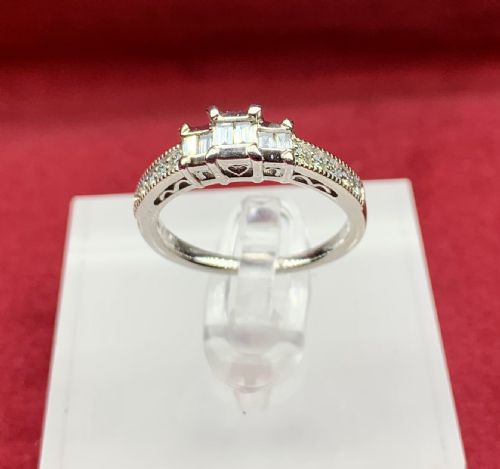
- A step-cut diamond shaped as a narrow rectangle. Jewellers utilise these stones as linear accents in geometric mountings.
Frequently Asked Questions
How do I care for my ring?
Clean your emerald and diamond ring gently using warm soapy water and a soft brush, avoiding harsh chemical ultrasonic cleaners.
Emeralds are softer than diamonds and require careful handling to prevent scratching during daily wear.
What is an Art Deco setting?
Art Deco settings use geometric lines, symmetry, and platinum to create bold architectural jewellery.
This style flourished during the 1920s and 1930s, prioritising high-contrast colour pairings.
Are these rings suitable for daily wear?
Sturdier platinum and 18ct gold mountings handle regular daily wear when checked periodically by a jeweller.
Careful removal during manual tasks protects the softer emerald from accidental impacts.
How can I tell the period?
Hallmarks, metal choices, and stone cutting styles help determine the era of manufacture.
Edwardian pieces often feature delicate platinum wirework, while 1950s examples show heavier mid-century casting.