




Three Stone Emerald Ring
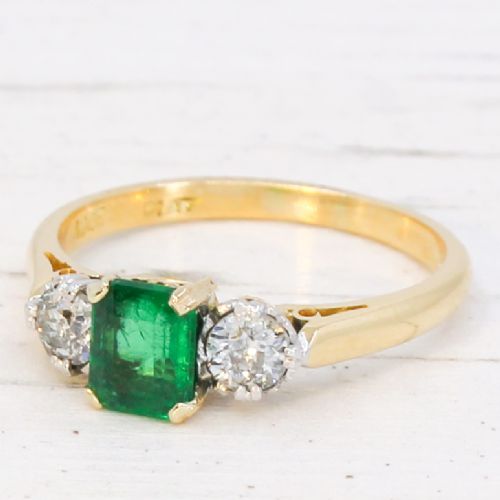
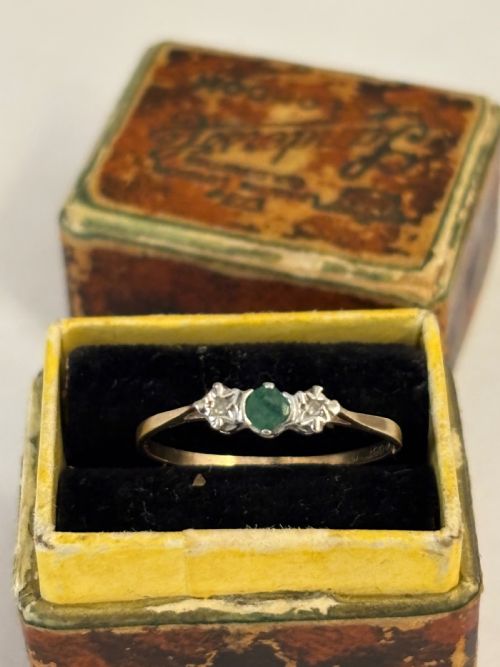
A three stone emerald ring brings together green beryl and bright diamond in a balanced trilogy format that spans Edwardian, Art Deco and mid-century periods.
Three Stone Emerald Ring
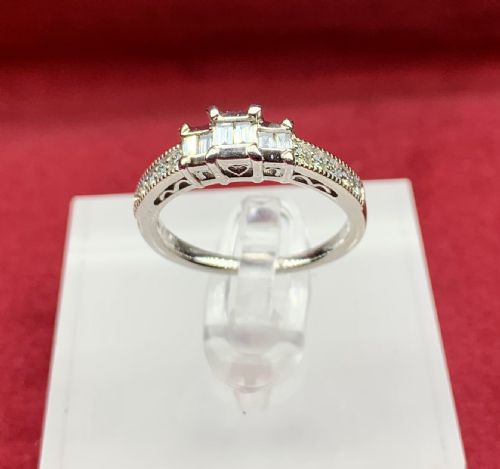
Makers set these stones in platinum or various shades of gold, including yellow gold, 18ct white gold, and 9ct gold. Alongside traditional emerald and diamond combinations, listings occasionally include alternative stones like paste, tanzanite, aquamarine, ruby, or pink topaz within similar trilogy or multi-stone layouts.
How they were made
Goldsmiths utilised platinum and gold, specifically 18ct white gold, 18ct yellow gold, and 9ct gold, to construct the mounts for these rings. Platinum became particularly popular during the Edwardian and Art Deco periods for its strength in delicate, fine settings.
The construction relies on securing a central emerald alongside flanking diamonds, often utilising old cut diamonds in earlier pieces. Gemstone treatments such as minor or insignificant oil are documented in specific Colombian emerald examples.
Some emeralds arrive with paperwork detailing their foreign travels, noting specific origins like Colombia alongside vintage oil treatments.
What varies in quality
The distinction between pieces rests largely on the quality and origin of the central emerald and its accompanying diamonds. Stones certified as Colombian emeralds with minimal or insignificant oil treatment command particular attention compared to standard commercial gems.
Metal choice and period execution also define the range, with hand-worked platinum settings from the Art Deco era showing notable craftsmanship. The clarity, cut, and carat weight of both the emeralds and the flanking diamonds dictate the overall standing of each ring.
The Three Stone Emerald Ring Glossary
- Trilogy ring
- A ring set with three stones, typically representing the past, present, and future. This layout forms the defining structure of the pieces found in this category.
- Old cut diamond
- A diamond cut in the early styles preceding modern brilliant cut stones, characterised by a smaller table and higher crown. These appear frequently in Edwardian and Art Deco pieces.
- Emerald cut
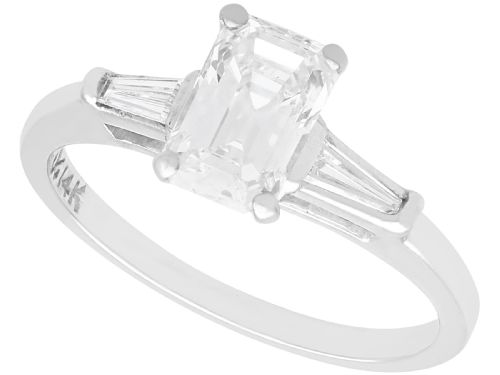
- A rectangular or square step cut with cropped corners designed specifically for emeralds and other square stones. This cut emphasises clarity and depth of colour over high brilliance.
- Paste
- A heavy, highly transparent type of glass used historically as an imitation gemstone. Pieces containing paste offer the visual effect of precious gems from specific historical periods.
Three Stone Emerald Ring: Frequently Asked Questions
What is a three stone emerald ring?
A three stone emerald ring is a piece of jewellery featuring a central emerald accompanied by two side diamonds or other accent stones. This arrangement is also frequently called a trilogy ring.
Such designs appear across multiple periods, including the Edwardian era, Art Deco years, and mid-century decades, utilising metals like platinum and yellow gold.
How do I care for an antique emerald ring?
Emeralds are a softer gemstone than diamonds and require gentle handling during everyday wear. Cleaning should be done with warm soapy water rather than ultrasonic machines or harsh chemicals.
Store the ring separately from harder jewellery to prevent scratching the softer emerald surface or the surrounding gold and platinum mounts.
How can I tell an Art Deco emerald ring apart?
Art Deco emerald rings often feature geometric motifs, platinum settings, and step cut stones. The design emphasises clean lines and strong architectural symmetry.
Earlier Edwardian versions tend to display more flowing, delicate wirework and garland motifs, while mid-century pieces shift toward heavier yellow gold structures.