


Vintage Plant Pot Holder
These vintage plant pot holder pieces bring nineteenth-century metalwork and ceramic vessels into modern rooms to display greenery.

Vintage Plant Pot Holder
A vintage plant pot holder encompasses brass and copper jardiniere vessels, ceramic pots, and wooden stands made during the Victorian, Edwardian, and Art Nouveau periods. These items served functional roles in nineteenth and early twentieth-century interiors, holding indoor plants or acting as log bins and coal buckets.
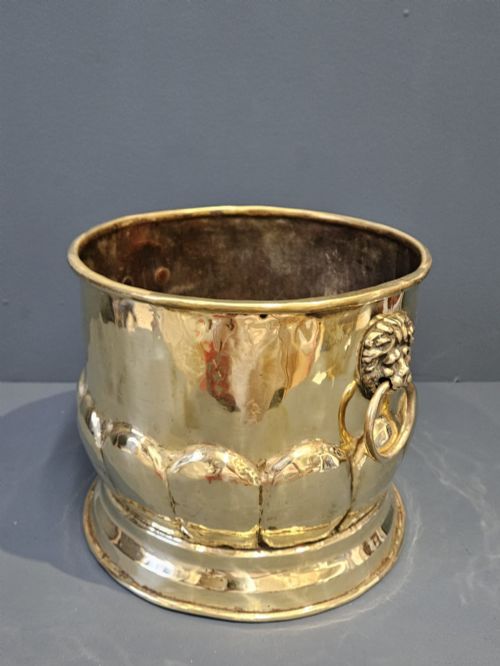
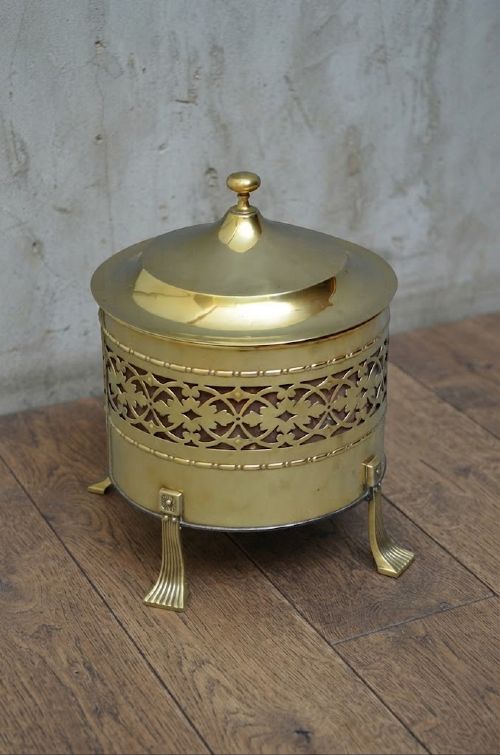
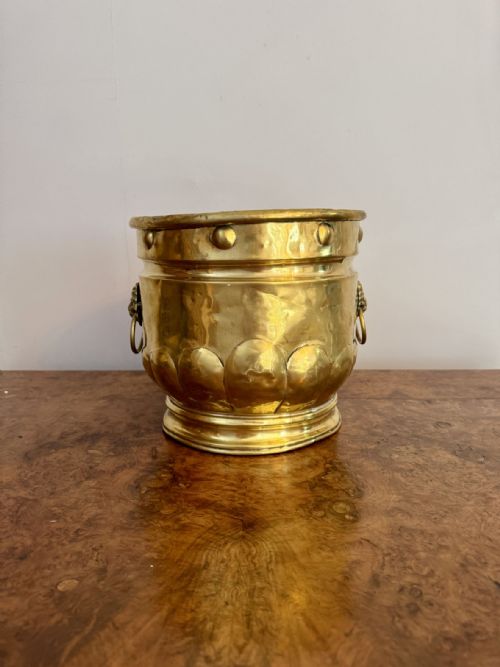
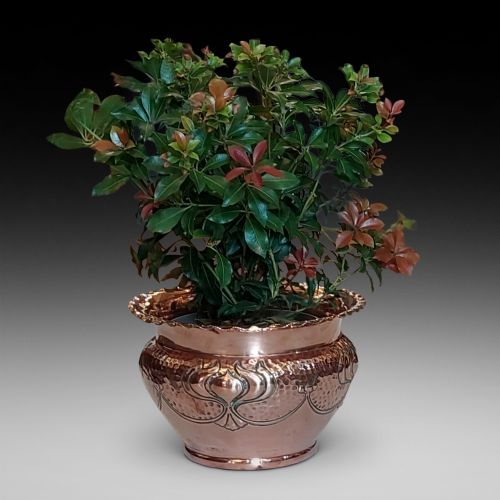
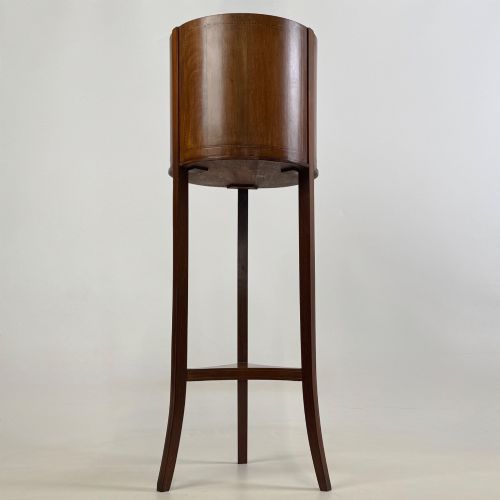
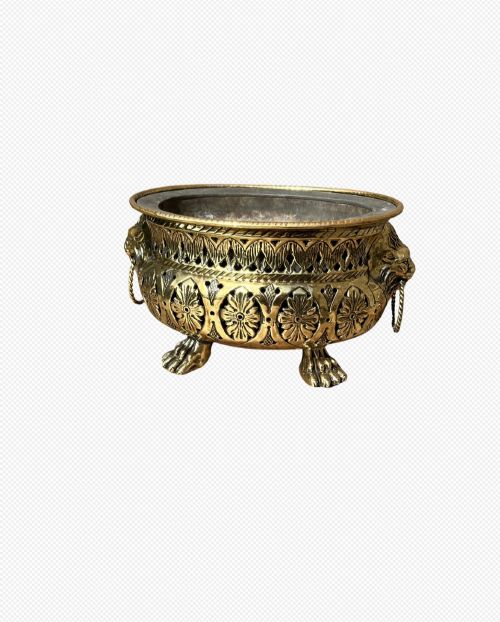
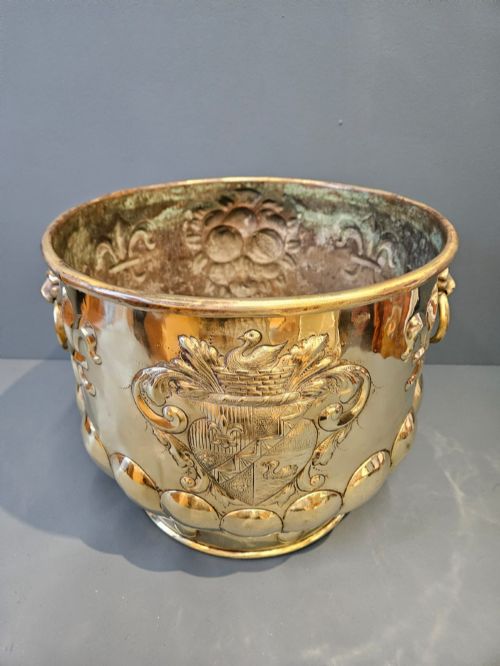
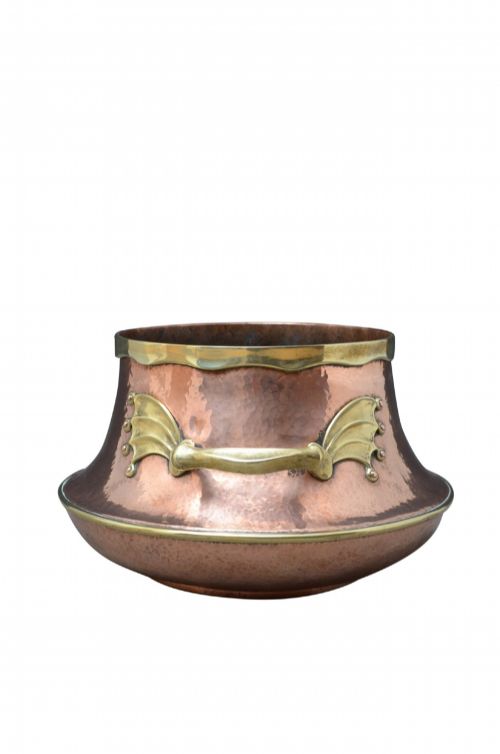
Brass planters dominate the selection, often appearing alongside copper vessels, mahogany plant stands, and glazed ceramic bowls. Buyers encounter cylindrical shapes, footed jardiniere vessels, and pieces resting on original stands or incorporating drop handles and crests.
Materials and construction methods
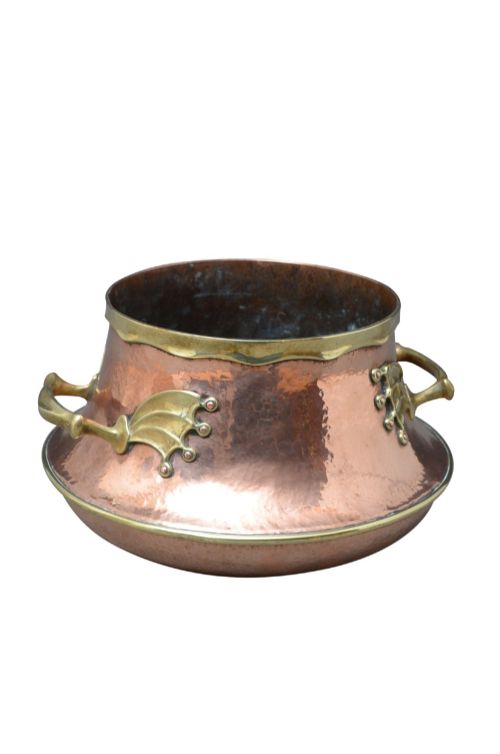
Metal vessels rely on sheet brass and copper formed through hammering, piercing, and repoussé work, frequently finished with cast lion mask handles or animal heads. Makers also utilised solid mahogany and English oak to construct coopered barrel stands and plant columns.
Ceramic examples employ stoneware and glazed earthenware bodies, sometimes paired with silver plated stands or detailed with floral transfer designs and moulded motifs typical of pottery production from the period.
Several heavy metal vessels double cheerfully as waste bins, coal buckets, or grand homes for modest ferns.
Distinctions in craftsmanship
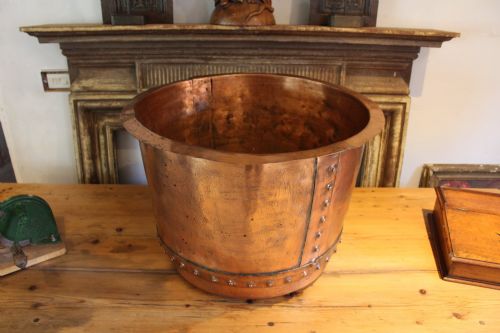
Quality rests in the crispness of the hand-hammered detail, the depth of repoussé relief work, and the structural integrity of riveted or joined seams on metal vessels. Superior examples retain original stands, matching liners, or well-cast handles without distortion.
In wooden stands and ceramic pots, merit shows in the choice of timber grain, the precision of coopered stave construction, and the richness of the glaze or ceramic body rather than surface wear from actual use.
J Sankey and Sons·Royal Doulton·Royal Worcester
The Vintage Plant Pot Holder Glossary
- Jardiniere
- An ornamental pot or stand designed to hold plants or flowers. These vessels appear in metal, ceramic, and wood across Victorian and Edwardian interiors.
- Repoussé
- A metalworking technique where the artisan hammers the design from the reverse side to form a raised pattern on the front. This method decorates many brass and copper planters.
- Cachepot
- A decorative container used to conceal an ordinary flower pot. They protect furniture surfaces from moisture and drainage.
- Coopered
- Built from vertical wooden staves fitted together and bound by metal hoops, similar to barrel construction. This method forms oak plant stands and log bins.
- Arts and Crafts
- A design movement valuing handcraftsmanship and simple forms over mass production. Pieces from this style often feature honest metalworking techniques and stylised motifs.
Vintage Plant Pot Holder: Frequently Asked Questions
What is a jardiniere?
A jardiniere is an ornamental container designed to hold potted plants indoors. The term derives from the French word for gardener.
In period homes, these vessels sat on tables, hearths, or dedicated stands to bring living foliage into domestic rooms.
How were brass planters used?
Victorian and Edwardian households used metal vessels to house potted palms, ferns, and flowering plants. Many designs doubled as coal buckets or log bins.
Their metal construction made them durable containers for heavy soil and damp plants when paired with inner liners.
How do I spot Art Nouveau style?
Art Nouveau pieces feature organic, flowing lines inspired by natural forms like plant stems and flower petals. Look for whiplash curves and stylised motifs.
In metalwork, this style manifests in soft hammered surfaces and graceful handles rather than strict geometric symmetry.
Are these planters waterproof?
Many antique metal vessels have riveted or soldered seams that may weep moisture over time. Glazed ceramic pots hold water better but can develop hairline fractures.
Using a modern plastic saucer or liner inside the vessel protects antique materials from water damage.