


Vintage Painted Keepsake Box
A vintage painted keepsake box holds small treasures and brings hand-applied colour and folk tradition directly into a room.
Vintage Painted Keepsake Box
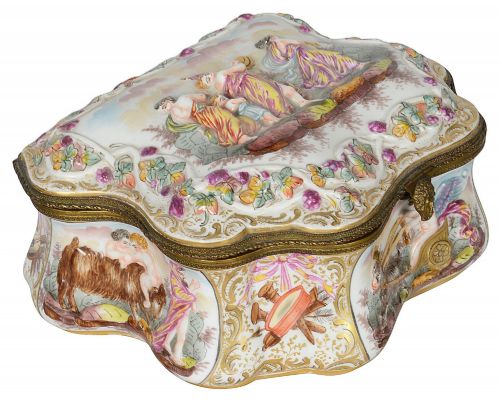
A vintage painted keepsake box encompasses small storage containers, jewellery caskets, tea caddies, and deed boxes originating from the eighteenth century to the early twentieth century. Buyers seeking this phrase encounter examples rooted in Georgian, Victorian, and Regency periods, alongside distinct regional styles like Scandinavian folk art and Italian Rococo revival.
The most common formats on this page are wooden boxes fashioned from pine, mahogany, or oak, decorated with hand-applied pigments or lacquer. These pieces range from small table boxes to miniature trunks and strong boxes designed for domestic utility and ornament.
Materials and construction methods
Makers constructed these boxes primarily from timber substrates such as pine, mahogany, and oak, alongside papier-mâché and metal foundations. Artisans applied lead or oil-based paints directly onto the prepared wood or lacquer surfaces, frequently sealing the exterior with varnish to protect the delicate motifs.
Hardware elements including brass hinges, iron locks, and brass carrying handles supplemented the wooden carcases. Lacquering techniques and enamel work appear on specialised items, requiring skilled layering of ground pigments and protective topcoats.
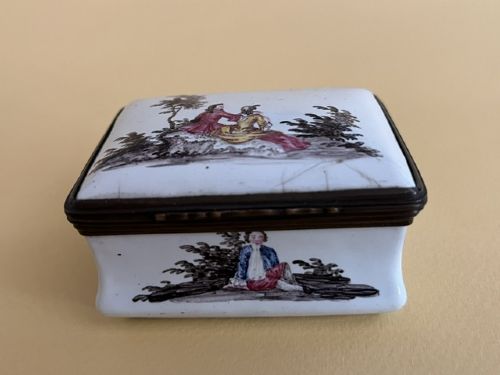
One tiny box even carries the careful portrait of a bygone face, painted entirely by hand over a century ago.
Differentiating quality in painted boxes
Quality rests upon the preservation of the original paint surface and the intricacy of the decorative motifs applied by the maker. Boxes retaining their untouched eighteenth or nineteenth-century folk art decorations hold greater integrity than those with later repainting.
Structural joinery of the wooden carcase and the original survival of fitted brass or iron hardware distinguish finer cabinetwork from simpler utilitarian storage chests.
Jennens and Bettridge
The Vintage Painted Keepsake Box Glossary
- Pine
- A softwood commonly used for European folk art and country boxes, providing a pale and stable base for painted decoration.
- Papier-mâché
- A composite material made from paper pulp or layers of paper bound with glue, pressed into moulds and lacquered to create smooth box surfaces.
- Tea caddy
- A small container originally partitioned to store loose tea leaves securely, often featuring decorative painted wood or mahogany exteriors.
- Folk art
- Traditional decorative work produced by self-taught or regional artisans, characterised by bold painted motifs and vernacular styling.
- Bilston enamel
- Opaque enamel painted on copper bases, produced in eighteenth-century workshops for small patch and trinket boxes.
Vintage Painted Keepsake Box: Frequently Asked Questions
What were painted keepsake boxes used for?
These boxes served domestic purposes for storing letters, documents, jewellery, and precious trinkets safely away from dust and light.
Over generations, their function shifted from utilitarian storage to decorative display on dressing tables and desks.
How do I identify a Georgian painted box?
Georgian examples often feature mahogany or pine carcases with restrained floral motifs, enamel plaques, or classical revival painting styles.
Construction details such as hand-cut dovetails and period brass hinges help confirm the eighteenth-century date.
What is Scandinavian folk art paintwork?
Scandinavian folk art boxes display vibrant, locally mixed pigments depicting stylized floral, geometric, or narrative scenes unique to rural traditions.
The original paint surfaces usually show natural craquelure and softening from age.
How should I clean a painted box?
Dust the surface gently with a soft, dry brush and avoid applying liquid cleaners, modern polishes, or water to aged paintwork.
Keep the box out of direct sunlight to prevent the original pigments from fading or the wood from drying out.