
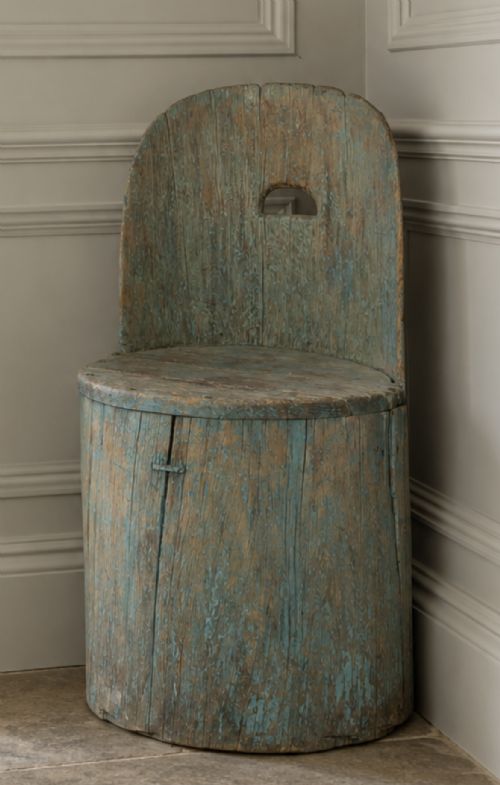


Antique Scandinavian Wooden Trunk
An antique scandinavian wooden trunk brings regional folk tradition and painted pine colour directly into a hallway or bedroom.
Antique Scandinavian Wooden Trunk
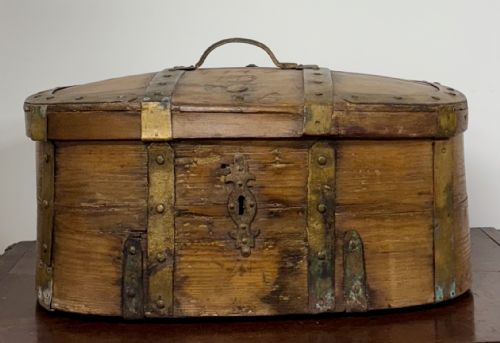
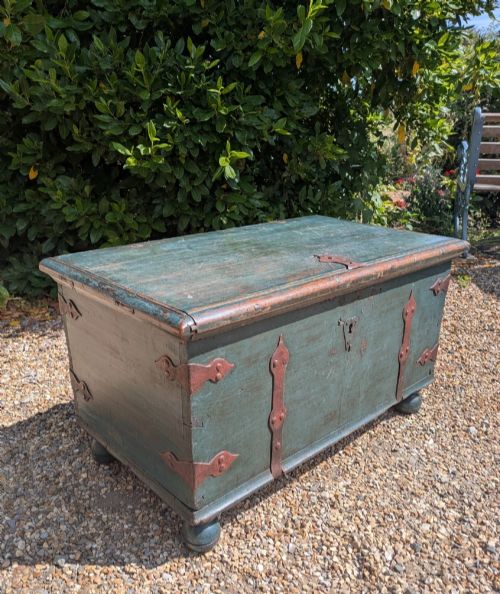
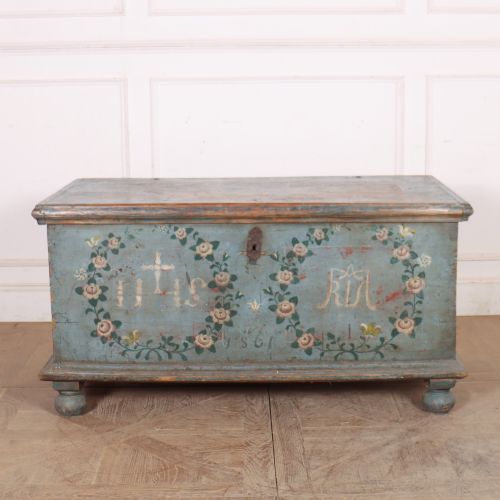
When you search for an antique scandinavian wooden trunk, you encounter pieces that span from the eighteenth century through the nineteenth century, encompassing styles such as Scandinavian folk art, rustic farmhouse, and baroque. The most common form on this page is the painted pine chest or coffer, often associated with marriage traditions in Sweden and Denmark.
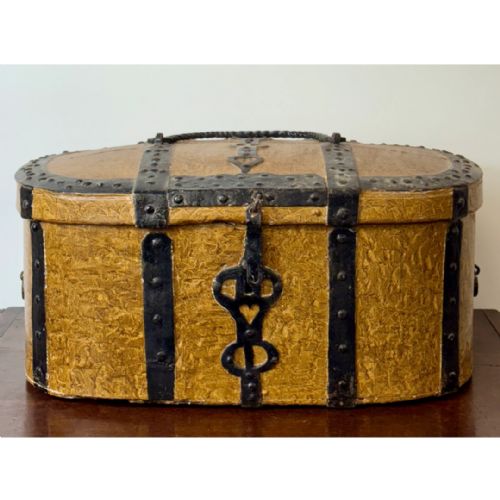
These items serve practical storage needs while displaying traditional hand-painted decoration, pigment finishes, and structural timber work. Alongside larger blanket boxes and dome top coffers, smaller strong boxes, log bins, and shaped boxes appear frequently in pine and oak.
How they were made
Carpenters constructed these pieces primarily from solid pine and oak, utilising traditional joinery and sturdy timber panels suitable for heavy domestic use. Surfaces were often treated with paint and pigment to create decorative finishes, ranging from simple grained patterns to elaborate folk art motifs.
Iron and wrought iron provided functional reinforcement through hand forged strapwork, hinges, and bindings, frequently complemented by brass elements. These metal details secured heavy lids and corners on strong boxes and dome top coffers.
Several items double as doctors bags or log bins, proving that historic Scandinavian storage was ready for anything from pine logs to pills.
What varies in quality
The sophistication of the hand-painted folk art and pigment decoration separates standard utility pieces from exceptional examples of regional craftsmanship. Original surface patination and the survival of early paint layers significantly influence the visual depth of a trunk.
The complexity of construction, such as dome top framing and the intricacy of hand forged iron strapwork, distinguishes finer coffers and strong boxes from simpler pine storage chests.
The Antique Scandinavian Wooden Trunk Glossary
- Coffer
- A heavy wooden chest traditionally used for storing valuables and household goods. These pieces often feature dome tops and robust iron bindings.
- Strong box
- A secure chest or box built for holding money, documents, or precious items. They frequently include reinforced iron strapwork.
- Marriage chest
- A specific type of decorative box or chest commissioned to mark a wedding. These objects commonly display painted dates and folk art motifs.
- Strapwork
- Ornamental bands of metal applied to reinforce and decorate the exterior of timber chests and boxes. This hand forged iron work adds both strength and visual contrast.
Antique Scandinavian Wooden Trunk: Frequently Asked Questions
How were these trunks used?
Historic households utilised these wooden trunks primarily for storing textiles, winter blankets, dowry items, and household valuables. Strong boxes held important documents and currency under lock and key.
In daily life, dome top coffers and blanket chests doubled as seating benches or tables within modest rural homes. Their robust timber construction ensured contents remained protected from dampness and pests.
How do I date an antique trunk?
Dating relies on examining the timber species, construction methods, and stylistic cues such as baroque framing or nineteenth-century folk art painting. Structural joints and hardware types like hand forged iron strapwork provide clear chronological indicators.
Paint analysis also helps, as original pigment layers, surface patination, and inscribed wedding dates offer precise historical context. Comparing the proportions to documented regional forms refines the age estimation further.
Where should I place a trunk?
These wooden chests fit naturally at the foot of a bed, along an empty hallway, or beneath a window as functional seating. Their painted pine finishes add warmth and colour to living spaces while hiding away bulky items.
Smaller strong boxes and decorative painted bins work well on side tables or as dedicated storage for shoes and fireside logs. Keeping them away from direct heat sources protects the historic wood and painted surfaces.