


Distressed Blue Chest
A distressed blue chest brings practical storage together with time-worn painted surfaces, ranging from 18th-century Georgian designs to 19th-century Scandinavian country pieces.
Distressed Blue Chest
A distressed blue chest encompasses a broad family of storage furniture, including chests of drawers, commodes, blanket boxes, and cupboards finished in worn blue paint. Buyers searching for a distressed blue chest will encounter pieces spanning the 18th century through to the early 20th century, originating from English, Swedish, French, Dutch, and Austrian workshops.
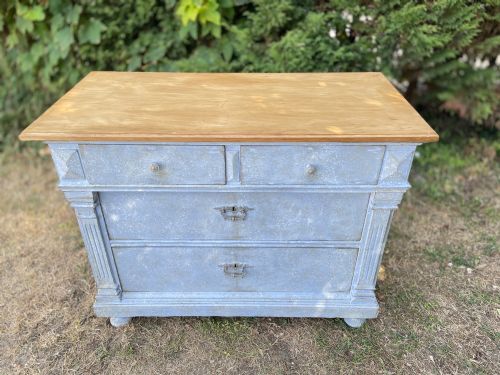
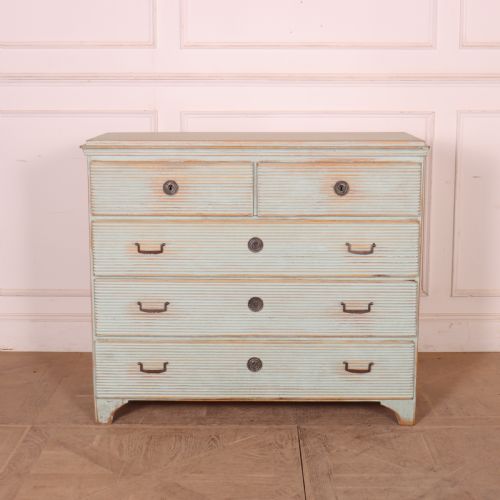
The most common version met on this page is the 19th-century Scandinavian painted commode or pine chest, often featuring soft blue tones applied over earlier timbers. Alongside these, English country and Georgian pieces appear frequently, sometimes bearing original paintwork or later layered blue finishes.
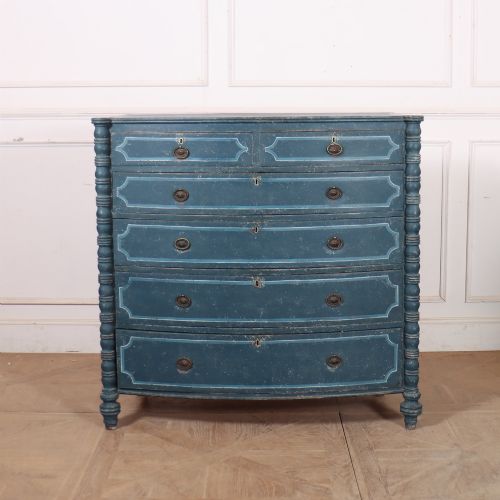
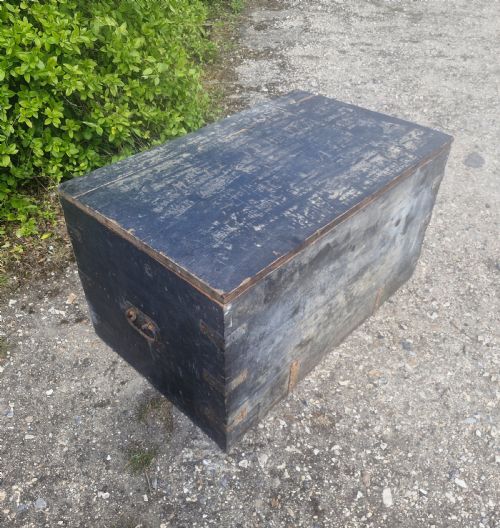
Forms vary significantly by region and period, stretching from serpentine commodes and bowfront chests of drawers down to rustic cupboards, log boxes, and campaign trunks. Each type balances utilitarian storage with the decorative charm of an aged blue surface.
Materials and construction
Construction relies heavily on pine and oak, complemented by secondary timbers used for drawer linings and internal framing. Woods like pine provided a stable base for the layers of paint that define these pieces, while oak served sturdier 18th-century Baroque and Georgian carcases.
Surface finishes involve traditional paint applications, ranging from hand-mixed pigments and mottled blue treatments to faux marble tops and diamond-point decorative mouldings. Metal elements such as brass, iron, and wrought iron provide structural reinforcement and functional hardware like handles and hinges.
Several chests hide their utility behind faux marble tops, tricking the eye into seeing heavy stone atop humble wood.
Judging quality in painted storage
Quality rests in the harmony between the underlying cabinetwork and the character of the surface finish. Pieces built with dovetail joinery and proportioned drawer construction stand apart from simpler utilitarian boxes, showing the hand of a skilled cabinetmaker beneath the paint.
The integrity of the painted surface determines visual success, distinguishing genuine period patina from heavy-handed modern distressing. The best examples display organic wear, integrated layers, and regional decorative details such as fluted drawer fronts or hand-painted motifs.
The Distressed Blue Chest Glossary
- Commode
- A low cabinet or chest of drawers, typically decorative in nature. French and Swedish commodes often feature serpentine fronts or refined drawer arrangements.
- Serpentine
- A furniture front curving outward in the centre and inward at the sides, or vice versa. This undulating profile requires skilled carpentry and adds fluid elegance to 18th-century commodes.
- Campaign trunk
- A portable storage chest designed for travel, equipped with metal corners and recessed carrying handles. These pieces reflect military practicality adapted for journeys.
- Bowfront
- A convex, outward-curving front profile typical of certain English chests of drawers. This shape softens the geometric rigidity of standard rectangular furniture.
- Baroque Revival
- A 19th-century style drawing inspiration from the dramatic, ornate forms of the 17th-century Baroque period. Pieces in this manner often display bold mouldings and rich surface treatments.
Distressed Blue Chest: Frequently Asked Questions
What is a distressed blue chest?
A distressed blue chest is a storage piece finished in worn blue paint, encompassing items from 18th-century Georgian styles to 19th-century Scandinavian country furniture.
These pieces combine functional storage with decorative painted surfaces that show age and use over time.
Where were these chests made?
The pieces originate from various European regions, with strong representation from English, Swedish, French, Dutch, and Austrian workshops.
Each region brought distinct regional proportions and painting traditions to their storage furniture.
How do I care for painted wood?
Protect painted surfaces from direct sunlight and moisture to prevent further degradation of the historic finish. Dust gently with a dry cloth rather than using harsh chemical polishes.
Maintaining a stable room temperature helps preserve both the timber carcase and the aged paint layers.
How can I tell the period?
Dating relies on construction methods, hardware types, and stylistic cues inherent to specific centuries. For example, 18th-century pieces often feature robust oak framing and serpentine profiles, while 19th-century examples frequently utilise pine and folk art painting.
Examining drawer construction and interior timbers further clarifies the age of a piece.