




Lacquered Trinket Box
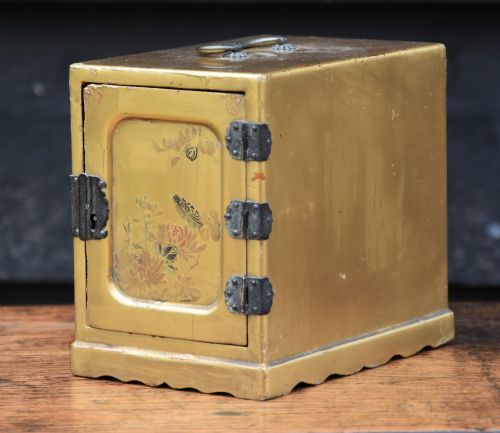
These lacquered trinket box pieces range from Georgian tea caddies to Meiji cabinets, bringing polished surfaces and hand-painted detail to small personal storage.
Lacquered Trinket Box
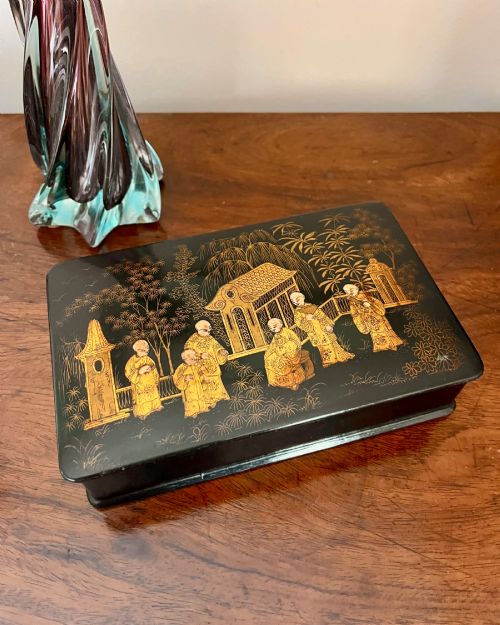
A lacquered trinket box serves to store small valuables, snuff, or stationery, appearing in forms such as tea caddies, card boxes, and small cabinets. You will frequently encounter Victorian papier-mâché examples alongside 19th-century Japanese and Kashmiri items.
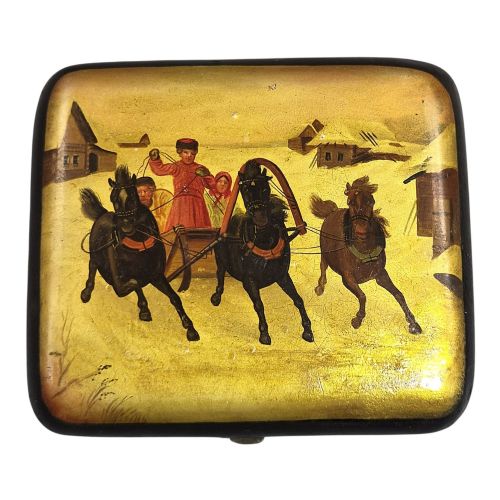
The selection spans periods from the Georgian and Regency eras through the Victorian decades and into the early 20th century. Geographical origins stretch across England, France, Germany, Russia, Italy, India, China, and Japan.
Forms vary from pocket-sized snuff boxes to large table cabinets and tiered trays. Each object reflects the prevailing decorative tastes of its origin, incorporating Chinoiserie, French Empire, or Meiji motifs.
How they were made
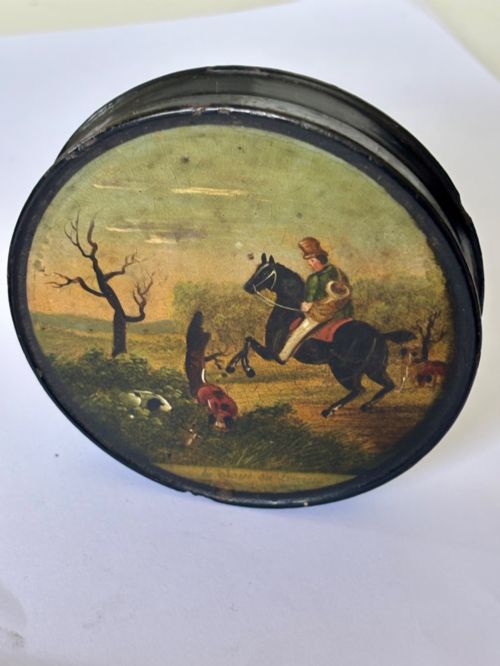
Makers built the foundational structures using wood, metal, or layered sheets of papier-mâché formed into rigid boxes. These substrates received multiple coats of lacquer to create a smooth, durable finish.
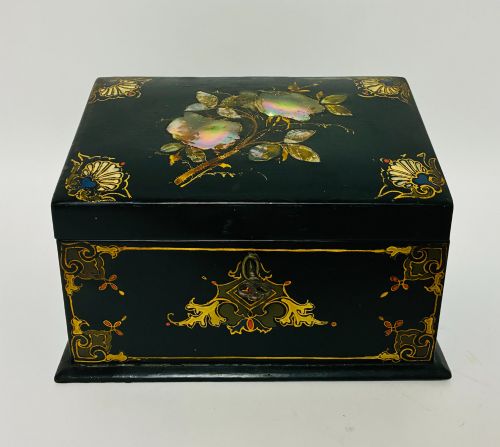
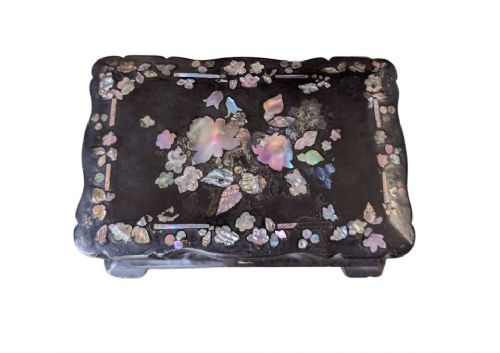
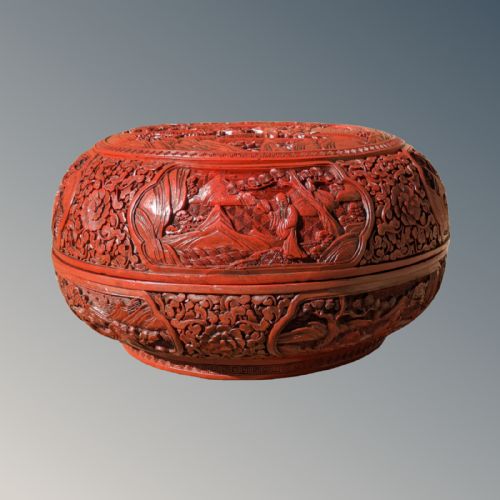
Artisans decorated the surfaces using hand paint, gold leaf, and penwork, sometimes embedding mother of pearl or brass inlay. Cinnabar varieties required deep layers of carved lacquer over a core.
Listings feature items from the Georgian, Regency, and Victorian periods, alongside Edwardian and 1920s examples.
What varies in quality
Quality rests on the depth and execution of the surface decoration, distinguishing brisk commercial painting from delicate, skilled brushwork. Finer examples display crisp penwork, precise mother of pearl inlay, and well-preserved lacquer coats.
The structural integrity of the papier-mâché or wood carcass dictates longevity, with superior pieces retaining tight hinges and stable interior fittings. The complexity of the form, from simple lids to multi-compartment cabinets, also separates standard items from exceptional works.
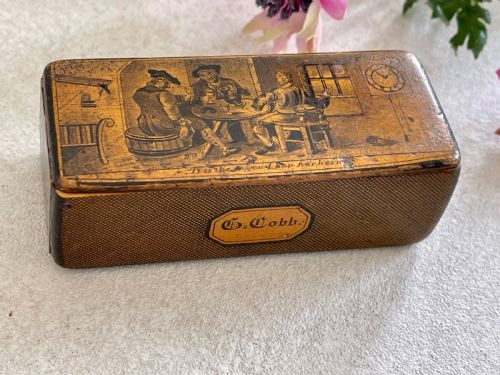
Vishnyakov Workshop·G Cobb·Stobwasser
The Lacquered Trinket Box Glossary
- Papier-mâché
- A composite material made from paper pulp or layers of paper mixed with glue, pressed and dried to form a rigid box base before lacquering. This technique allowed makers to mould smooth, curved surfaces ideal for painting.
- Chinoiserie
- A European decorative style reflecting Chinese artistic influences, commonly seen in gilt motifs on black or coloured lacquer grounds. It dominated many 18th and 19th-century decorative pieces.
- Penwork
- A meticulous decoration technique using fine pen and ink lines to create intricate architectural or pictorial designs, often finished with a clear protective glaze. Regency boxes frequently employ this method.
- Cinnabar
- A carved lacquer ware made by applying numerous coats of red mercuric sulphide lacquer to a base before carving intricate patterns into the hardened layers. Originating in China, these pieces require immense patience to produce.
- Toleware
- Painted and japanned metalware, typically tin or iron, produced in England and Europe for domestic utility and decoration. These items often match the aesthetic of contemporaneous lacquer boxes.
Lacquered Trinket Box: Frequently Asked Questions
What were small lacquered boxes used for?
These containers served multiple domestic and personal purposes, holding items like tobacco, snuff, visiting cards, and sewing implements. Larger iterations functioned as stationery cabinets, tea caddies, or designated repositories for jewellery.
Their placement was typically prominent on ladies' dressing tables, writing desks, or drawing room surfaces. They combined practical storage with ornamental display.
How do I care for antique lacquer?
Keep these items away from direct sunlight and damp environments to prevent the lacquer from fading or lifting. Dust them gently with a soft, dry cloth without applying modern chemical polishes.
Maintaining a stable room temperature protects the underlying wood or papier-mâché from warping and cracking. Proper handling ensures the delicate surface decoration remains intact.
How do I distinguish papier-mâché from wood?
Papier-mâché feels surprisingly light yet rigid, often presenting a completely seamless curved body without visible joinery. Tap lightly to hear a duller sound compared to the resonance of solid timber.
Examining the interior or underside often reveals the fibrous texture of the pressed paper layers. Lacquer finishes on both materials can look similar, requiring closer inspection of the base structure.
What is Meiji period lacquer?
Meiji period lacquer originates from late 19th-century Japan, a time of exceptional craftsmanship aimed at both domestic use and export. These items frequently feature fine gold and silver hiramaki-e work on a deep black ground.
The decoration often depicts natural scenes, birds, and flora rendered with extreme precision. Such pieces represent a high point in Japanese decorative arts.