

Inlaid Jewellery Casket
An inlaid jewellery casket holds keepsakes and personal treasures, combining decorative craft with practical storage.
Inlaid Jewellery Casket
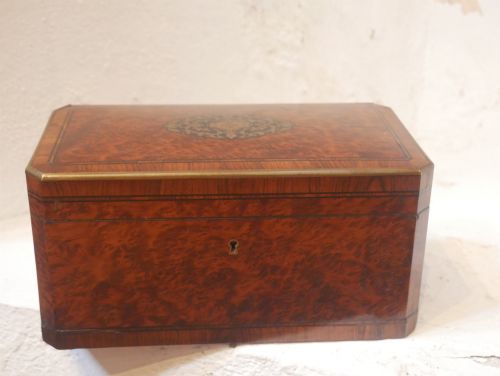
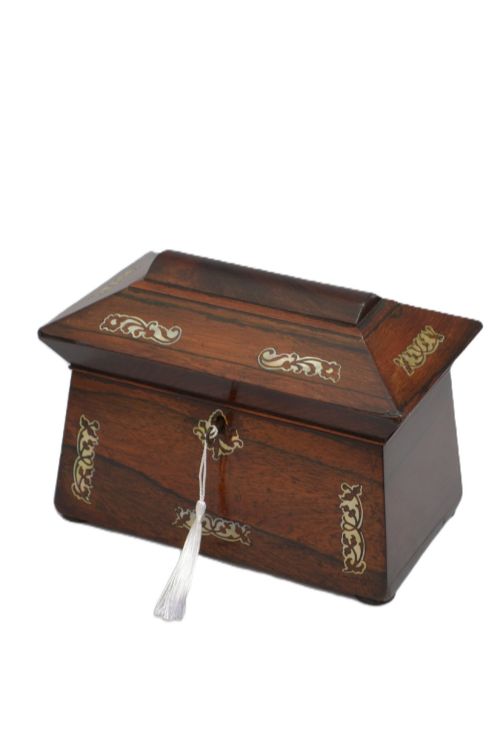
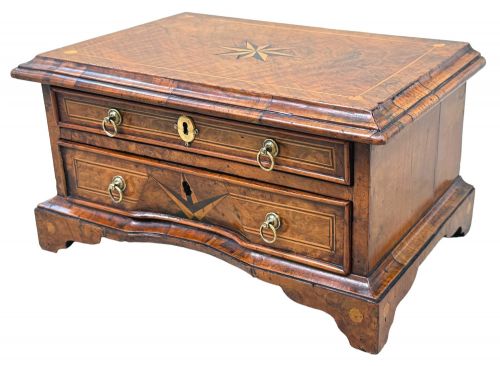
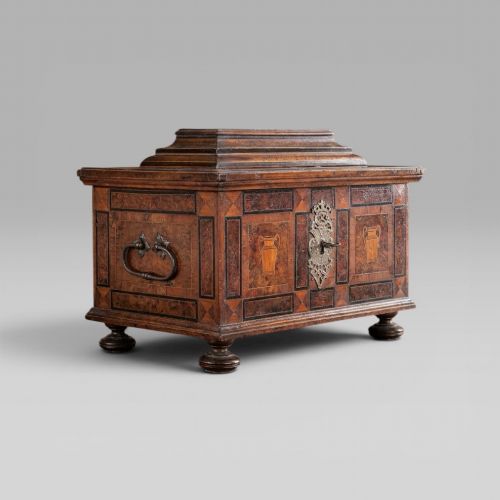
An inlaid jewellery casket spans several historical eras, with Victorian and Regency examples appearing most frequently on this page. These pieces range from compact trinket boxes to larger fitted cabinets equipped with mirrors and removable trays.
How they were made
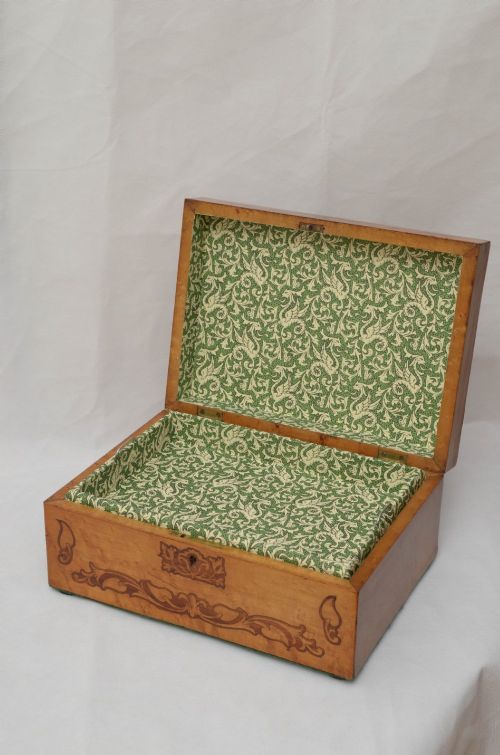
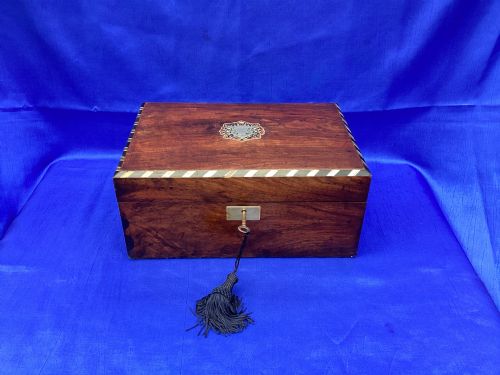
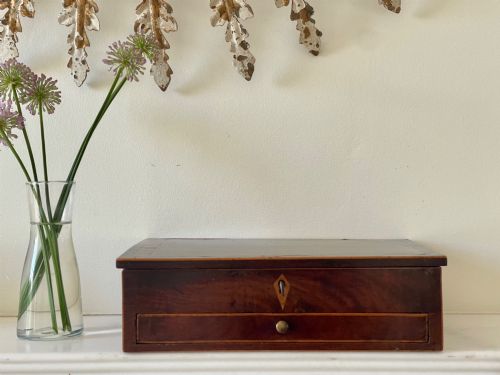
Artisans built these caskets using dense timbers such as rosewood, walnut, and mahogany as the foundational structure. They then applied decorative veneers, parquetry, and marquetry patterns.
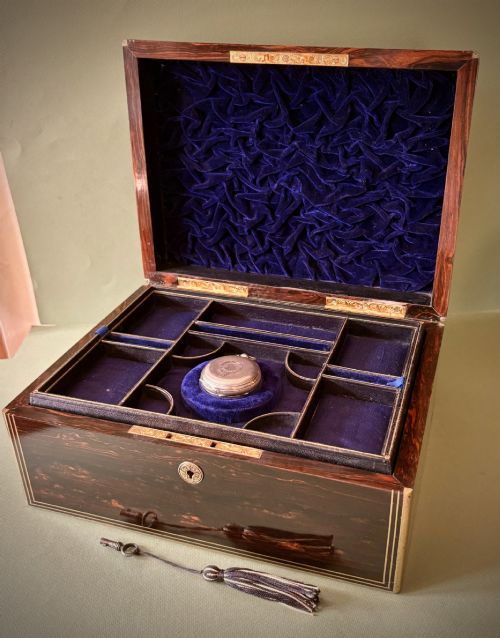
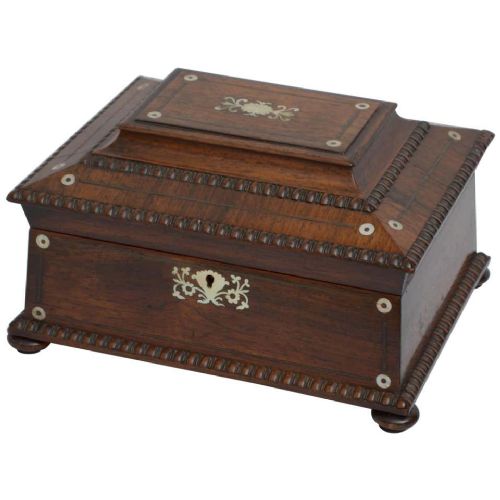
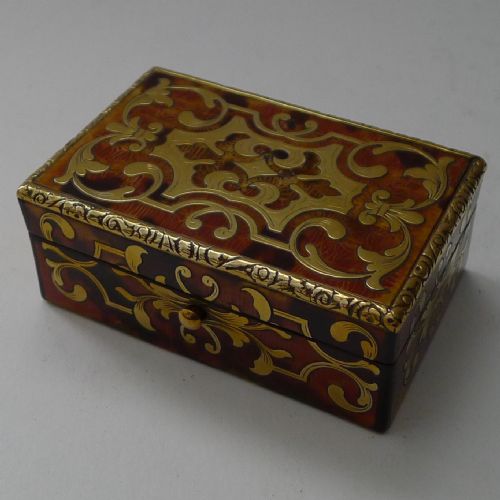
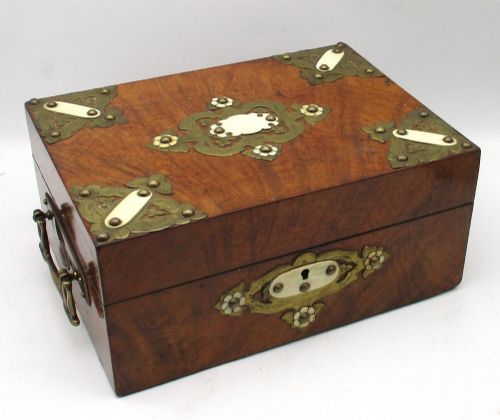
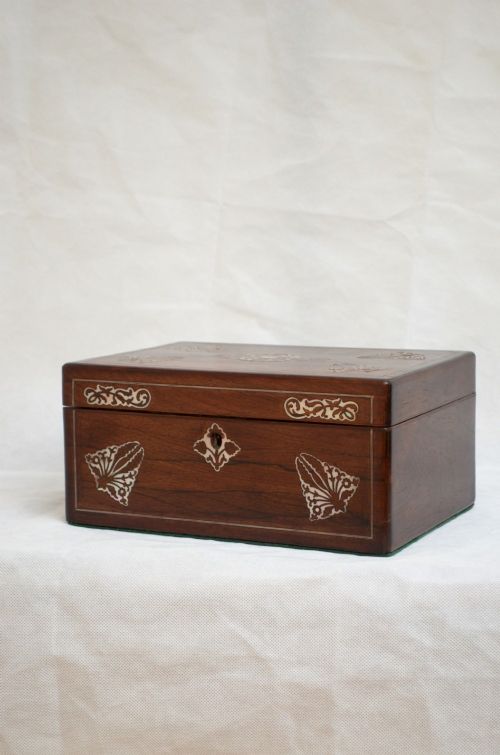
Craftsmen integrated contrasting materials into the timber surfaces, incorporating mother-of-pearl, brass, bone, tortoiseshell, and silver. Interiors typically featured fitted compartments lined in silk, velvet, or leather.
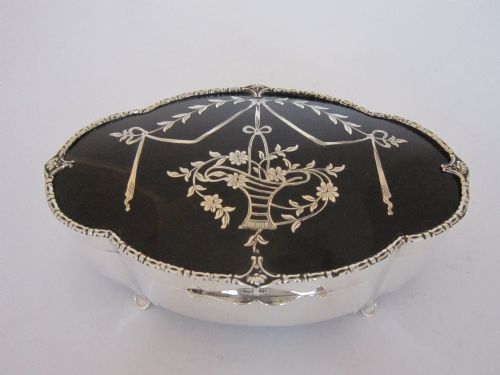
Listings feature items constructed from rosewood, walnut, tortoiseshell, and silver across the Victorian, Regency, and Georgian periods.
What varies in quality
The precision of the surface decoration dictates the standard of an inlaid jewellery casket, distinguishing simple geometric banding from intricate pictorial marquetry or micro-mosaic work. Tighter joints in the timber and well-fitted internal trays indicate superior workshop production.
The complexity of the internal fittings also separates standard boxes from finer examples. Fully integrated mirrors, secret drawers, and original velvet or silk linings elevate the status of a piece.
Tahan Paris·Edmund Nye·Erhard and Sohne
The Inlaid Jewellery Casket Glossary
- Marquetry
- The art of applying decorative pieces of veneer to a structure to form intricate pictorial designs. This technique utilises various coloured woods and natural materials.
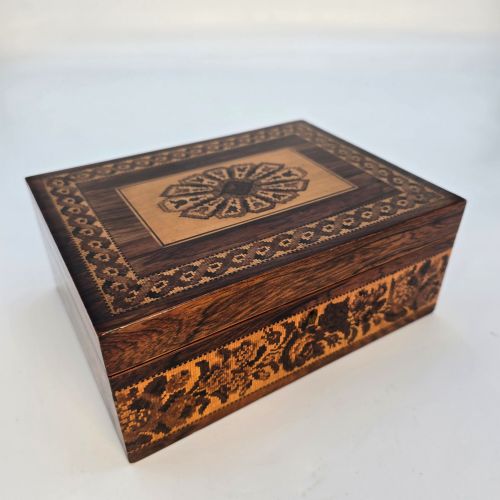
- Tunbridge Ware
- A specialised form of woodworking originating in England, characterised by tiny mosaic tiles assembled to create geometric or pictorial scenes. Artisans constructed these patterns from numerous species of naturally coloured wood.
- Pietra Dura
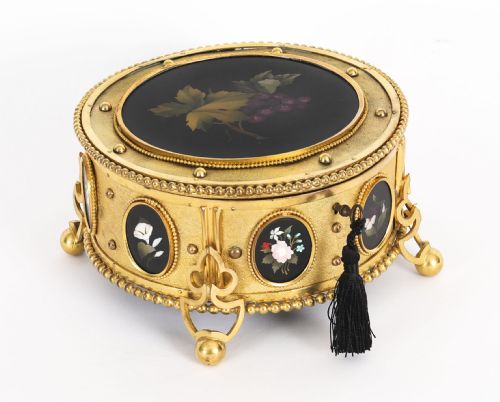
- An Italian method of inlaying cut and fitted polished coloured stones into a background base. This technique creates smooth, durable images of flowers or abstract motifs.
- Boulle work
- A style of marquetry using brass and tortoiseshell inlay, popularized in France. Craftsmen cut matching patterns from both materials simultaneously to produce contrasting decorative panels.
- Parquetry
- Geometric wood inlay forming regular patterns such as cubes, chequers, or stripes. This method creates decorative surfaces on box lids and panels.
Inlaid Jewellery Casket: Frequently Asked Questions
What is an inlaid jewellery casket?
An inlaid jewellery casket is a decorative storage box featuring surface ornamentation created by embedding contrasting materials like wood veneer, mother-of-pearl, or metal into a timber base.
These pieces served as functional accessories on dressing tables and desks during the Georgian, Regency, and Victorian periods to secure small valuables.
How do I date an antique box?
Dating involves examining the timber species, construction methods, and stylistic cues present in the inlay and hardware. Regency boxes often feature rosewood with brass banding, while mid-Victorian pieces frequently display walnut with marquetry.
Interior linings and paper remnants inside the compartments also offer clues regarding the decade of manufacture.
Were these boxes used only for jewellery?
While many served to store rings and brooches, these containers held various small personal items. Surviving examples functioned as document boxes, stamp boxes, sewing cases, or general keepsake containers.
Internal partitions and removable trays indicate the intended contents of each specific box.
How should I care for wooden caskets?
Maintain these pieces by keeping them away from direct sunlight and fluctuating humidity levels to protect the delicate wood veneers and adhesives. Gentle dusting with a dry cloth preserves the polished surface.
Avoid using modern liquid polishes, which can seep into the grain and damage older finishes.