


Floral Papier Mache Box
A floral papier mache box brings rich Victorian lacquer and hand-painted botanicals to a desk or dressing table.
Floral Papier Mache Box
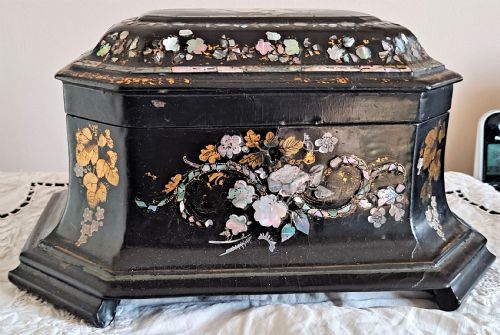
When you search for a floral papier mache box, you encounter nineteenth-century tea caddies, stationery boxes, and jewellery cabinets designed for Victorian homes. These items showcase the period's fascination with botanical motifs rendered in paint, lacquer, and shell inlay.
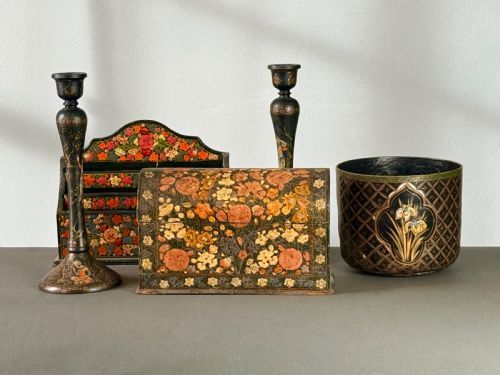
The versions most common on this page date from the Victorian era and the middle of the nineteenth century. They appear in forms ranging from dome-shaped snuff boxes to tea caddies and graduated Indian sets.
Makers shaped these functional containers from layers of paper pulp mixed with glue and resin, pressing them into moulds before baking and finishing them. They served practical storage needs while displaying intricate floral decoration on tables and desks.
How they were made
Artisans built these pieces using layers of paper pulp treated with binding agents, compressed and dried to create a rigid, durable body of papier-mache. This core received multiple coats of black or ebonised lacquer, polished to a smooth gloss.
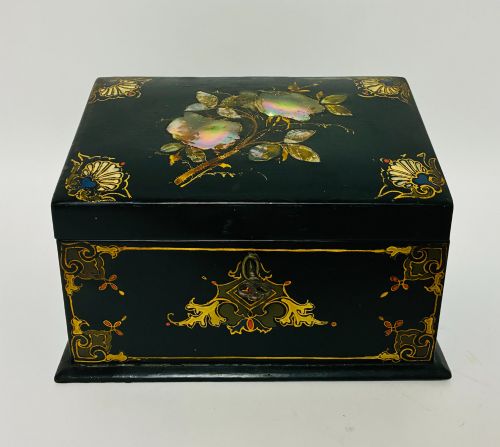
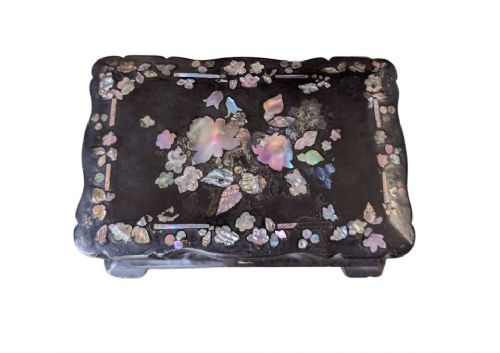
Workers applied hand-painted floral details often enhanced with gold leaf, alongside mother of pearl inlay to catch the light. Wood, brass, and paint completed the internal fittings and structural reinforcements of boxes and tea caddies.
Victorian ladies stored their secrets and tea leaves inside moulded paper pulp.
What varies in quality
The refinement of the hand-painted floral brushwork and the precision of the mother of pearl inlay separate standard containers from finer examples. Artisans who invested greater time in layering and polishing the lacquer achieved a deeper, more resilient surface sheen.
The structural integrity of the papier-mache core and the preservation of original painted surfaces determine the lasting character of each box. Pieces retaining their internal wooden linings, brass hardware, and intact lacquer finishes demonstrate superior original manufacture.
The Floral Papier Mache Box Glossary
- Papier-mache
- A composite material made from paper pulp or layers of paper mixed with glue, oil, or resin, moulded and dried to form a hard substance. It provides a lightweight yet sturdy base for decorative lacquering.
- Mother of Pearl
- The iridescent internal layer of mollusc shells, cut into thin pieces and embedded into the lacquer surface. Craftsmen used these gleaming fragments to highlight flower petals and botanical stems.
- Lacquer
- A durable varnish applied in multiple coats to wood or papier-mache and polished to a smooth finish. It protects the painted decoration underneath while creating a deep, reflective surface.
- Tea Caddy
- A container designed specifically to store dry tea leaves securely away from moisture and air. Victorian examples often featured internal lidded compartments and rich surface ornamentation.
- Chinoiserie
- A European decorative style reflecting Chinese artistic influences, frequently featuring painted landscapes, figures, and floral arrangements. It appears on nineteenth-century lacquered wares and boxes.
Floral Papier Mache Box: Frequently Asked Questions
What were floral papier mache boxes used for?
Victorians used these containers to store precious items such as jewellery, letters, tea, and snuff on tables and desks.
Their decorative exteriors allowed them to sit openly in reception rooms as ornaments while fulfilling practical household storage roles.
How do I date a Victorian papier mache box?
Dating relies on examining the materials, construction methods, and stylistic cues such as mother of pearl inlay and floral painting techniques.
Nineteenth-century examples typically show specific lacquer formulations and hardware styles characteristic of the period between eighteen-fifty and eighteen-eighty.
How do I care for antique lacquerware?
Keep these pieces away from direct sunlight and high humidity to prevent the lacquer finish and painted floral details from degrading.
Dust gently with a dry, soft cloth and avoid using liquid cleaners, waxes, or chemical polishes on the fragile surface.
What is the difference between English and Kashmiri boxes?
English nineteenth-century boxes often feature ebonised papier-mache with precise mother of pearl floral inlay and formal lacquering.
Kashmiri boxes from the same period showcase distinct painted patterns across graduated sets of round containers.