


Vintage Papier Mache Box
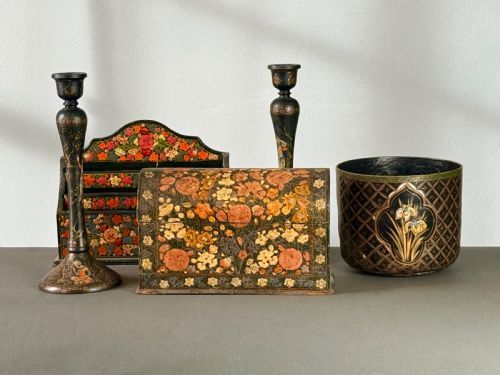
These vintage papier mache box examples bring together hand-painted lacquer, mother-of-pearl inlay, and centuries of decorative craft from Britain, Russia, and Kashmir.
Vintage Papier Mache Box
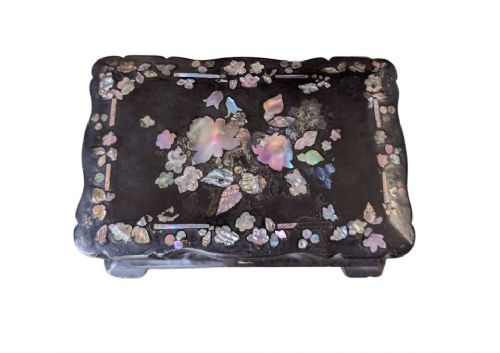
A vintage papier mache box search opens up a varied selection of nineteenth-century and early twentieth-century lidded containers, tea caddies, stationery boxes, and cigarette cases. You will frequently meet Victorian pieces featuring mother-of-pearl inlay alongside Russian folk art and Kashmiri craftwork.
Makers utilised moulded paper pulp reinforced with binders and finished with durable layers of dark lacquer to create sturdy desk accessories and decorative boxes. These vessels served practical domestic functions, from holding correspondence and loose tea to safeguarding jewellery and tobacco.
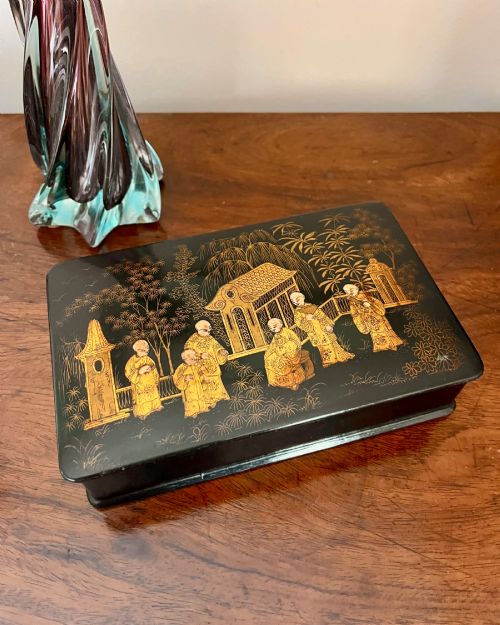
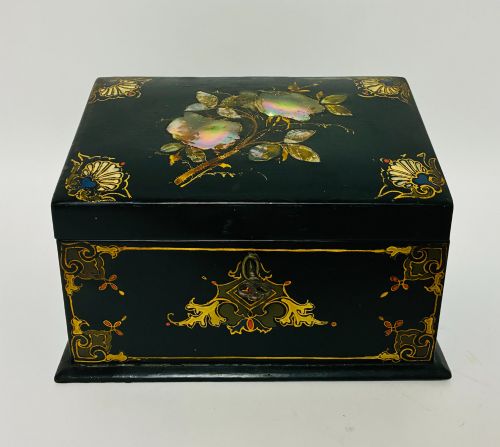
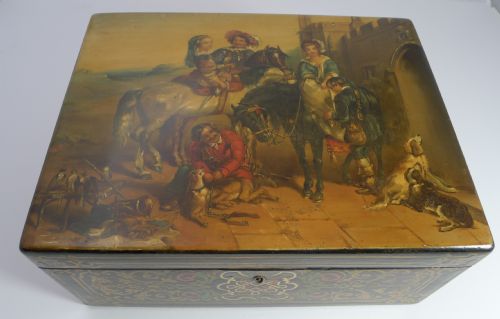
The objects range from dome-shaped snuff boxes to graduated sets of round painted boxes and intricate jewellery caskets bearing portraits or orientalist scenes. Their surfaces often combine oil paint, gold leaf, and polished shell to achieve rich textural contrast.
How they were made
Craftsmen built the core structures using layers of paper pulp or bonded sheets pressed into moulds, which dried into a dense, durable material capable of holding crisp architectural and curved forms. This foundation received multiple applications of dark lacquer, sanded and polished between coats to create a smooth, glossy ground.
Makers applied ornamentation using hand-painted oil colours, applied gold leaf, and inlaid fragments of shimmering mother of pearl. Brass elements sometimes reinforced hinges and closures on functional pieces like stationery boxes and tea caddies.
Some nineteenth-century makers cleverly hid chessboards inside backgammon interiors, proving Victorian desk boxes loved a dual-purpose game.
What varies in quality
The refinement of the hand-painted detail and the precision of the mother-of-pearl inlay distinguish finer examples from simpler utilitarian objects. Workshops known for signed miniature portraits or intricate Chinoiserie landscapes achieved greater depth and compositional control across their lacquer surfaces.
The integrity of the underlying papier-mâché structure and the condition of the original lacquer finish heavily influence the overall character of a piece. Well-preserved surfaces retain their deep sheen without extensive craquelure or losses to the gold leaf and decorative pigments.
Vishnyakov Workshop·Jennens & Bettridge
The Vintage Papier Mache Box Glossary
- Papier-mâché
- A composite material made from paper pulp or reinforced paper layers mixed with glue or resin, moulded into shape and dried. It forms a remarkably tough base for decorative lacquer and paint.
- Mother of pearl
- The iridescent inner layer of mollusc shells, cut into thin pieces and inlaid into lacquer surfaces. It catches the light with shifting tones of pink, green, and silver.
- Chinoiserie
- European artistic style reflecting Chinese motifs and decorative schemes, popular in nineteenth-century lacquerwork. It typically depicts figures, pagodas, and landscapes in gold and colour.
- Lacquer
- A durable protective coating derived from resin or varnish, applied in successive layers to wooden or papier-mâché objects. It is polished to a hard, glossy finish.
- Toleware
- Metalware finished with lacquer and hand-painted decoration, often grouped alongside papier-mâché items in period interiors. It shares similar decorative techniques and colour palettes.
Vintage Papier Mache Box: Frequently Asked Questions
Are these boxes waterproof?
Although the lacquer finish provides a degree of moisture resistance, these pieces are not waterproof containers. Storing damp items inside will damage the paper core and interior linings over time.
Use them for dry storage such as letters, trinkets, jewellery, and dry tea leaves rather than liquids or fresh botanicals.
How can I tell Victorian from Russian pieces?
Victorian examples frequently display mother-of-pearl inlay, ebonised surfaces, and gilt Chinoiserie motifs reflecting British taste of the mid-nineteenth century. They often served as stationery boxes, sewing tables, or tea caddies.
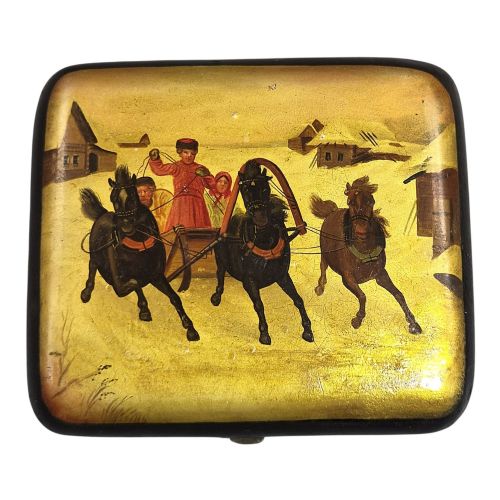
Russian pieces from workshops like Vishnyakov typically feature hand-painted portrait miniatures, troika scenes, or folk art motifs executed on lacquered cigarette cases and lidded boxes, sometimes bearing Cyrillic signatures.
What was a tea caddy used for?
Tea caddies stored precious loose tea leaves securely under lock and key in nineteenth-century drawing rooms. Because tea was an expensive commodity, these lidded containers often featured internal compartments and fitted lids.
The papier-mâché and lacquer construction helped protect the dry leaves from light and ambient household moisture.