


Gilt Painted Jewellery Box
These gilt painted jewellery box examples span the nineteenth century and earlier, offering decorative storage for trinkets and keepsakes.
Gilt Painted Jewellery Box
A gilt painted jewellery box serves as a decorative repository for personal trinkets, rings, and keepsakes. The selections gathered here encompass French, Italian, English, and Japanese origins spanning from the eighteenth century through the Victorian era.
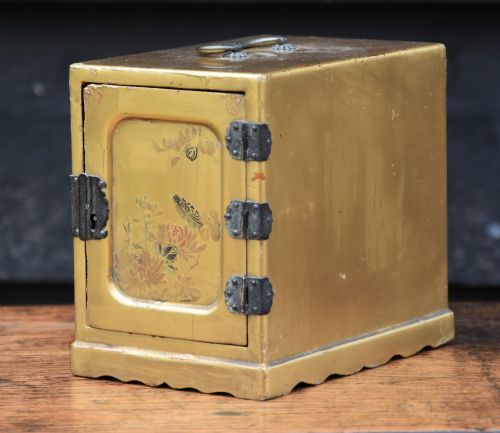
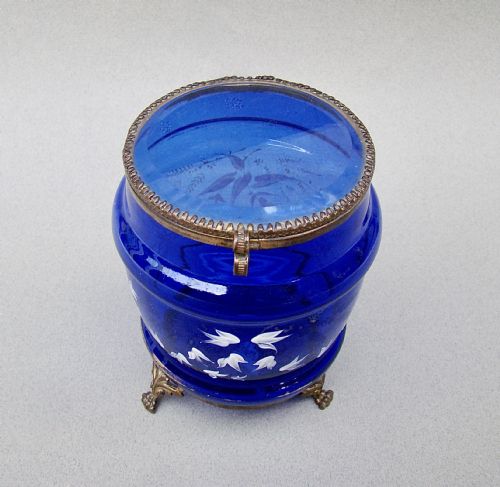
The physical forms include traditional jewellery caskets, small table cabinets, round trinket boxes, and lacquer kodansu containers. Most pieces belong to the nineteenth century, reflecting revivalist tastes and skilled hand-painted ornamentation.
How they were made
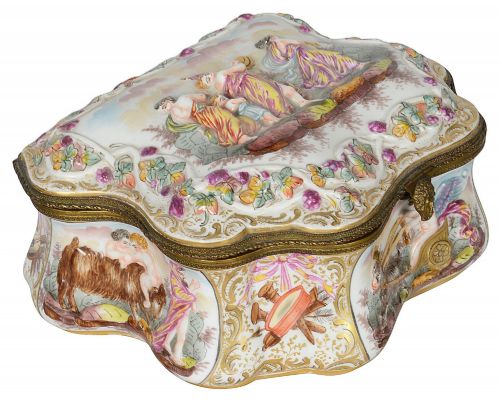
Many items combine porcelain bodies with cast or chased ormolu mounts, utilising Sevres, Meissen, or Capodimonte ceramics enriched with hand-painted details. Gilding techniques employ gold leaf and gilt bronze to highlight decorative motifs across the surfaces.
Alternative constructions utilise wooden foundations finished with black lacquer, papier-mache, or penwork decoration. Japanese Meiji period examples display traditional lacquerwork methods paired with metallic paint applications.
Several boxes disguise themselves as miniature architectural cabinets, waiting for someone to misplace a ring inside a tiny drawer.
What varies in quality
Quality differences emerge in the precision of the hand-painted brushwork on porcelain panels and the crispness of the cast ormolu mounts. Finer examples display meticulous detailing in figural or floral scenes alongside substantial metalwork.
The integrity of the underlying materials also separates tiers of production, such as the depth of the lacquer finish on Asian and European pieces or the quality of the timber beneath penwork cabinets.
The Gilt Painted Jewellery Box Glossary
- Ormolu
- Gilded bronze mounts applied to furniture, porcelain, and decorative boxes. This technique was widely utilised by French makers during the nineteenth century.
- Sevres
- Hard-paste porcelain produced by the royal French manufactory. Pieces often feature cobalt blue grounds and elaborate gilt detailing.
- Kodansu
- A small Japanese cabinet featuring multiple internal drawers for valuables. These items typically display traditional lacquer finishes and gilt decoration.
- Papier-mache
- A composite material made from paper pulp reinforced with glue or resin. It was moulded into boxes and painted or lacquered during the Victorian period.
- Capodimonte
- Italian porcelain characterised by sculptural relief work and hand-painted polychrome surfaces. It frequently appears on nineteenth century table caskets.
Gilt Painted Jewellery Box: Frequently Asked Questions
What are these boxes used for?
These containers were originally intended for holding personal valuables, rings, and small keepsakes upon a dressing table or in a parlour.
Today, collectors utilise them in domestic settings both as decorative objects and for storing modern jewellery.
How do I identify a nineteenth century piece?
Nineteenth century examples often display specific revival styles such as French Rococo, Neoclassical, or Viennese historicism. Material combinations like porcelain with ormolu mounts are also characteristic of this period.
Examining the construction methods, hinges, and interior linings provides further context regarding the date of manufacture.
Are Japanese lacquer boxes common?
Japanese lacquer boxes appear in nineteenth century inventories alongside European porcelain and wood items. These pieces reflect the Meiji period craftsmanship imported to Western markets.
They are distinguished by their specific lacquer techniques and gilt pictorial designs.
How do I care for a painted box?
Painted and gilded surfaces require gentle handling to protect fragile pigments and gold leaf. Dusting with a soft, dry cloth is recommended.
Keeping the items away from direct sunlight and excessive moisture helps preserve the lacquer, porcelain, and metal mounts.