




Ebonised Trinket Box
An ebonised trinket box brings dark timber and disciplined craftsmanship to a dressing table.
Ebonised Trinket Box
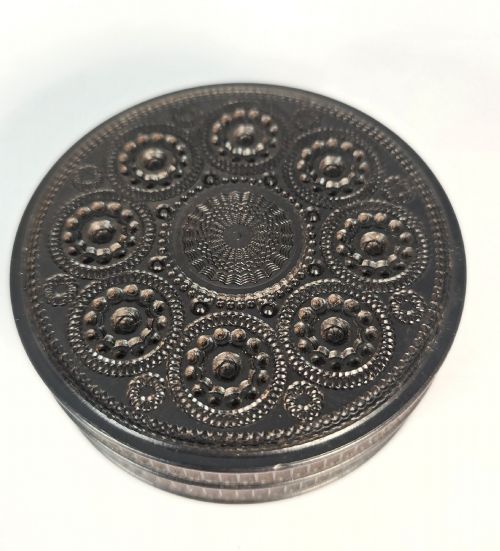
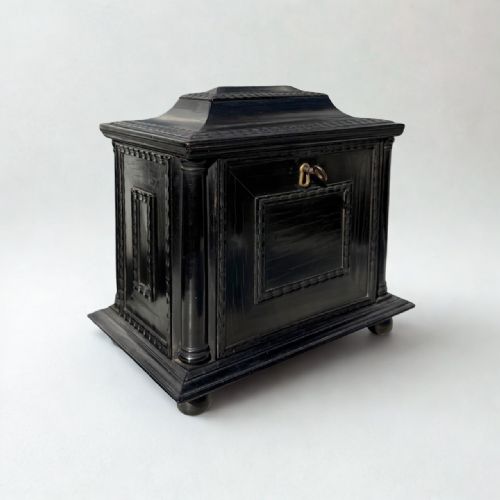
An ebonised trinket box is a small container surfaced in dark wood or treated timber, designed to hold personal valuables. The pieces on this page span the eighteenth, nineteenth, and early twentieth centuries, drawing on Regency, Victorian, and Edwardian styles.
Most examples rely on ebonised wood or solid ebony, often enriched with brass, mother of pearl, or fruitwood. Forms range from simple jewellery caskets and music boxes to specialised snuff and penwork boxes.
Origin points vary widely across these listings, taking in English workshops alongside Italian Grand Tour Sorrento marquetry, Flemish baroque designs, and French inlaid pieces. Buyers encounter everything from utilitarian desk boxes to elaborate table caskets.
How they were made
Cabinetmakers constructed these boxes using dense timbers like ebony, fruitwood, rosewood, and walnut, frequently applying an ebonising process to cheaper woods to imitate solid ebony. Surfaces were smoothed and polished to achieve a deep, light-absorbing black finish.
Decoration involved intricate techniques such as engine turning, penwork, parquetry, and marquetry. Many examples incorporate contrasting inlays of mother of pearl, brass, or exotic woods, while others feature pietra dura panels or porcupine quill work.
Periods represented span the eighteenth century, the Regency era, the Victorian period, and the early twentieth century up to the George V era.
What varies in quality
Quality rests primarily in the precision of the joinery and the complexity of the surface ornamentation. Finer boxes display meticulous hand-cut parquetry, precise engine turning, or tightly fitted stone and shell inlays rather than surface-printed decoration.
The choice of secondary woods and the integrity of the hinges, locks, and internal trays separate standard production items from masterwork caskets. Superior execution shows in the crispness of carved details and the stability of the box structure over centuries.
The Ebonised Trinket Box Glossary
- Ebonised wood
- Timber treated with stain or polish to resemble solid ebony. This process allowed makers to achieve a uniform black finish on fruitwood or other lighter bases.
- Marquetry
- The art of applying thin veneers of wood and other materials to form decorative patterns. Sorrento marquetry often depicts architectural or floral motifs.
- Pietra dura
- Inlay technique utilising cut and fitted polished-stone sections to create pictorial designs. Italian makers frequently mounted these panels onto wooden caskets.
- Engine turning
- Mechanical decoration applied to surfaces using a specialised lathe. It produces precise geometric patterns of engraved lines.
- Parquetry
- Geometric mosaic woodwork formed by small veneer blocks arranged in repeating patterns. It differs from marquetry through its strictly geometric layout.
Ebonised Trinket Box: Frequently Asked Questions
What is an ebonised trinket box used for?
These small containers served to store rings, brooches, letters, and small personal valuables. Their internal compartments kept delicate items organised and protected from dust.
Today they function as dressing table accessories or decorative objects on desk surfaces, continuing their traditional role of holding small treasures.
How do I date an ebonised trinket box?
Dating relies on identifying the underlying construction methods, hinge styles, and decorative motifs. Regency and Victorian examples often feature distinct lining materials and joinery.
Comparing the exterior embellishments, such as penwork or pietra dura mounts, against known period styles helps narrow the decade of manufacture.
What materials are used in these boxes?
Makers utilised dense hardwoods including solid ebony, walnut, fruitwood, and rosewood. Many pieces employ ebonised timber as a base for contrasting inlays.
Decorative accents frequently include brass wire, mother of pearl, porcupine quill, and inlaid stone panels depending on the origin.
Where were these boxes made?
The listings demonstrate a diverse geographic range including English, French, and Italian workshops. Grand Tour pieces specifically reflect items brought back by travellers from Sorrento.
Flemish and continental European makers also contributed distinct styles like parquetry table caskets and intricate marquetry designs.
Are musical movements original?
Music boxes from the Victorian era incorporate mechanical comb and cylinder movements to play short tunes upon opening. Assessing originality requires examining the fit of the movement within the wooden case.
Repairs and replacements were common over the lifespan of these nineteenth-century items, so internal components deserve close inspection.