



Vintage Painted Bedside Cabinets
Vintage painted bedside cabinets bring character to a bedroom, offering practical storage alongside distinctive hand-finished surfaces.
Vintage Painted Bedside Cabinets
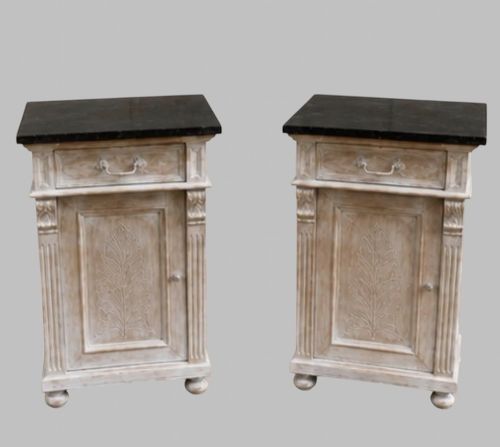
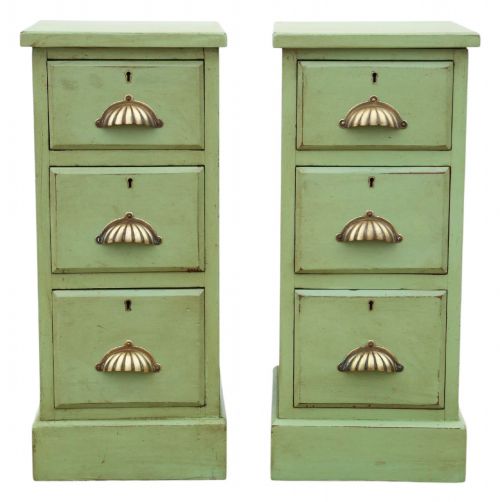
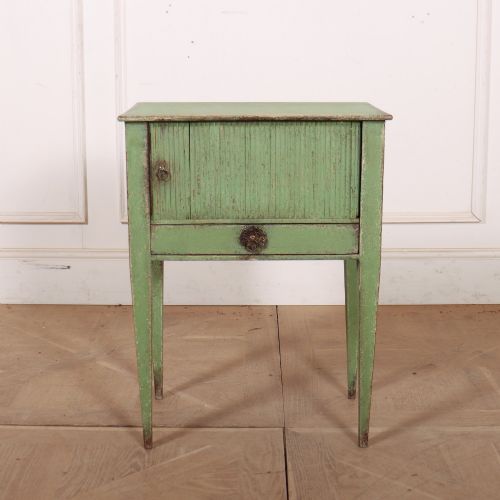
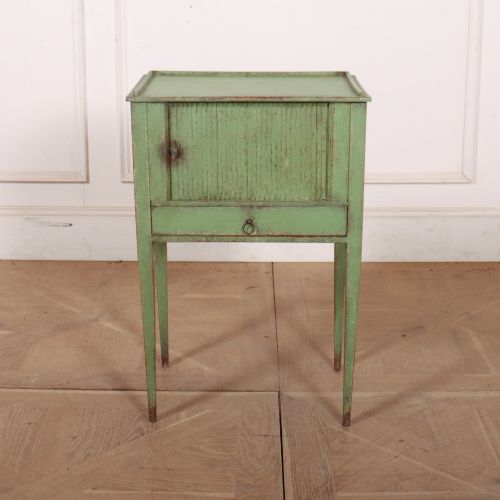
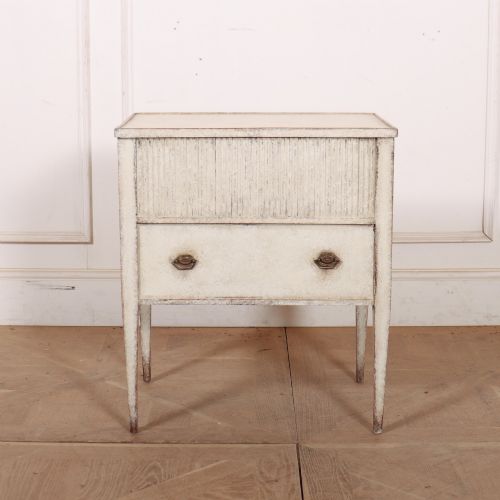
Vintage painted bedside cabinets appear in various forms, including bedside tables, chests of drawers, and pot cupboards, spanning the nineteenth century through the early twentieth century. Buyers seeking these pieces encounter items originating from English, French, Dutch, and Italian workshops, reflecting regional decorative traditions from Victorian and Edwardian periods onward.
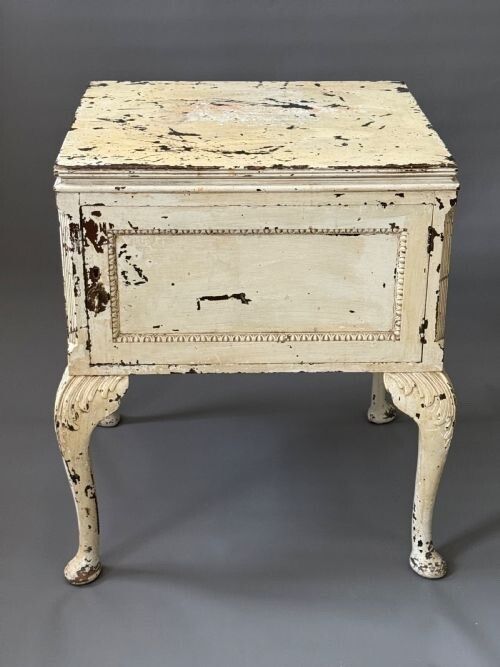
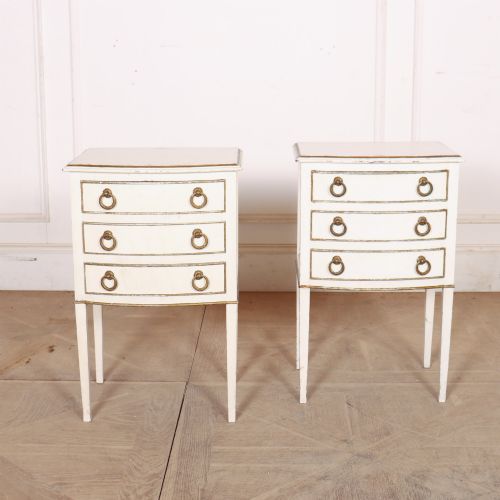
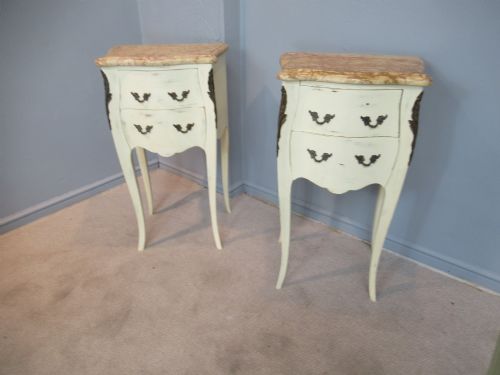
The selection frequently includes matched pairs, alongside single cabinets sharing characteristics such as carved details, columned corners, or cylindrical bodies. Common timber frameworks include pine, oak, satinwood, and mahogany beneath decorative surface treatments.
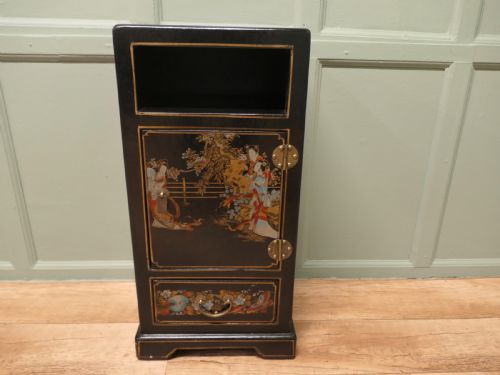
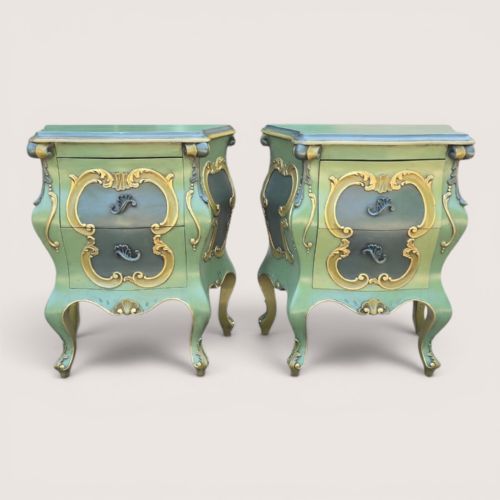
Makers utilised distinct regional styles ranging from French Chateau and Provincial designs to Chinoiserie lacquer work, Dutch provincial painting, and gilded Italian rococo motifs. These items function primarily beside a bed while introducing historic colour and surface texture to an interior.
Materials and construction methods
Makers constructed these cabinets using traditional timbers such as pine, oak, mahogany, and satinwood, frequently joining structural elements with dovetail joints on drawers and solid backboards. Surfaces received preparatory layers of primer or gesso before artisans applied oil-based paints, lacquers, or gilded finishes.
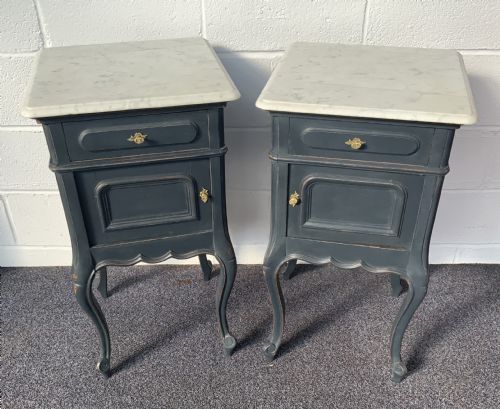
Certain pieces integrate contrasting materials, mounting marble tops onto wooden carcasses or incorporating brass hardware, ceramic handles, and hand-painted motifs. Decorative work relied on brush application, stencil techniques, or applied carved wooden ornamentation to achieve the desired regional style.
Listings feature items from the nineteenth century, Victorian era, Edwardian period, and the nineteen-twenties, constructed from pine, oak, mahogany, satinwood, and marble.
Evaluating quality and finish
Quality rests upon the integrity of the underlying carpentry and the originality of the painted surface, where hand-mixed pigments and layered brushwork display superior depth compared to flat, uniform modern coatings. Cabinets retaining original decorative schemes, whether floral details, Chinoiserie lacquer, or aged monochrome paint, hold greater historical coherence.
The refinement of carved mouldings, the smooth operation of drawers and cupboard doors, and the retention of original brass or ceramic hardware separate standard utility pieces from finely finished regional examples.
The Vintage Painted Bedside Cabinets Glossary
- Pot cupboard
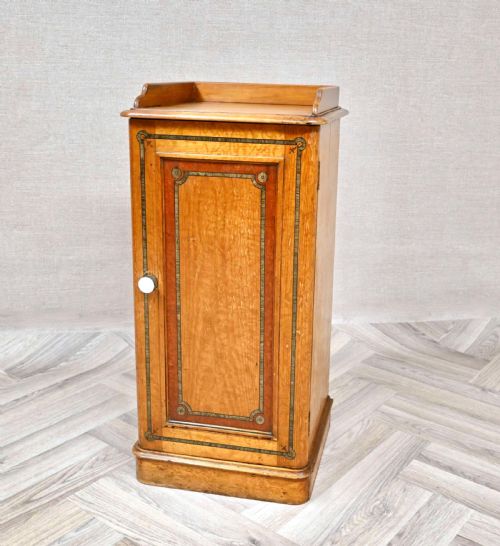
- A small bedside cabinet originally designed to enclose a chamber pot behind a single door. These compact units frequently feature a marble top or a galleried surface.
- Chinoiserie
- European decorative style imitating Chinese artistic traditions, often utilising lacquered surfaces and hand-painted gilt motifs. This technique appears on cabinets dating from the late nineteenth and early twentieth centuries.
- Commode
- A low French chest of drawers or cabinet. These items often sit beside a bed as decorative storage.
- Satinwood
- A durable hardwood with a lustrous, yellow-brown appearance used extensively for fine cabinetry during the Edwardian period. Artisans valued it for smooth surfaces and pale colouration.
- Demi-lune
- A half-moon shape utilised for furniture designed to stand flush against a wall. Cabinets in this form provide curved storage surfaces.
Vintage Painted Bedside Cabinets: Frequently Asked Questions
What periods do these cabinets date from?
The pieces span the nineteenth century through the early twentieth century, encompassing Victorian, Edwardian, and later periods.
Craftsmen produced various regional styles during these decades, drawing on French, Dutch, and English design traditions.
Are pairs common for bedside use?
Matched pairs appear frequently among the surviving pieces, originating from French provincial workshops and English cabinet makers alike.
Single cabinets also occur, offering alternative options for asymmetric bedroom layouts.
What timbers lie beneath the paint?
Carpenters utilised pine and oak for traditional painted bodies, alongside finer hardwoods like mahogany and satinwood for polished or partially painted surfaces.
Marble tops also feature on select pieces from the Victorian era.
How do I identify Chinoiserie cabinets?
Chinoiserie cabinets display characteristic lacquered finishes decorated with gilt motifs depicting figures, landscapes, or floral arrangements.
These pieces date predominantly from the late nineteenth century and the Edwardian period.
What is a pot cupboard?
A pot cupboard is a dedicated bedside enclosure designed to house a chamber pot behind a single door.
Many examples feature a marble top surface designed for easy cleaning.