
Vintage Oriental Table Light
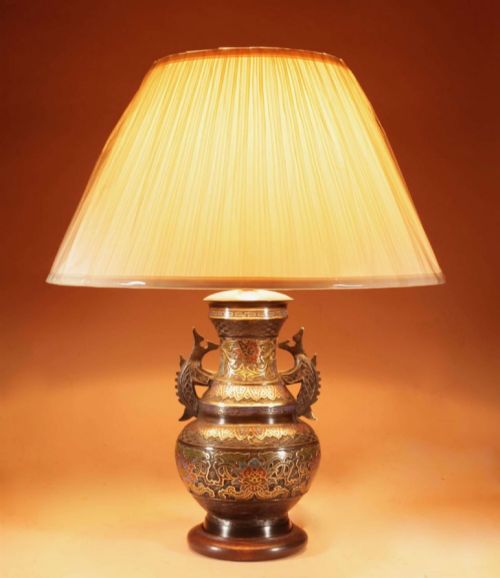
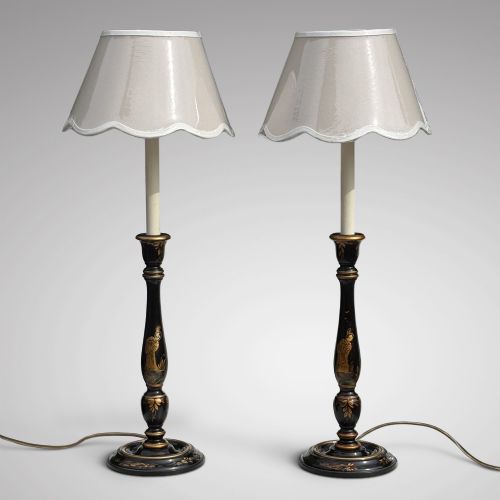
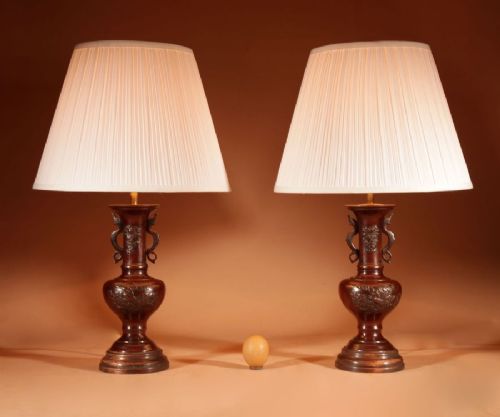
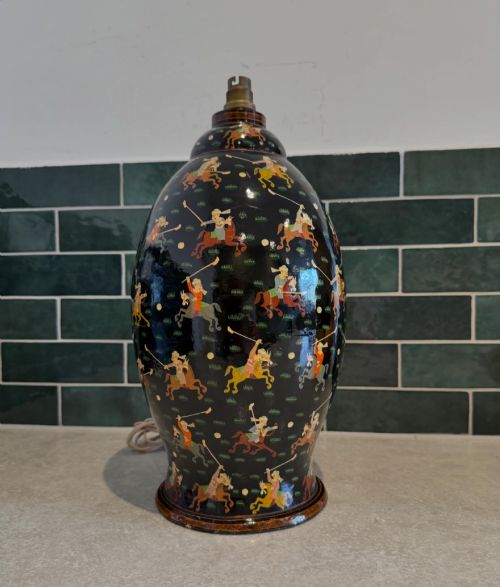
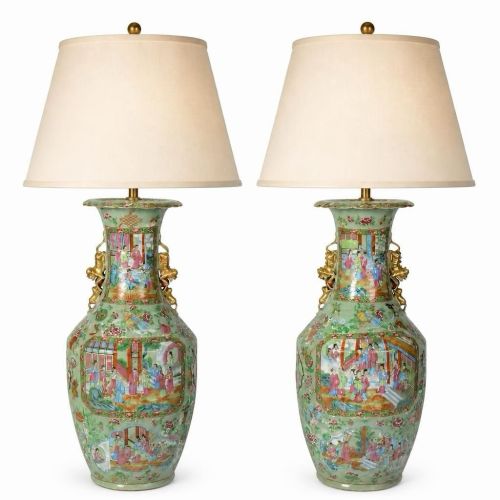
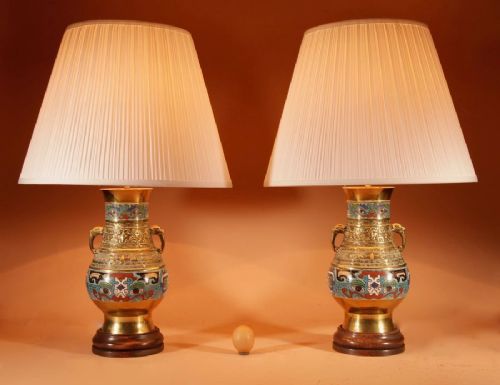
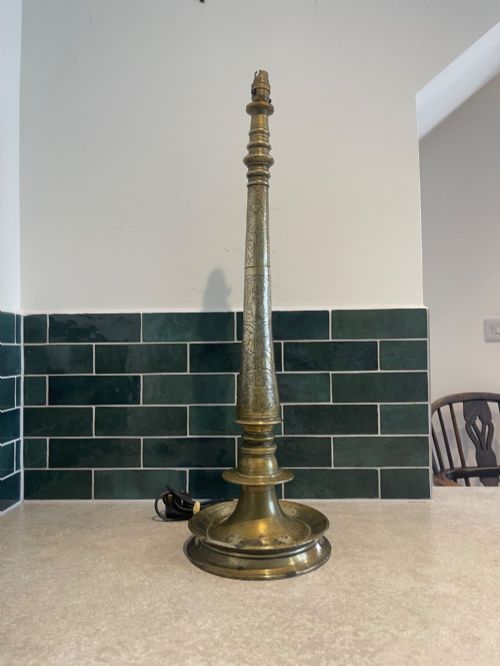
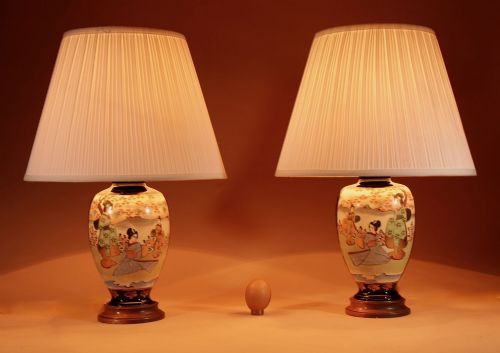
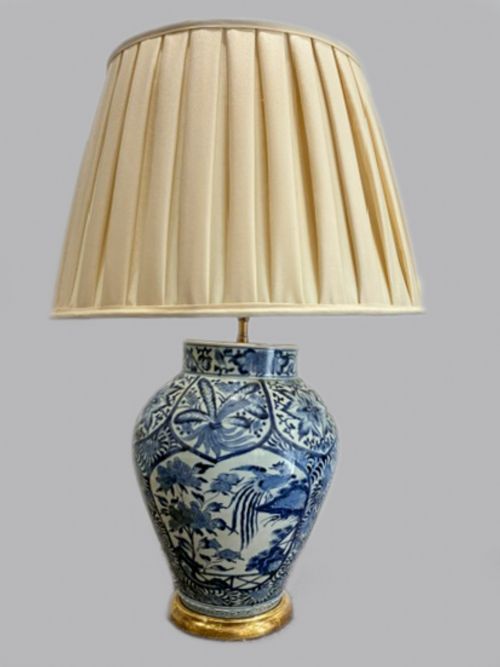
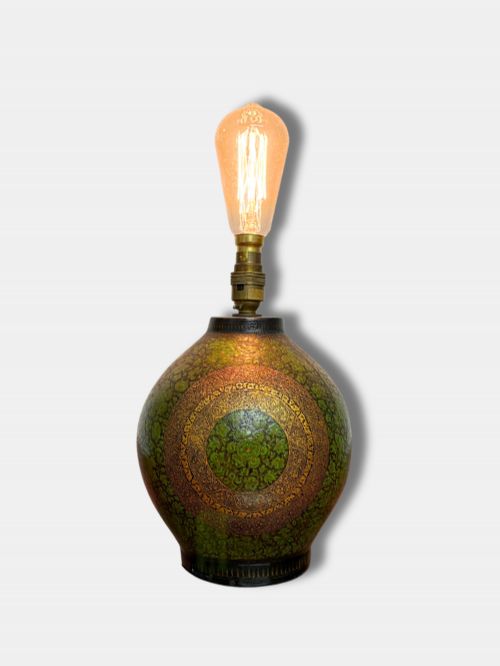
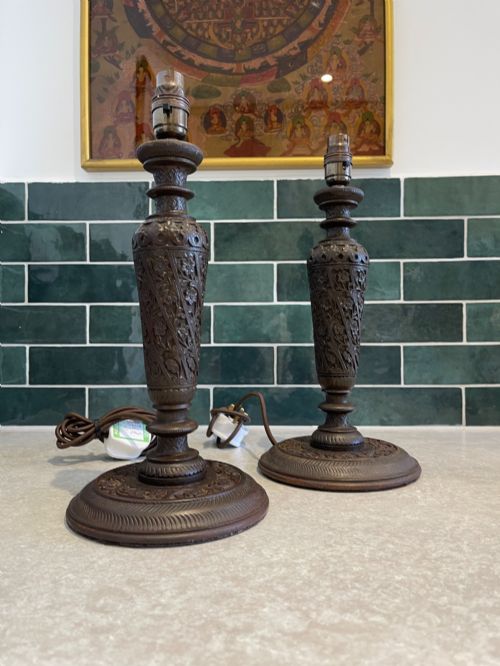
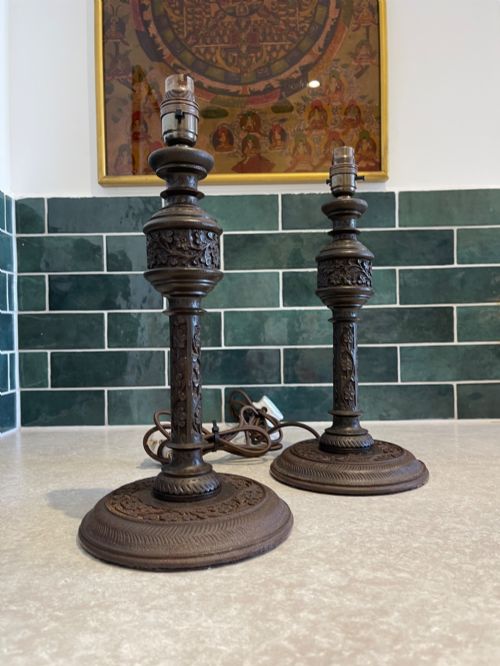
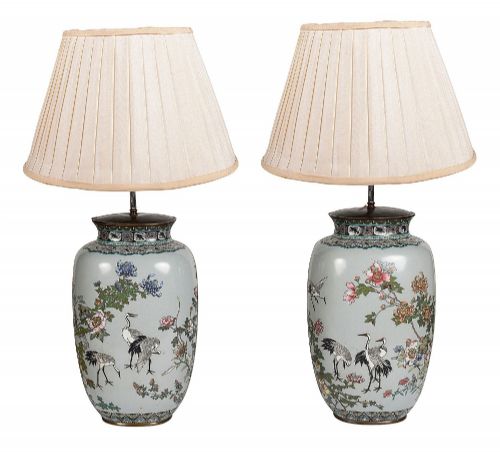
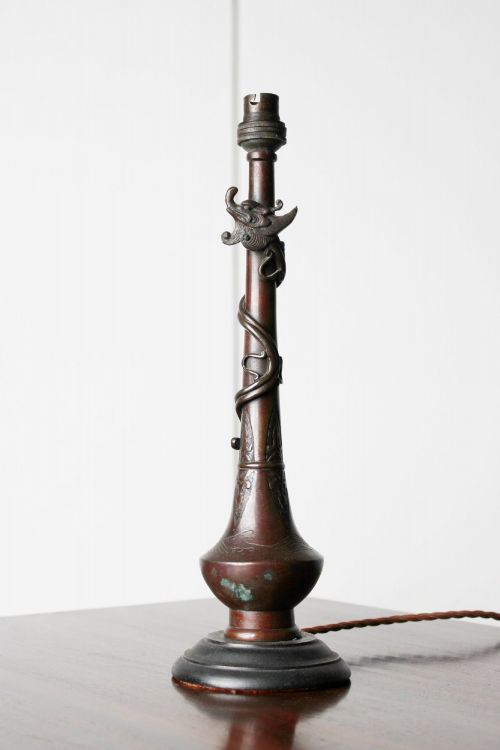
These vintage oriental table lights bring together export porcelain, champlevé bronze and hand-painted lacquer from periods spanning the seventeenth century to the 1930s.
Vintage Oriental Table Light
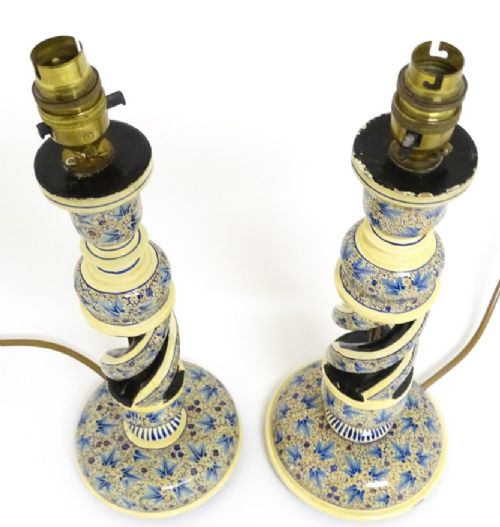
A vintage oriental table light transforms historic vessels, vases and carved wooden objects into functional domestic lighting. The selection on this page draws on nineteenth-century Satsuma wares, Japanese Meiji bronzes and twentieth-century Kashmiri papier-mâché alongside Chinese export porcelain.
Makers and converters often took vessels from earlier dynasties or reigns, such as the seventeenth century or the Qing period, and adapted them for European interiors. Pairs appear frequently alongside single tall lamps and smaller console companions.
The decorative vocabulary encompasses Chinoiserie lacquer, Anglo-Indian painting and Japanese cloisonné enamel. These pieces range from Edwardian brass mountings to Victorian tea canister conversions.
Materials and construction
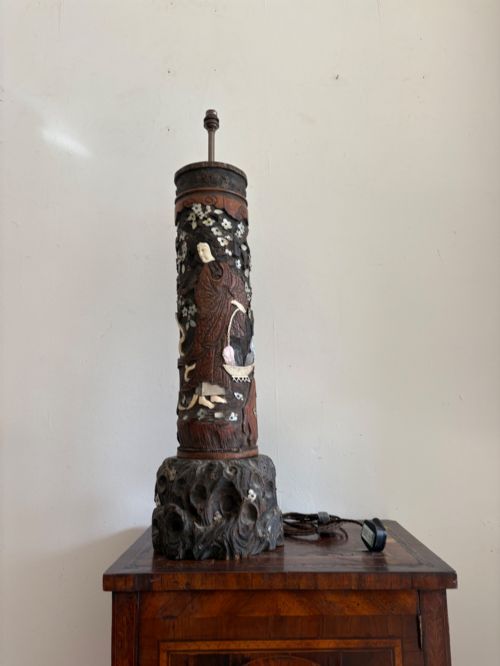
Metal components utilise cast brass, patinated white metal and heavy bronze, often decorated with champlevé or cloisonné enamel work. Artisans built structural bodies from carved hardwoods, root wood and papier-mâché.
Surfaces rely on hand-painted lacquer, gilt gold and delicate pigments applied to porcelain and earthenware. Many items incorporate converted vessels such as Rose Medallion vases, Blanc de Chine Shi lions and blue and white jars.
Fabric shades and fitted electrical adaptations complete the transformation from vessel to lamp, maintaining the integrity of the original antique body.
Listings incorporate items from the seventeenth century through to the Edwardian period, utilising brass, porcelain, lacquer and bronze.
Distinctions in quality
Quality rests in the fidelity of the original object and the sympathy of its conversion into a lamp. Early Meiji bronzes and seventeenth-century vases demonstrate superior hand-finishing compared to later mass-produced alternatives.
The precision of hand-painting on Satsuma ceramics and Kashmiri papier-mâché dictates the visual depth of the piece. Crisp enamel work and intact gilding separate fine examples from heavily worn specimens.
The Vintage Oriental Table Light Glossary
- Champlevé
- Enamelling technique where cells are carved into a metal surface to hold coloured glass paste before firing. This method creates robust patterns on nineteenth-century Japanese bronze bodies.
- Cloisonné
- Decorative work where metal wire forms compartments on a vase surface to contain enamel pastes. The technique produces intricate floral and geometric motifs.
- Satsuma
- Japanese earthenware originating from the Satsuma province, characterised by a crackled ivory glaze decorated with polychrome enamels and gold. These ceramics frequently form the base of period table lamps.
- Chinoiserie
- European artistic style reflecting Chinese aesthetic traditions, prominent in lacquerwork and furniture during the Victorian and Edwardian eras. It employs dark grounds highlighted with gold and mandarin orange tones.
- Meiji Period
- Japanese historical era spanning from 1868 to 1912, noted for detailed metalwork, bronzes and export porcelain destined for Western markets.
Vintage Oriental Table Light: Frequently Asked Questions
What is a vintage oriental table light?
A vintage oriental table light is a decorative lamp created by converting an antique Asian vessel, such as a bronze vase, a ceramic jar or a lacquer canister.
These pieces combine historical craftsmanship from periods like the Meiji era or Qing dynasty with electrical fittings for modern interiors.
How do I identify the period of a lamp?
Dating relies on examining the material of the base vessel, whether it is seventeenth-century porcelain, nineteenth-century bronze or twentieth-century papier-mâché.
Stylistic markers such as Edwardian brass mounts or Meiji period cloisonné enamel provide further chronological context.
Are these lamps sold as pairs?
Many listings feature matched pairs of lamps, particularly those created from Satsuma vases, Kashmiri papier-mâché or cloisonné enamel.
Single lamps also appear, often derived from larger console pieces, tea canisters or carved root wood stands.
How should I live with these lamps?
These lamps function as focal points on side tables, desks and console units, offering ambient illumination while displaying historic decorative art.
Placing them away from direct sunlight protects hand-painted lacquer and delicate enamel surfaces.