

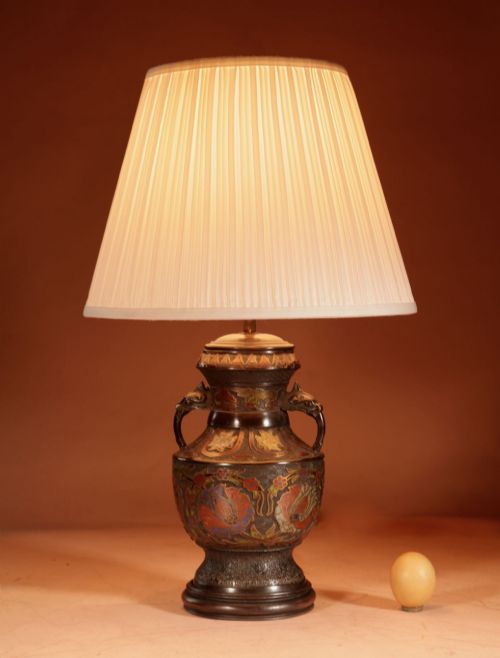
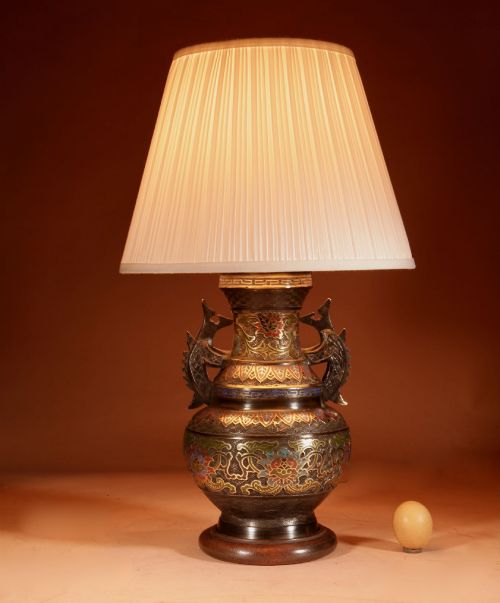
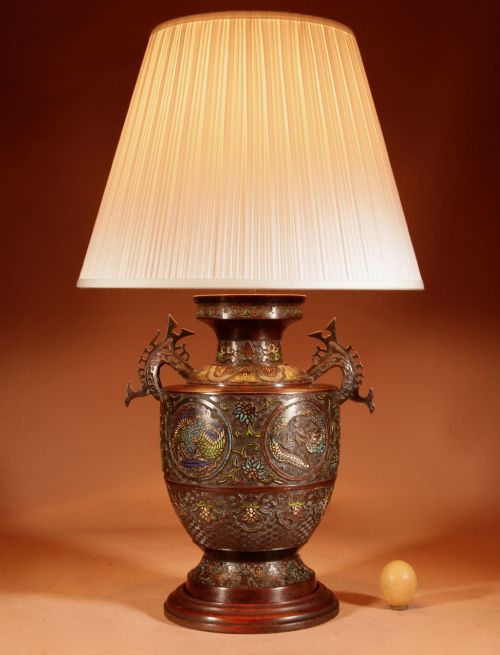
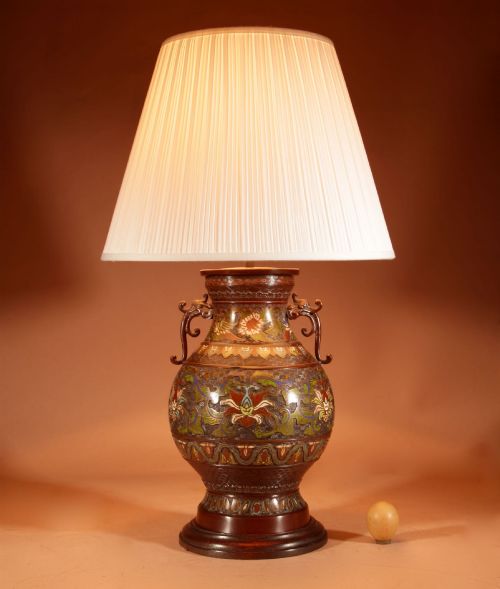




Japanese Bronze Urn Lamp
These japanese bronze urn lamp pieces combine Meiji period craftsmanship with later electrical conversion, offering striking decorative presence for any room.
Japanese Bronze Urn Lamp
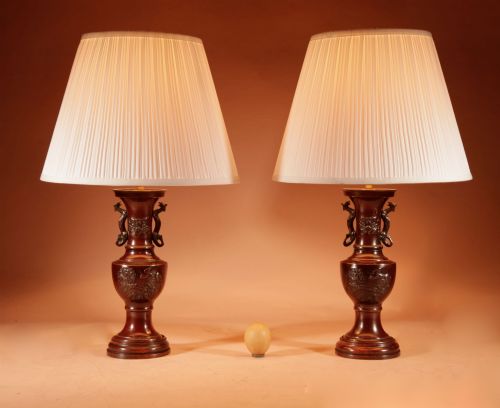
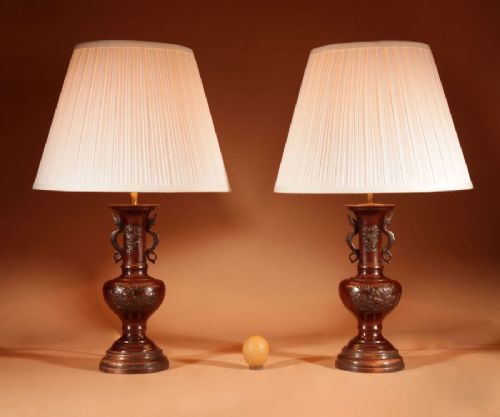
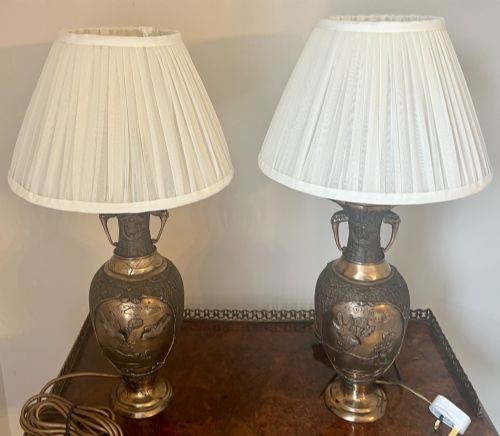
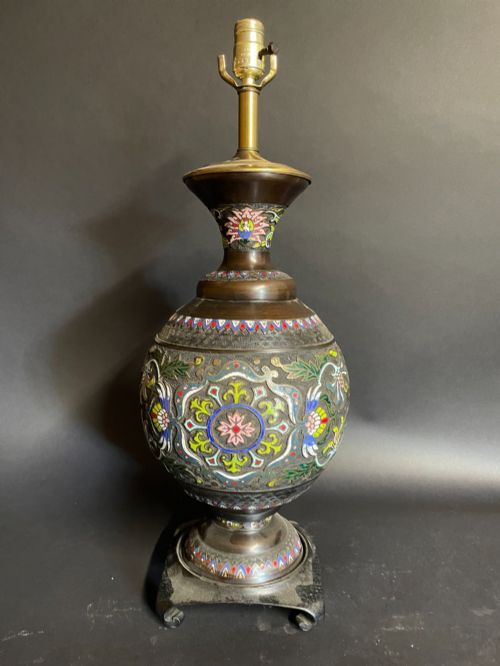
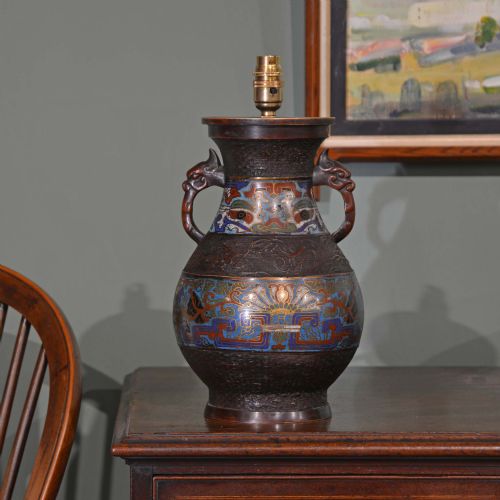
When you search for a japanese bronze urn lamp, you find table lamps created from heavy metal vessels originating in the Far East. These pieces frequently date from the nineteenth century, including the Meiji period and Victorian eras, often repurposed later for domestic illumination.
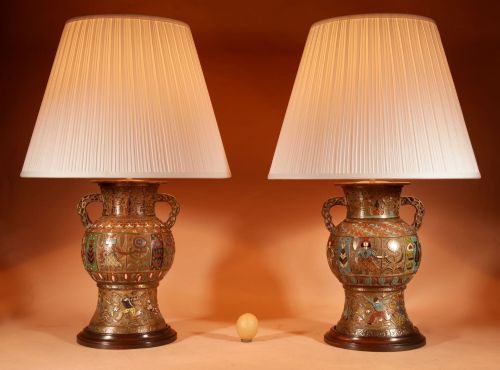
The selections available here range from single table lights to large pairs featuring champlevé enamel or gilt mounts. Many items started life as decorative vases before receiving electrical fittings to serve as functional table lamps.
Origins span Japanese workshops from the late nineteenth and early twentieth centuries, sometimes paired with fabric shades. The primary form is the urn or baluster shape, rendered in patinated metal and occasionally set upon wooden bases.
How they were made
Makers utilised cast bronze as the primary structural body, often incorporating champlevé or cloisonne enamel decoration into the surface design. Gilt bronze and gilt metal mounts frequently secure the upper and lower sections of the urns.
Surface finishing involved meticulous patination of the bronze alongside recessed enamel work containing coloured vitreous pastes. Artisans combined metalworking traditions with applied wooden components to stabilise the heavy vessels for tabletop use.
Japanese Bronze Urn Lamp Retail Price Guide 2026
Typical asking prices for japanese bronze urn lamp among the pieces listed under this phrase on Sellingantiques today, from the lower quarter to the upper quarter. They describe what is for sale here now, not the wider market.
Listings span the nineteenth century, 1900, 1910, and 1920, incorporating materials such as bronze, enamel, brass, wood, and porcelain.
What varies in quality
The standard of the metal casting and the precision of the enamel work dictate the visual weight of each lamp. Pieces featuring intricate champlevé details and crisp original gilding sit comfortably above simpler, plain cast bronze examples.
Proportion and scale also separate standard items from grander pairs, particularly where large gilt bronze mounts or rose medallion porcelain elements are integrated. The integration of the electrical conversion relative to the antique body shows the care taken by restorers.
The Japanese Bronze Urn Lamp Glossary
- Champlevé
- An enamel technique where recessed cells are gouged into the bronze surface and filled with vitreous enamel before firing. This method creates bold coloured patterns across the body of the urn.
- Meiji Period
- The era in Japanese history spanning from 1868 to 1912, noted in these listings for producing highly decorative metalwork and vases later converted to lighting. Pieces from this time often bear distinct patination.
- Gilt Bronze
- Bronze metal coated with a thin layer of gold, providing a bright metallic contrast to the darker patinated body of the lamp. It is frequently seen on mounts and bases.
- Cloisonne
- A decorative enamel method using thin metal wires soldered to the bronze base to create compartments for coloured paste. It produces intricate patterns across the surface of the vessel.
Japanese Bronze Urn Lamp: Frequently Asked Questions
What is a japanese bronze urn lamp?
These items are traditional metal vessels, often originating in nineteenth century Japan, that have been converted into functional table lamps.
They bring distinct patination and decorative enamel work into modern interiors as statement lighting.
How do I date a japanese bronze urn lamp?
Dating relies on stylistic markers from the Meiji period, Victorian era, and early twentieth century manufacturing techniques.
Examination of the bronze patination and enamel style helps place the vessel in its historical context.
Were these lamps made for electricity originally?
Most of these pieces started life as decorative vases or urns during the nineteenth century before receiving later electrical conversions.
Wiring and lamp holders were added to repurpose the heavy bronze vessels for household illumination.
How do I style a japanese bronze urn lamp?
The substantial weight and rich patination make these lamps suited for placement on large sideboards or desks as focal points.
Pairing them with appropriate fabric shades complements the intricate champlevé or cloisonne detailing on the body.