

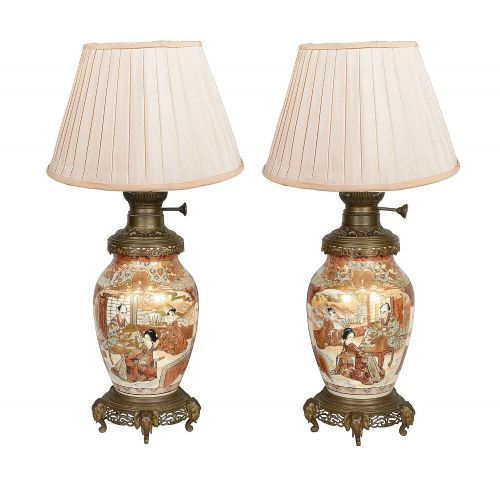


Meiji Bronze Table Lamp
A meiji bronze table lamp brings heavy cast metal, intricate surface enrichment and distinct Japanese artistry directly into a room.
Meiji Bronze Table Lamp
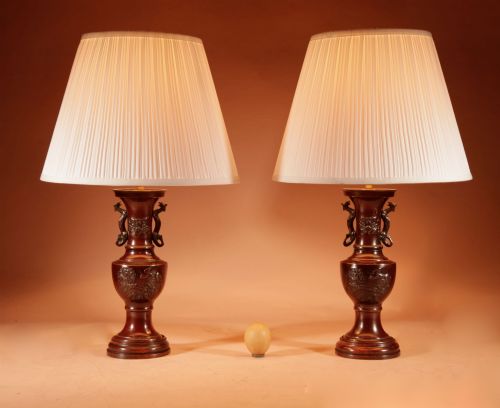
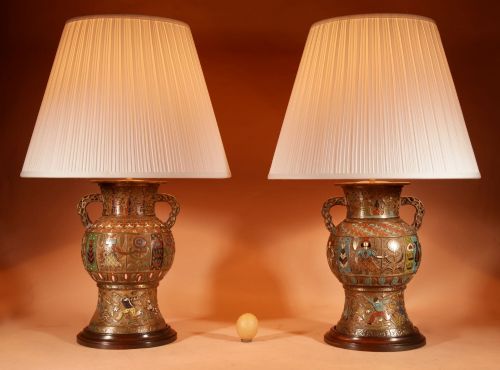
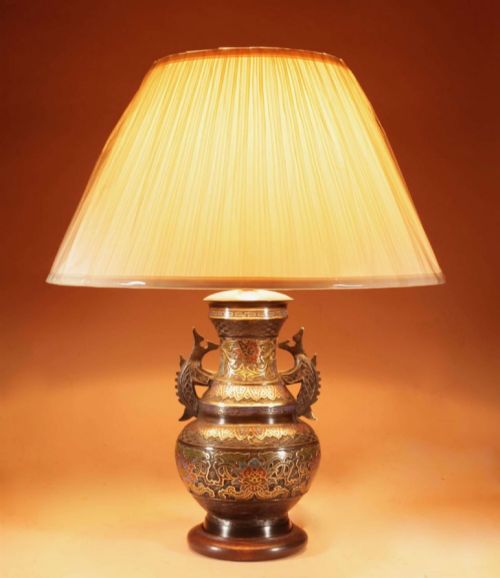
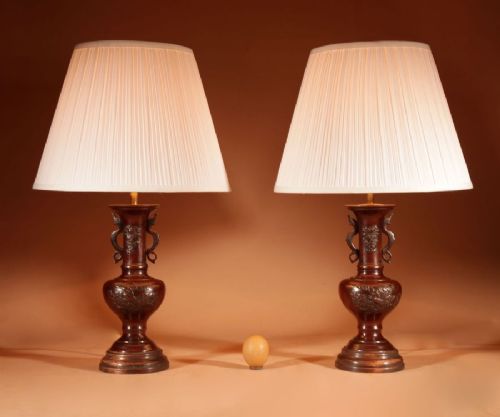
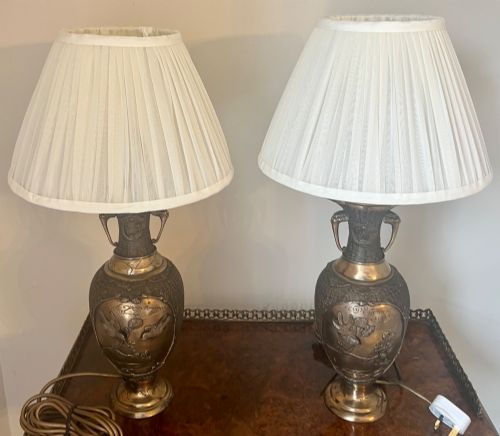
A meiji bronze table lamp generally takes the form of a cast bronze vessel, a lantern or an adapted vase originating from the Meiji period or associated with Japanese design aesthetics. These pieces often arrive as pairs or substantial single lights, sometimes incorporating other elements such as champlevé enamel or cloisonné.
The objects frequently bridge traditional Japanese metalwork and Western domestic lighting needs from the nineteenth and early twentieth centuries. Surviving examples demonstrate how Satsuma ceramic elements, earthenware, fabric shades and silk components were incorporated into table lights during the Victorian and Edwardian eras.
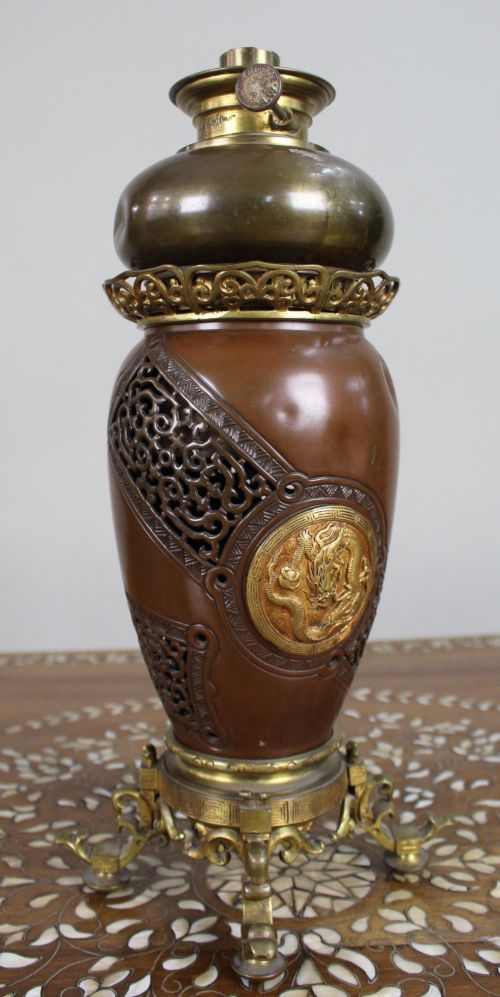
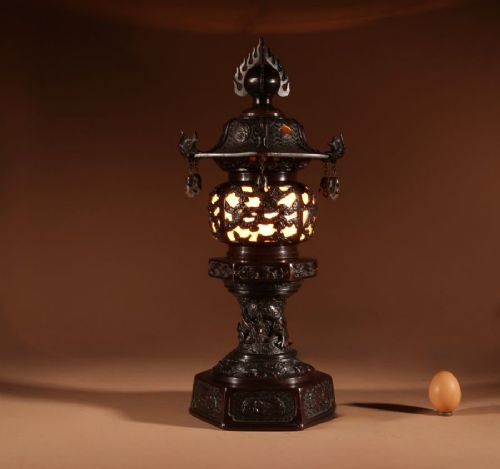
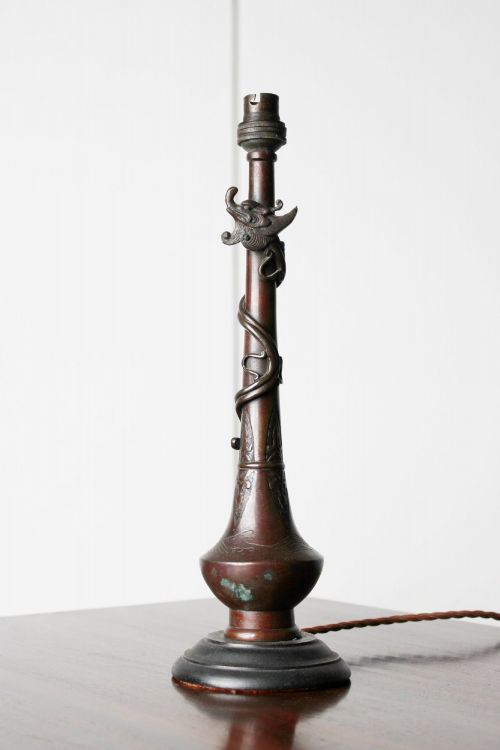
Buyers seeking a meiji bronze table lamp will encounter varied forms ranging from dragon and elephant figural mounts to tall architectural lantern designs and converted vases. Most examples on offer date across the late nineteenth and early twentieth centuries, spanning periods from the 1850s to the 1920s.
Distinctions in quality
Quality rests upon the crispness of the bronze casting and the precision of the decorative surface work, particularly where enamel or champlevé details are applied. Sculptural figural models, such as dragon or elephant forms, show greater artistic ambition and manual labour than plain vessel conversions.
The scale and proportion of the piece also separate standard lighting conversions from impressive, large-scale pairs intended as focal points. The integration of period components, from original bronze patination to authentic enamel panels, dictates the overall character of the surviving object.
Materials recorded across current inventory include bronze, brass, enamel, wood, glass, earthenware, fabric and silk.
The Meiji Bronze Table Lamp Glossary
- Meiji Period
- The era in Japanese history lasting from 1868 to 1912, characterised by extensive cultural exchange and opening trade with the West. Objects from this time often show exceptional metalworking skill.
- Champlevé
- An enamel technique where troughs or cells are dug into the bronze surface and filled with vitreous enamel before firing. This creates colourful decorative patterns across the body of the lamp.
- Cloisonné
- A method of decorating metalwork objects using vitrified enamel held in place by thin metal wires welded to the bronze base. It produces intricate geometric or floral designs.
- Satsuma
- A type of Japanese earthenware traditionally featuring a ivory-coloured cracked glaze and elaborate polychrome enamel paintings. Satsuma vessels are frequently adapted into table lamps.
- Chinoiserie
- A European artistic style reflecting Chinese and broader East Asian artistic influences, sometimes applied to decorative lighting pieces of the Edwardian period.
Meiji Bronze Table Lamp: Frequently Asked Questions
Are these lamps converted from old vases?
Many surviving pieces began life as traditional Japanese bronze vases or temple lanterns before receiving electrical fittings for domestic use. This practice of adaptation was common during the Victorian and Edwardian periods.
Other examples were manufactured specifically as oil lamps or table lights during the late nineteenth and early twentieth centuries, combining traditional metalcraft with functional lighting requirements.
How do I date a meiji bronze table lamp?
Dating relies on stylistic markers associated with the Meiji period between 1868 and 1912, alongside later Victorian and Edwardian manufacturing traits. Evidence often appears in the style of the bronze casting, enamel work and associated brass or wood components.
Records frequently point to specific decades such as the 1890s or 1900s, while some adapted Satsuma pieces trace back to the mid nineteenth century.
What is the difference between champlevé and cloisonné?
Champlevé involves carving or casting recessed troughs directly into the bronze surface to hold the coloured enamel paste. The surrounding metal acts as the boundaries for the design.
Cloisonné uses thin metal wires soldered onto the exterior of the bronze body to form individual cells, which are then filled with enamel and fired. Both techniques produce richly coloured decorative finishes.
How should I clean a bronze lamp base?
Bronze surfaces require minimal intervention to preserve their natural historic patination and accumulated age character. Dusting gently with a soft, dry cloth is usually sufficient for routine maintenance.
Avoid chemical polishes or abrasive cleaners, as these can strip away the original finish and historical surface coloration built up over more than a century.