



Oriental Cast Bronze Lamp
An oriental cast bronze lamp brings weight and intricate detail to a room, drawing the eye with its sculptural form and rich patination.
Oriental Cast Bronze Lamp
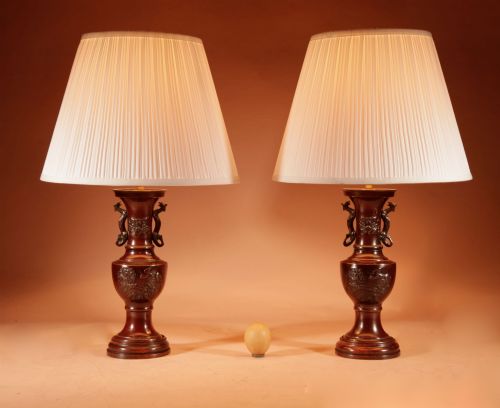
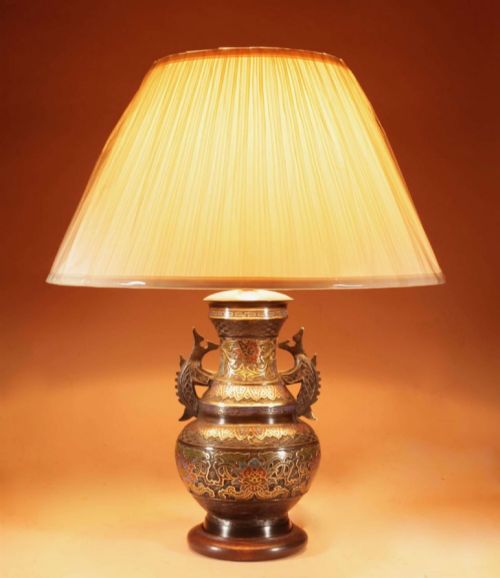
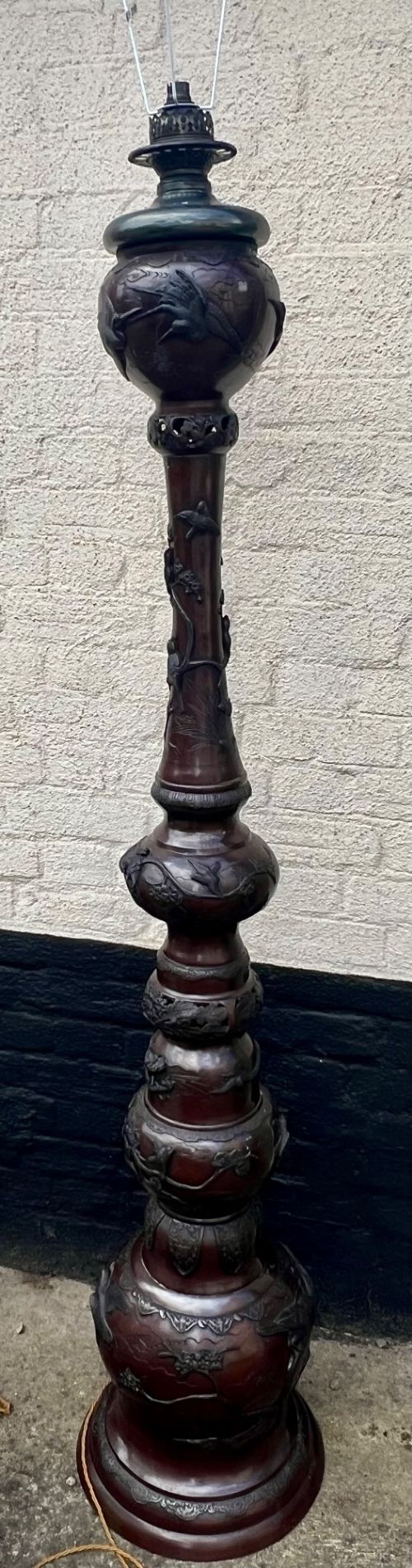
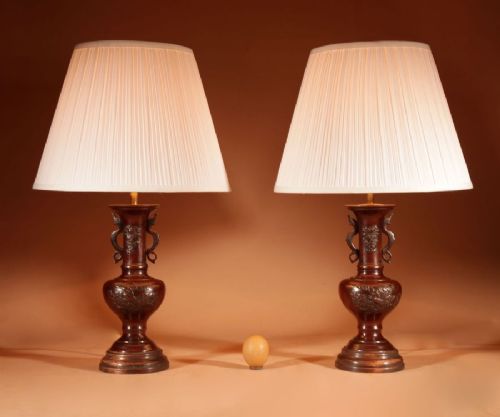
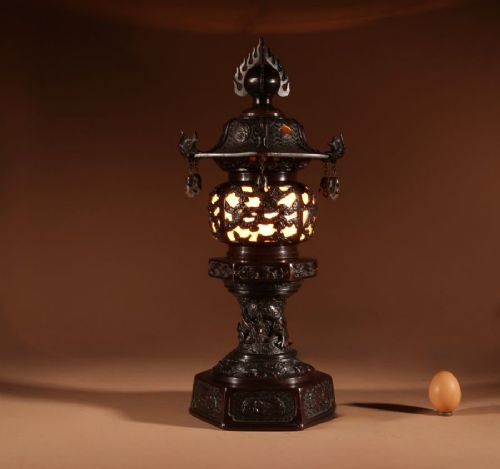
An oriental cast bronze lamp is typically formed from cast bronze, often originating from the Meiji period or created in later Chinoiserie and Chinese tastes. These pieces function primarily as table lamps or floor lamps, incorporating materials like fabric, wood, brass, enamel, glass, patinated white metal, and gilt metal into their overall design.
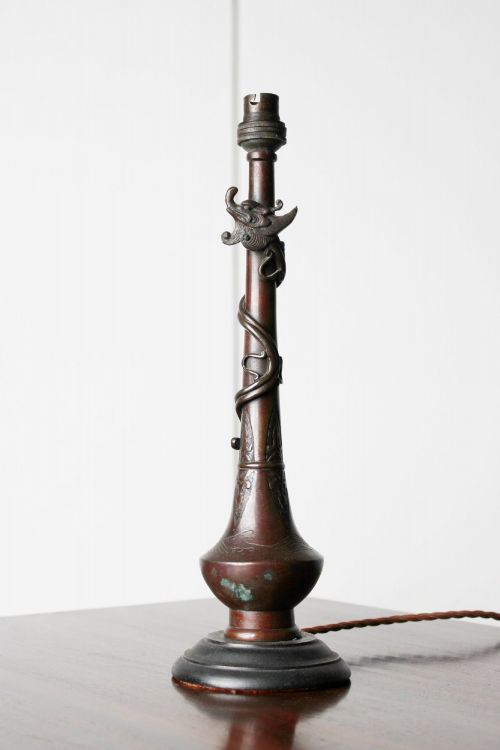
Buyers are most likely to meet Japanese Meiji period bronze table lamps and floor lamps on this page, alongside Edwardian and 20th-century interpretations. The selection ranges from figural designs featuring dragons and elephants to lantern styles and converted vases.
The forms vary from simple baluster shapes to elaborate pairs and large single decorative pieces. Each item reflects the intersection of Eastern metalwork traditions with Western lighting adaptations.
How they were made
The construction relies on traditional casting techniques applied to bronze and related metals. Artisans shaped the primary metal bodies through casting, often adding patination or gilding to enhance the surface texture.
Many examples incorporate mixed media elements, securing components made from wood, glass, enamel, and brass into or onto the main bronze structure. Fabric shades complete the assembly, often paired with patinated white metal or gilt metal mounts.
Elephants and dragons occasionally hold up the light.
What varies in quality
Quality in an oriental cast bronze lamp rests upon the crispness of the casting and the depth of the metalwork detail. Pieces featuring complex figural elements like dragons or elephants display greater sculptural ambition than simple baluster forms.
The sophistication of the patination and the integration of secondary materials such as enamel or gilt metal also separate standard production from superior examples. Pairs command attention for their matched casting and balanced proportions.
The Oriental Cast Bronze Lamp Glossary
- Meiji Period
- The era in Japanese history spanning from 1868 to 1912, noted for metalwork exported to Western markets. This period produced the majority of the Japanese bronze lamp bases seen here.
- Chinoiserie
- The European interpretation and imitation of Chinese and East Asian artistic traditions. This style appears in British-made or European lamps adopting Eastern motifs.
- Patination
- The process or result of modifying the surface colour of bronze through age or chemical treatment. A rich patina adds visual depth to the cast metal.
- Champlevé
- An enamelling technique where troughs are carved into the metal surface and filled with vitreous enamel before firing. This technique decorates the body of specific Japanese bronze lamps.
Oriental Cast Bronze Lamp: Frequently Asked Questions
What is an oriental cast bronze lamp?
An oriental cast bronze lamp is a lighting fixture utilising a cast bronze body from East Asian manufacturing traditions or European interpretations. These pieces often originate from the Meiji period or the Edwardian era.
They combine heavy metal casting with functional wiring, serving as table lamps or floor lamps within a domestic interior.
How do I date a bronze lamp?
Dating relies on the stylistic markers of the casting, such as Meiji period motifs or Edwardian manufacturing characteristics. The integration of materials like enamel, brass, and patinated white metal also helps establish the period.
Makers often utilised specific casting methods and decorative techniques tied to the late nineteenth and early twentieth centuries.
Where should I place a floor lamp?
A bronze floor lamp requires a stable surface and adequate clearance to showcase its sculptural height and metalwork detail. These large pieces anchor a room when placed beside seating areas or in corners.
Ensure the surrounding space complements the dark patination and mixed media elements of the metal base.
Are these lamps converted vases?
Some pieces begin as decorative vessels before conversion into lighting fixtures. The listings include items originally formed as Japanese bronze vases subsequently adapted into lamps.
This practice preserves the intricate casting and form of the original metalwork while updating its utility.