





Japanese Dragon Bronze Lamp
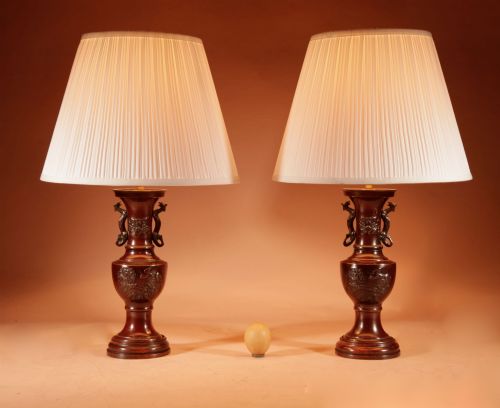
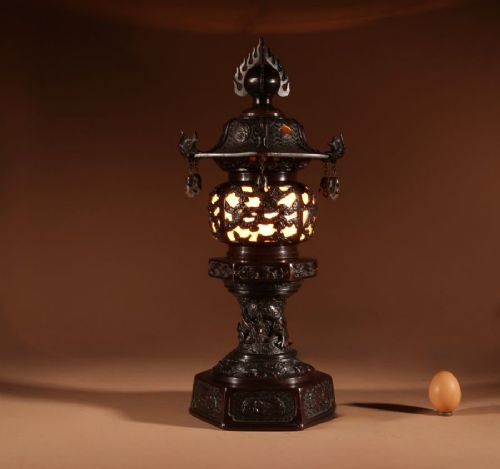
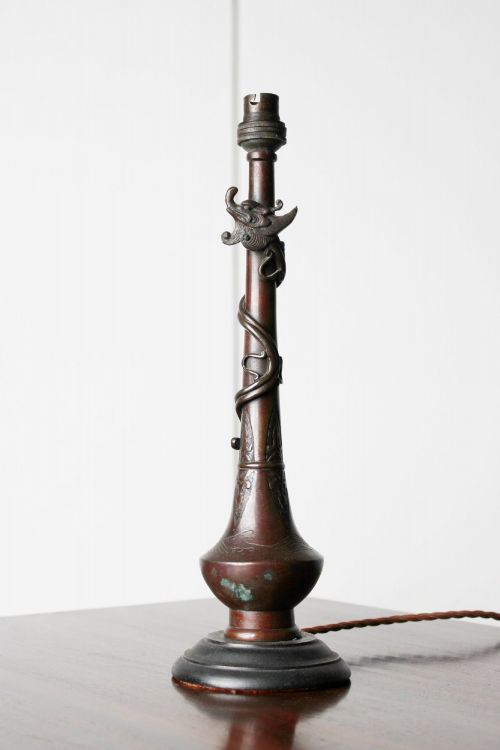
These japanese dragon bronze lamp pieces are heavy cast metal creations that bring striking sculptural presence and period illumination into a room.
Japanese Dragon Bronze Lamp
When you search for a japanese dragon bronze lamp, you are looking at cast metal work that spans the late nineteenth century into the early twentieth century. Most examples you will encounter date from the Meiji period, often taking the form of table lamps or converted oil lamps.
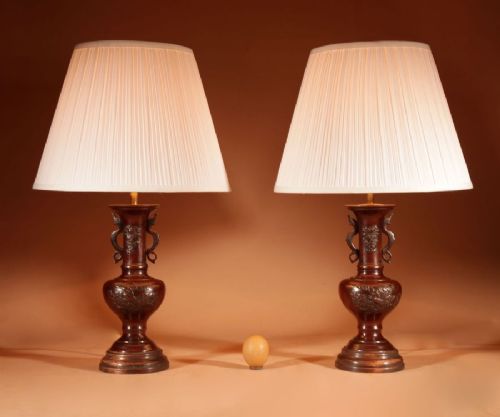
The selection includes pairs and single pieces, frequently featuring dragon or elephant motifs integrated into the metal body. These items bridge traditional oriental metalwork and western lighting needs from the Edwardian era onward.
Materials and construction
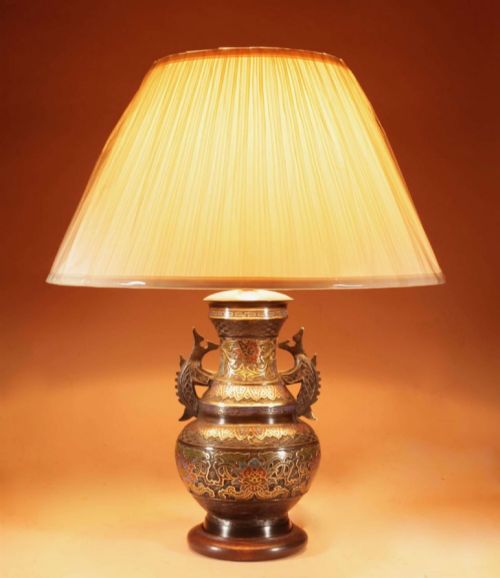
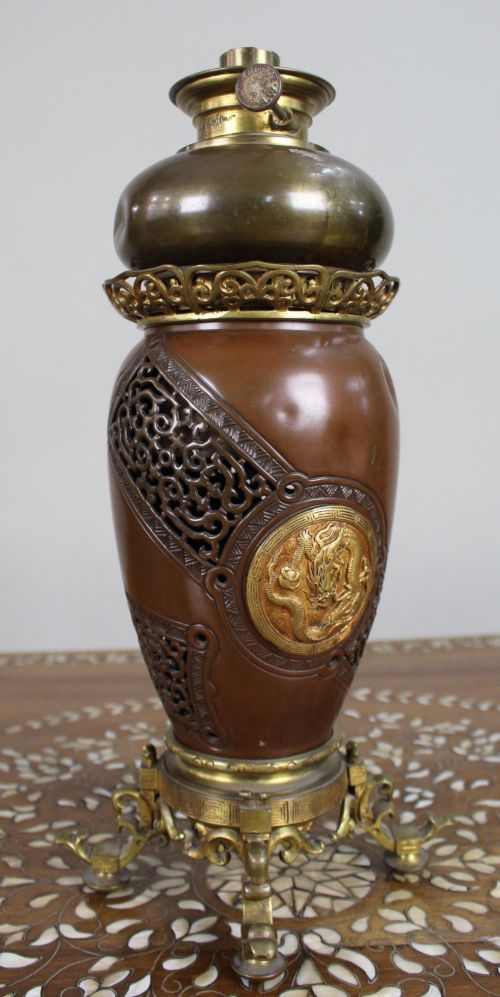
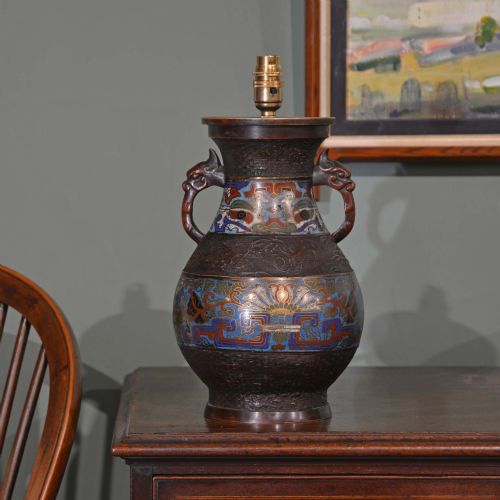
These pieces rely on heavy bronze or brass casting, sometimes enhanced with gilt bronze, gilded metal, or champlevé enamel detailing. Artisans shaped the metal bodies to depict dragons and other traditional subjects with high textural relief.
Many of these lamps originated as decorative vases or oil lamps before receiving later electrical wiring and fabric shades. The combination of patinated metal and applied enamel gives each piece a distinct weight and tactile quality.
Materials recorded across the inventory include bronze, brass, fabric, enamel, wood, gilded metal, glass, and gilt bronze.
Assessing quality
Quality in these items rests upon the crispness of the bronze casting and the depth of the chased or sculpted details on the dragon figures. Finer examples display intricate surface work and harmonious proportions that mark out superior workshop production.
The integration of original elements, such as champlevé enamel panels or matched pairs, elevates a piece significantly. Lesser items show softer surface definition or mismatched components resulting from later alterations.
The Japanese Dragon Bronze Lamp Glossary
- Meiji Period
- The era in Japanese history spanning from 1868 to 1912, known for distinct decorative arts exported to the west. Much of the metalwork seen here originates from this timeframe.
- Champlevé
- An enamelling technique where troughs or cells are sunken into the metal surface and filled with vitreous enamel before firing. This adds colourful decorative highlights to the bronze body.
- Gilt Bronze
- Bronze that has been coated with a thin layer of gold or gold-coloured alloy to impart a rich sheen. It highlights specific design elements against dark patinated metal.
- Oil Lamp
- A lighting device designed to burn liquid fuel using a wick before later conversion to electricity. Many period metal bodies were adapted for modern table use.
Japanese Dragon Bronze Lamp: Frequently Asked Questions
Are these lamps wired for modern use?
Most examples have been adapted for contemporary electrical standards to allow straightforward placement in a room.
Buyers should inspect the existing flex and plug arrangement, and consult a qualified electrician if rewiring is necessary to meet current safety codes.
How do I date a bronze lamp?
Dating relies on stylistic markers from the Meiji period and Edwardian era, alongside the casting style and manufacturing techniques visible on the metal.
Documentation or historical trade marks on the base can occasionally help narrow down the period of production.
How should I clean bronze?
Maintenance requires only a gentle dusting with a soft, dry cloth to protect the original patination and any delicate enamel work.
Harsh metal polishes or chemical cleaners should be avoided because they strip away the historic finish and diminish the visual character.
Where should I place a dragon lamp?
These substantial metal pieces suit prominent locations such as sideboards, heavy desks, or large entrance tables where their sculptural form stands out.
Pairing them with an appropriate fabric shade balances the dark metal weight and provides warm ambient light.