





Vintage Oriental Chest
When you search for a vintage oriental chest, you seek a practical storage box or cabinet carrying the rich textures of Asian and trade craftsmanship.
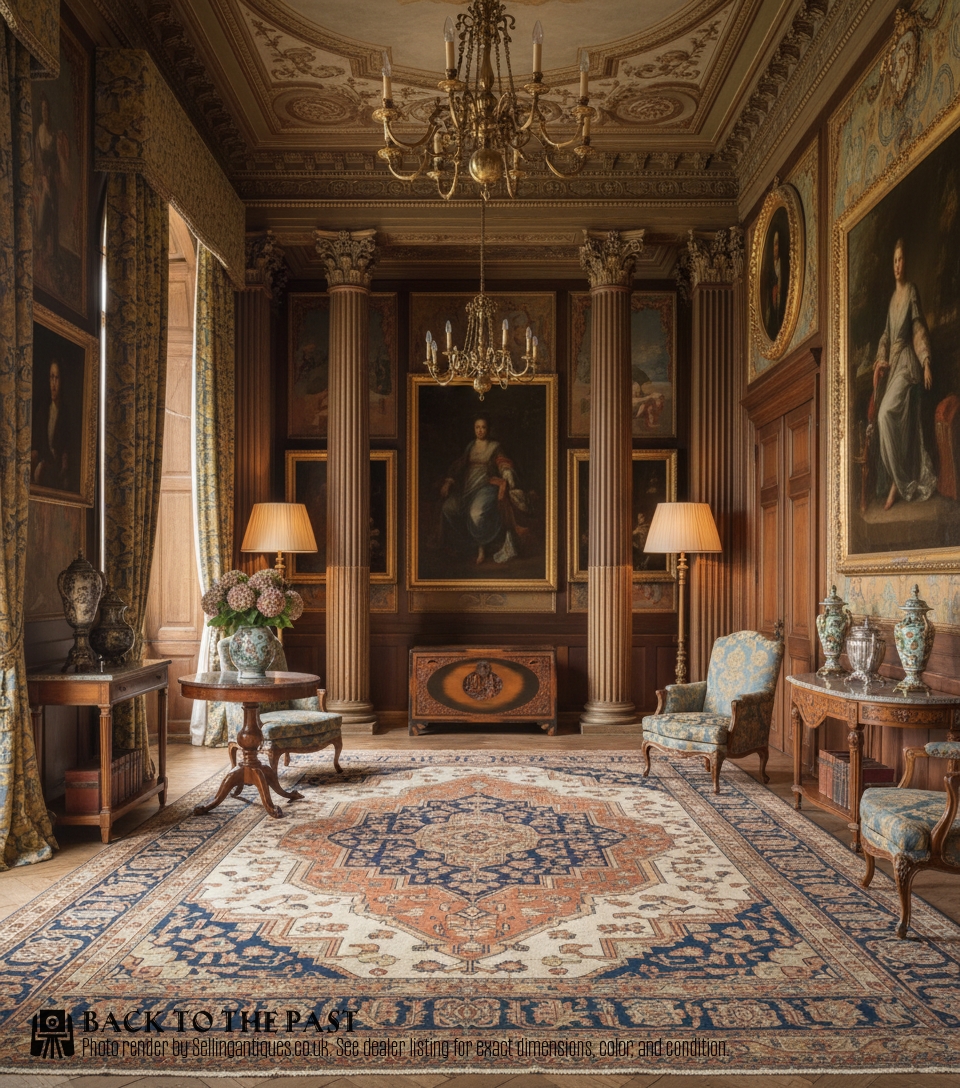
Vintage Oriental Chest
A vintage oriental chest encompasses a diverse group of storage forms, including camphor trunks, apothecary cabinets, blanket boxes, and lacquer cupboards. These pieces emerge from traditions spanning China, Japan, Korea, India, and East Africa, reflecting centuries of distinct regional joinery and utility.
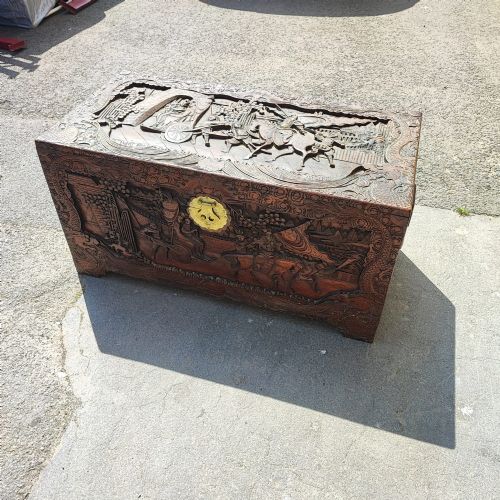
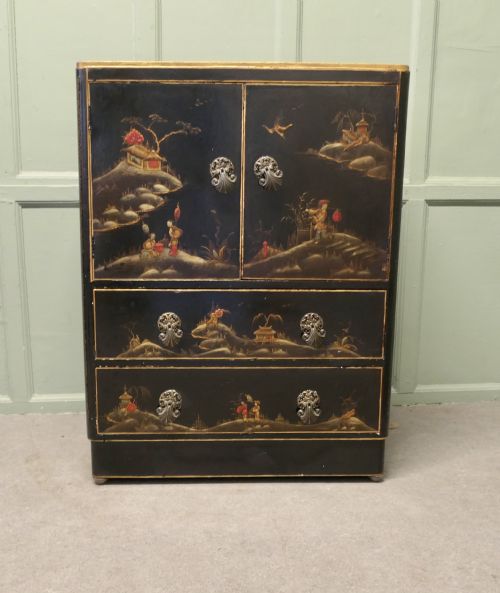
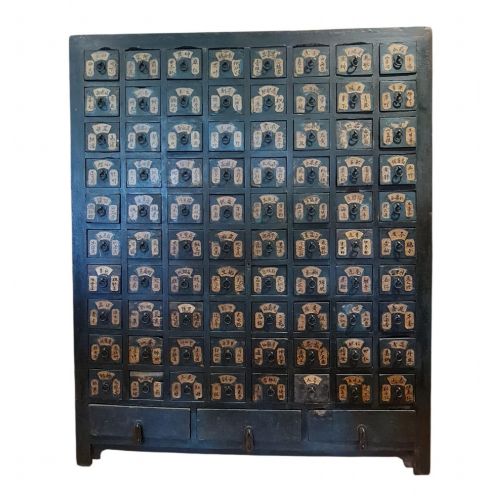
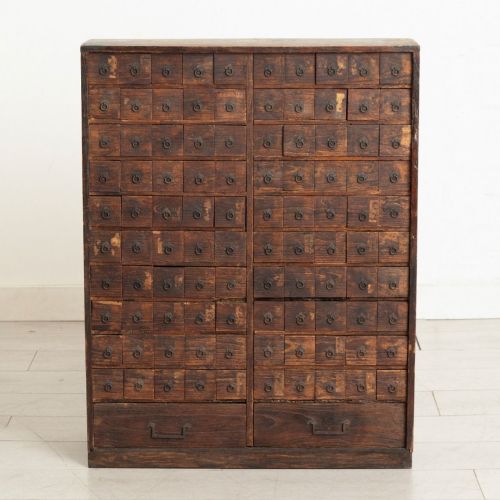
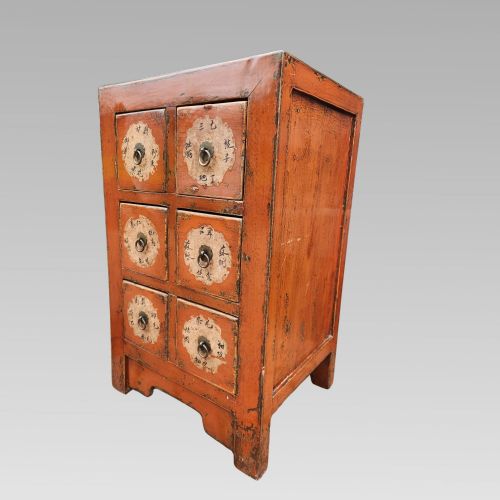
The versions most commonly met on this page are carved camphor wood trunks and black chinoiserie lacquer cabinets dating from the nineteenth and early twentieth centuries. Buyers encounter heavy brass hardware, hand-painted floral motifs, and multi-drawer medicine chests alongside simple elm and teak storage boxes.
How they were made
Makers utilised native timbers such as camphor wood, elm, rosewood, teak, and hardwood, often selecting camphor for its natural insect-repelling properties in maritime trunks. Joinery relied on traditional framing and panel construction designed to accommodate the shifting of wood in humid climates without splitting.
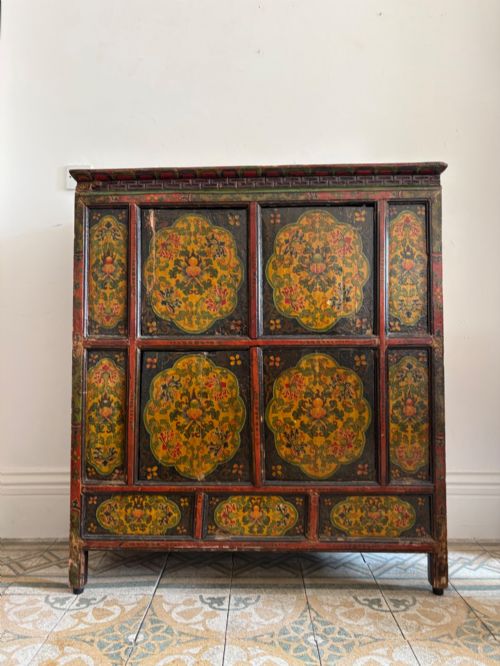
Surface finishes involved layers of black or coloured lacquer, hand-painted polychrome decoration depicting birds and flowers, and intricate low-relief carving. Blacksmiths forged brass straps, corner brackets, and heavy drop handles that served both a structural reinforcement purpose and a decorative function.
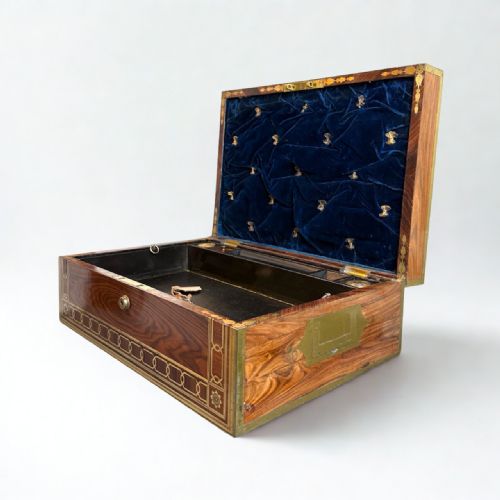
Listings feature pieces spanning the nineteenth century through the 1930s, utilising materials such as camphor wood, rosewood, elm, brass, and lacquer.
What varies in quality
The depth and crispness of the hand-carving define the upper tier of camphor trunks, where sharply defined foliage stands out from a smooth background rather than appearing shallow and rushed. Cabinet work shows in the precise fitting of numerous small apothecary drawers and the integrity of the original lacquer or painted finish.
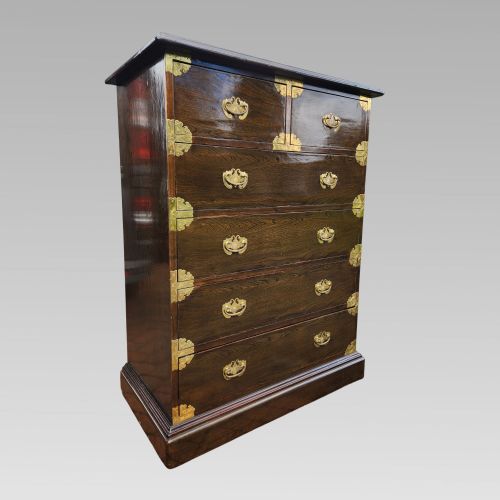
Hardware weight and originality separate standard utility boxes from superior examples. Heavy, hand-beaten brass plates and functional original locks demonstrate a higher grade of workshop production than later replacements or thin stamped metal.
The Vintage Oriental Chest Glossary
- Camphor wood
- A fragrant timber native to Asia, prized for storage chests because its natural scent protects textiles from moths and dampness. It frequently displays a pale golden brown tone and subtle figuring.
- Chinoiserie
- European artistic interpretation and imitation of Chinese and East Asian artistic traditions, commonly expressed through black lacquer surfaces decorated with gold or painted figures, birds, and landscapes.
- Tansu
- A traditional Japanese mobile storage chest built from wood with distinct iron or brass hardware. These pieces served various domestic functions, from kitchen storage to clothing organisation.
- Zanzibar chest
- A heavy hardwood travel trunk associated with East African and Indian trade routes, characterised by brass studding, strapwork, and a characteristic domed or flat lid.
- Bandaji
- A traditional Korean blanket chest constructed with prominent metal hinges and reinforcement plates arranged in geometric patterns across the wooden facade.
Vintage Oriental Chest: Frequently Asked Questions
What is a camphor wood chest used for?
These trunks were traditionally used for storing garments, woollens, and valuable textiles during transit or at home. The natural aromatic oil in the timber deters insects.
Today, owners utilise them as blanket boxes, coffee tables with internal storage, or decorative statement pieces at the foot of a bed.
How do I care for a lacquer cabinet?
Lacquer surfaces require protection from direct sunlight and extreme humidity changes, which can cause the finish to craze or lift. Dust gently with a dry, soft cloth.
Avoid using modern chemical polishes, silicone sprays, or abrasive cleaners that damage the historic surface layer.
How do I tell a Japanese tansu from a Chinese chest?
Japanese tansu chests typically feature exposed iron or brass structural hardware arranged in functional grids, often designed as modular stacking units for domestic use. Chinese examples more frequently lean towards carved camphor panels, rounded brass corner mounts, or painted lacquer finishes.
Regional joinery methods and timber choices also separate the two traditions.
What is an apothecary cabinet?
Apothecary cabinets are multi-drawer storage units originally built for holding dried herbs, medicines, and botanical ingredients in traditional pharmacies or medical practices. They feature numerous small compartments, sometimes numbering in the dozens, each fitted with a small pull handle.
In modern interiors, collectors repurpose them as desk organisers or small-item storage furniture.