



Vintage Oak Wine Cooler
These vintage oak wine coolers bring heavy timber and gleaming metal together to keep bottles cold at the table.
Vintage Oak Wine Cooler
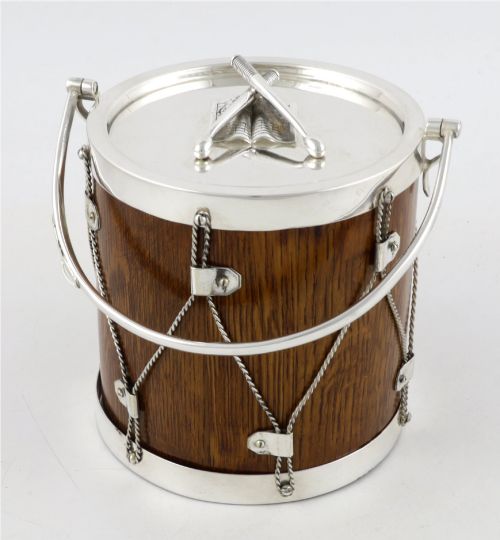
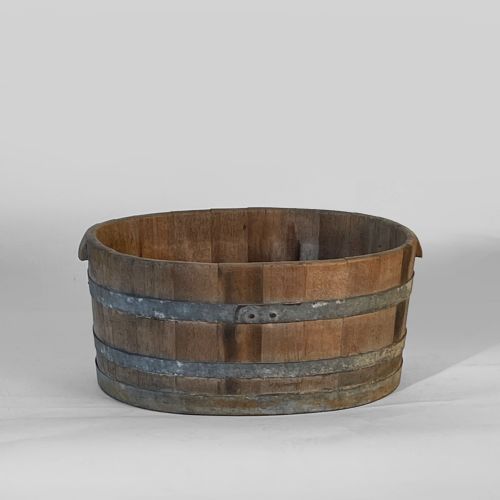
A vintage oak wine cooler typically takes the form of a coopered vessel fashioned from solid timber staves held together by metal bands. Buyers searching for a vintage oak wine cooler encounter sturdy buckets, barrels, and troughs adapted from domestic, utilitarian, and decorative roots across the nineteenth and twentieth centuries.
The pieces appearing on this page span the Victorian, Edwardian, and Art Deco eras, alongside rustic farmhouse and Arts and Crafts examples. Many double as planters, jardinieres, or ice buckets, reflecting how heavily repurposed these durable wooden objects tend to be.
Origins stretch from English country workshops to Dutch makers, utilising the natural water-resistant properties of oak. Buyers most often meet Edwardian and c1900 iterations fitted with brass bands or silver-plated hardware.
Materials and construction
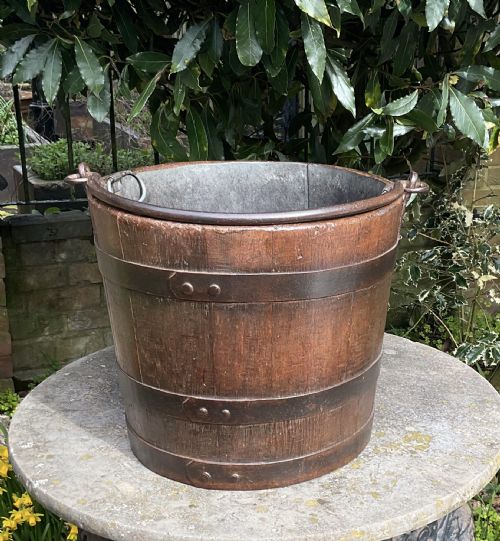
Makers constructed these vessels using traditional cooperage techniques, shaping individual oak staves to curve tightly into barrels and tubs. Iron, brass, or copper bands are tensioned around the timber to hold the structure firm without modern adhesives.
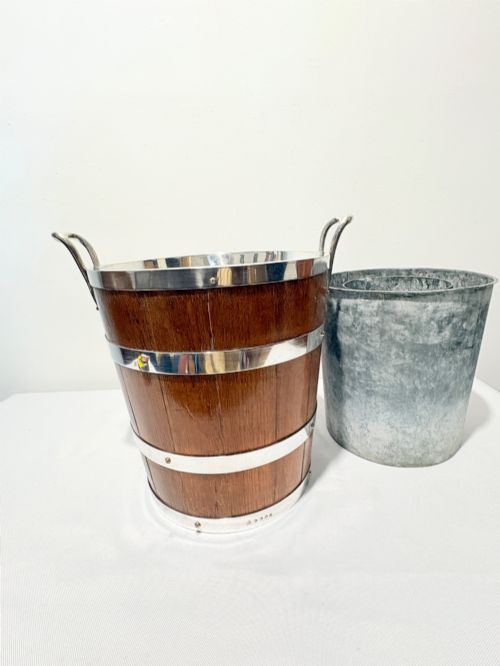
Internal linings of zinc, copper, silver plate, or creamware ceramic were integrated to hold ice, water, and wine safely against the wood. Metal mounts, handles, and swing bails provide functional lifting points forged from iron or cast in brass.
Vintage Oak Wine Cooler Retail Price Guide 2026
Typical asking prices for vintage oak wine cooler among the pieces listed under this phrase on Sellingantiques today, from the lower quarter to the upper quarter. They describe what is for sale here now, not the wider market.
Some oak barrels served double duty for generations, shifting gracefully from dairy chores to champagne duty without missing a stave.
Assessing quality and craftsmanship
Quality rests in the tightness of the cooperage and the weight of the metal fittings, distinguishing heavy structural oak from lighter decorative veneer work. Superior examples display precise stave alignment and substantial brass or silver-plated mounts that show deliberate weight in the hand.
The presence of original internal liners, whether ceramic creamware or fitted metal, separates practical vessels from altered or incomplete items. Maker attribution, such as branded pieces by Lister and Co, elevates certain Edwardian stands above unrecorded domestic tubs.
Lister and Co
The Vintage Oak Wine Cooler Glossary
- Coopered
- Assembled from curved wooden staves bound with metal hoops, much like a traditional barrel. This method provides inherent strength to vessels holding liquids.
- Jardiniere
- An ornamental pot or stand designed to hold plants or flowers, frequently sharing forms with wine coolers. These often feature matching metal liners.
- Creamware
- A type of fine earthenware with a pale yellowish-white glaze, occasionally found as original internal liners in ice buckets. It gained widespread popularity during the eighteenth and nineteenth centuries.
- Swing bail
- A curved metal handle attached to opposite sides of a bucket, allowing it to swing freely. This hardware is typically forged from iron or cast in brass.
- Stave
- One of the narrow vertical strips of oak fitted together to form the sides of a coopered vessel. The edge of each piece is bevelled to ensure a watertight seal.
Vintage Oak Wine Cooler: Frequently Asked Questions
Were these always used for wine?
Many vintage oak wine coolers started life as washing tubs, milking pails, or general agricultural vessels before being repurposed for dining tables. Coopered oak barrels and buckets adapted easily to holding ice and bottles alongside plants and domestic goods.
Makers built these sturdy containers to handle moisture, which explains why historical examples cross over fluidly between wine cooling, ice holding, and botanical display.
How do I clean an oak wine cooler?
Dust timber surfaces gently with a dry cloth and avoid soaking the bare wood during routine maintenance. Metal liners should be removed if possible and washed separately with mild soap before being dried thoroughly.
Protect the oak from excessive temperature shifts and direct heat sources to prevent the staves from shrinking or cracking over time.
What is the difference between a planter and a wine cooler?
Planters and wine coolers often share identical coopered oak bodies and metal bands, differing primarily in their internal setup and intended use. Jardiniere stands and planters usually feature drainage accommodations or simply hold potted greenery.
Wine coolers generally include watertight metal linings or ceramic inserts designed to retain melting ice and contain condensation around wine bottles.