

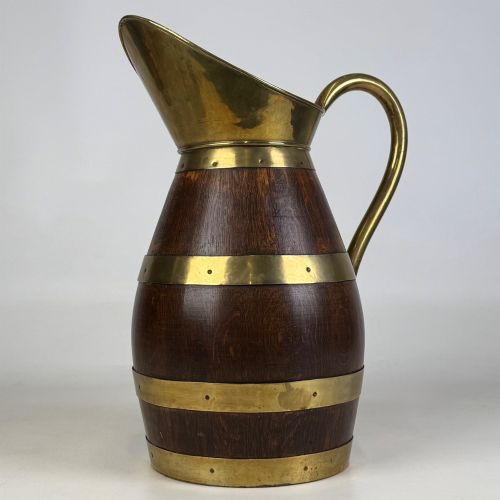
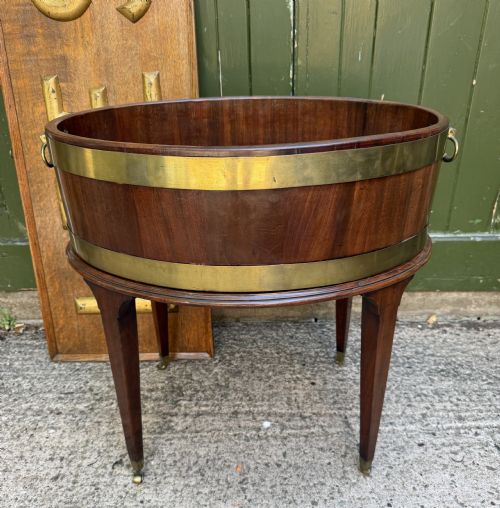

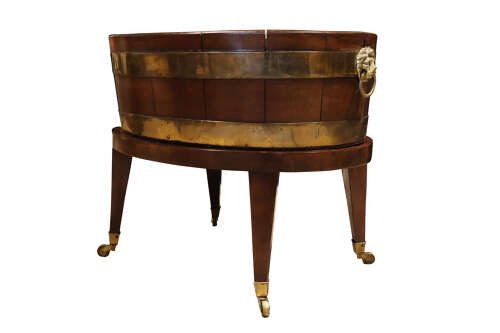


Coopered Bucket Stand
These coopered bucket stands combine stave-built vessel construction with dedicated floor supports, offering a practical way to display large plants or hold hallway sticks.
Coopered Bucket Stand
A coopered bucket stand unites a stave-built wooden vessel with a fitted base or elevated frame, drawing on traditions of domestic and garden utility. When buyers search for a coopered bucket stand, they encounter forms originally designed to hold wine, peat, or umbrellas, adapted over time for botanical display.
The pieces appearing on this page span the Georgian, Victorian, and Edwardian eras, alongside items from around 1900 to 1920. Oak and mahogany dominate the construction, frequently secured with substantial brass bands or iron straps.
Vessel shapes vary from traditional round barrels to oval wine coolers and tall umbrella loops. Stands range from simple integrated legs to distinct floor-standing frames that elevate the main body.
Materials and construction
Makers built the bodies using shaped wooden staves grooved to receive a solid base panel, employing traditional cooperage techniques common to cask and bucket making. Oak and mahogany provide the primary structural timber, chosen for durability and stability.
Metal components play an essential role in holding the staves tight. Brass bands and iron straps are fitted around the circumference, often secured with small pins or rivets.
Surface treatments rely on polished hardwoods, ebonised wood details, or natural finishes that highlight the tight joints between individual staves.
Coopered Bucket Stand Retail Price Guide 2026
Typical asking prices for coopered bucket stand among the pieces listed under this phrase on Sellingantiques today, from the lower quarter to the upper quarter. They describe what is for sale here now, not the wider market.
Some oak barrels designed for peat fires now spend their retirement holding oversized parlour ferns.
Judging quality and proportion
The standard of timber selection and the precision of the stave joints dictate the initial impression of quality. Tighter fitting wooden sections and clean edge alignments demonstrate superior workshop practice.
Metalwork integration also separates examples. Heavy cast brass bands or hand-forged iron straps fitted flush to the wood indicate careful craftsmanship compared to loose or thin metal bands.
The relationship between the bucket vessel and its supporting stand influences the overall design coherence. Integrated frames and purpose-built stands show greater harmony than later adaptations.
Lister and Co
The Coopered Bucket Stand Glossary
- Coopered
- Built from curved wooden staves bound together by metal hoops, similar to barrel construction. This method provides inherent strength for holding contents.
- Stave
- A narrow strip of wood with bevelled edges that forms the curved sides of a bucket or barrel. Multiple staves joined together create the vessel wall.
- Jardiniere
- An ornamental pot or stand designed to hold plants and flowers. These often feature waterproof linings or metal liners to protect the wood.
- Cellarette
- A lockable container used for storing wine bottles in the dining room during the Georgian and Victorian periods. Many double as wine coolers.
- Ebonised
- Wood finished with a dark stain or polish to imitate the appearance of ebony. This treatment often highlights bright brass bands.
Coopered Bucket Stand: Frequently Asked Questions
What were coopered bucket stands originally used for?
These vessels served various domestic purposes including cooling wine with ice, holding peat fuel for fires, or keeping walking sticks and umbrellas in the hallway.
Over time, many of these sturdy stave-built containers found new life as planters and jardiniere stands inside period homes.
How do I date a coopered oak stand?
Dating relies on the style of the timber, the shape of the supporting stand, and the metal used for the bands. Georgian pieces often feature elegant mahogany ovals, while Victorian and Edwardian examples frequently use heavy oak barrels.
Looking at the construction of the base and the method used to secure the metal straps helps narrow down the period of manufacture.
Are these stands suitable for indoor plants?
Many of these pieces function well as planters, though original interiors often require modern waterproof liners to protect the historic wood from moisture.
Checking the interior condition helps determine whether a protective insert is needed before placing potted plants inside.
What is the difference between a wine cooler and a stick stand?
Wine coolers generally feature lower, broader oval or round bodies designed to hold bottles and ice, sometimes fitted with drop handles. Stick stands are typically taller and narrower, often incorporating metal umbrella loops.
Both utilise coopered stave construction, but their proportions reflect their original functional roles.