

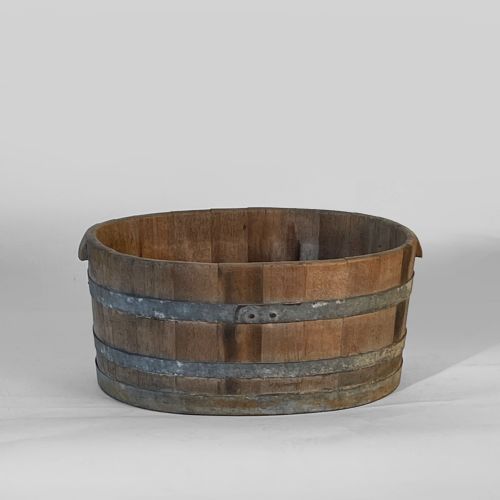
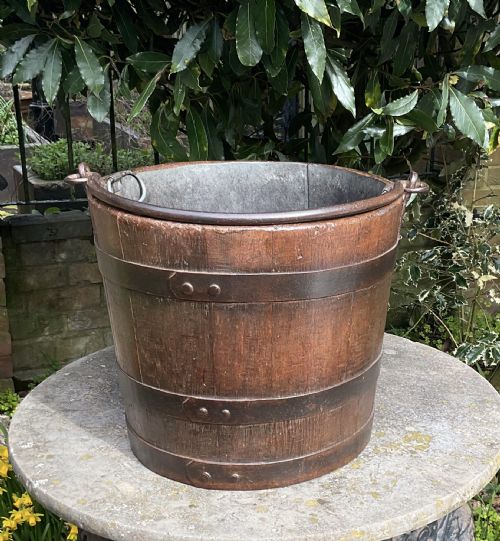


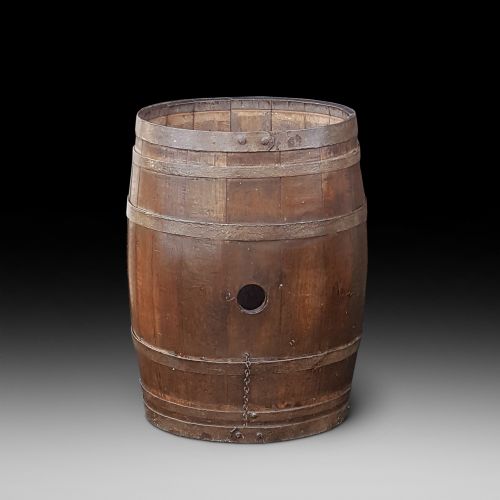
Oak Coopered Planter
These oak coopered planters are sturdy vessels adapted from traditional stave-building for domestic greenery and fireside storage.
Oak Coopered Planter
An oak coopered planter unites traditional stave construction with domestic planting and storage, appearing across the nineteenth century, Victorian, Edwardian, and later periods. Buyers seeking an oak coopered planter encounter robust forms ranging from small table jardinieres and stick stands to large floor barrels, log bins, and washing tubs.
Regional variations emerge within the evidence, including English, Scottish, and Dutch pieces in rustic country, farmhouse, and formal styles. These vessels serve multiple functions as plant pots, jardiniere stands, umbrella holders, and well buckets while retaining their characteristic stave and band architecture.
Materials and Construction
Staves of solid oak form the body of each vessel, shaped tightly to create curved barrels, tubs, and buckets. Mahogany occasionally appears alongside the primary timber in the construction.
Metal bands in brass, iron, copper, wrought iron, and zinc secure the wooden staves together under tension. Liners are sometimes incorporated to protect the timber from moisture when used for planting.
Oak Coopered Planter Retail Price Guide 2026
Typical asking prices for oak coopered planter among the pieces listed under this phrase on Sellingantiques today, from the lower quarter to the upper quarter. They describe what is for sale here now, not the wider market.
A nineteenth-century coopered washing tub finds a second life holding oyster shells before becoming a garden planter.
Build and Material Selection
Superior examples display precise fitting between individual oak staves and carefully forged metal bands that hold the vessel under even tension. The choice of contrasting metals, such as polished brass against rich golden oak, distinguishes finer decorative pieces from utilitarian vessels.
Proportion and structural integrity separate standard barrels from specialised forms like tall stick stands, oval log bins, and raised jardiniere stands on dedicated supports.
Lister and Co
The Oak Coopered Planter Glossary
- Coopered
- Assembled from curved wooden staves bound together by external metal hoops. This traditional method derives from cask and barrel making.
- Jardiniere
- An ornamental pot or stand designed to hold growing plants or flowers. These vessels often sit on dedicated stands or floor supports.
- Stave
- One of the narrow shaped strips of wood that form the sides of a barrel, tub, or bucket. Fitting these pieces together requires precise edge-bevelling.
- Log bin
- A deep floor vessel used for storing firewood near a hearth. These items frequently share the stave construction of traditional barrels.
Oak Coopered Planter: Frequently Asked Questions
What is an oak coopered planter?
An oak coopered planter is a vessel built from curved wooden staves and secured with metal bands, adapted for holding plants, logs, or umbrellas.
These items draw on traditional barrel-making techniques to create durable containers with distinct decorative presence.
How were these vessels originally used?
Many examples began life as utilitarian items such as washing tubs, well buckets, oyster buckets, or peat buckets before finding new purpose as planters and log bins.
Others were made specifically as ornamental jardinieres, stick stands, and jardiniere stands for domestic interiors.
How do I date an oak coopered planter?
Dating relies on assessing the style, timber characteristics, metalwork fixings, and overall form across Victorian, Edwardian, and nineteenth-century examples.
Makers' marks or specific construction details can also help narrow down the period of manufacture.
Do planters need internal liners?
Many surviving pieces incorporate metal or waterproof liners designed to contain moisture and protect the internal oak staves from damp soil.
Checking for a liner helps determine how the vessel was used and maintained over time.