


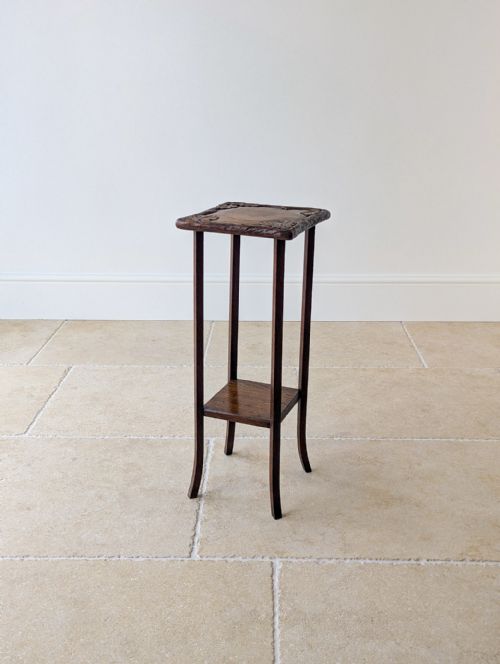

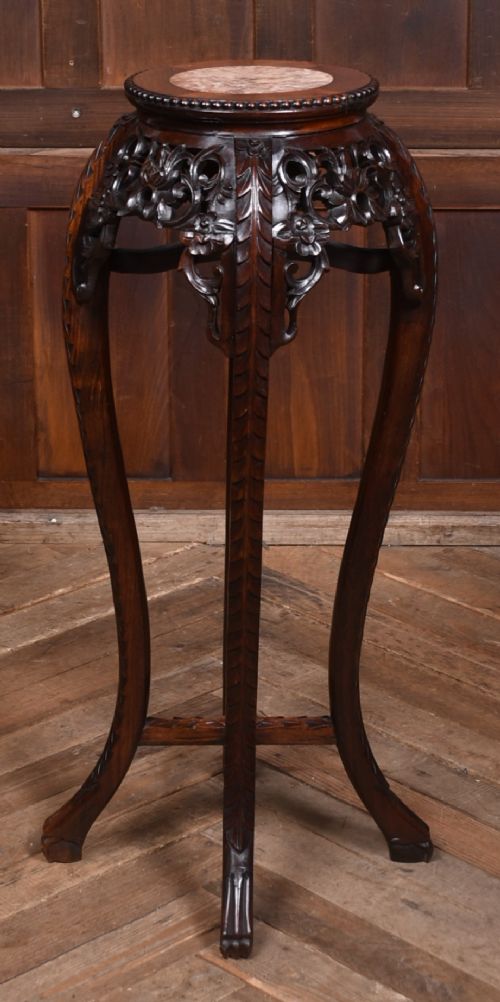
Tall Wooden Jardiniere
A tall wooden jardiniere raises your plants to eye level, combining practical horticulture with decorative joinery.
Tall Wooden Jardiniere
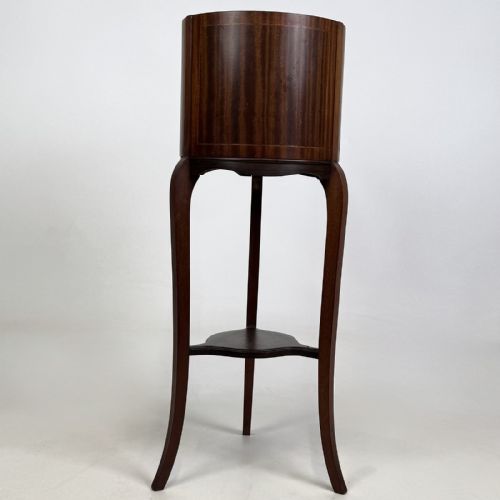
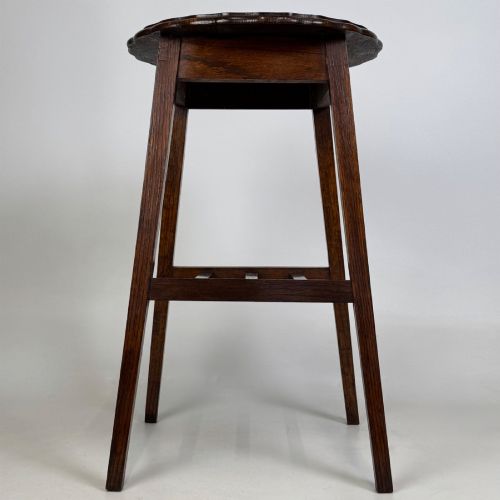
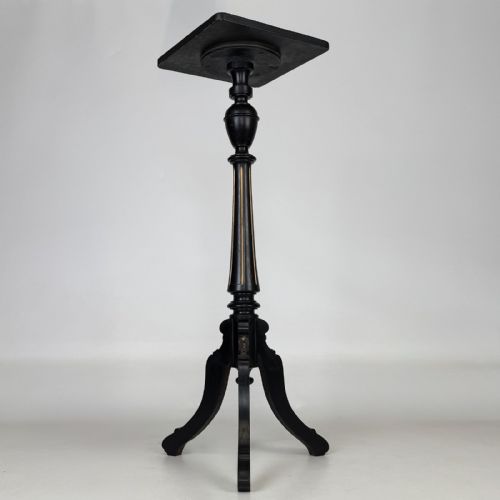
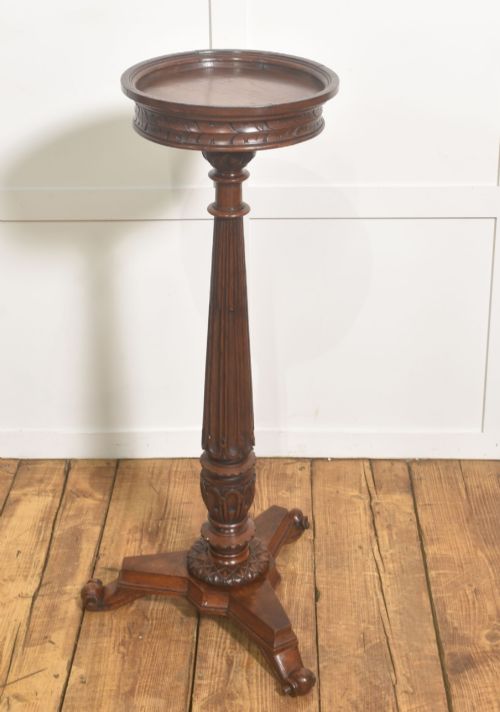
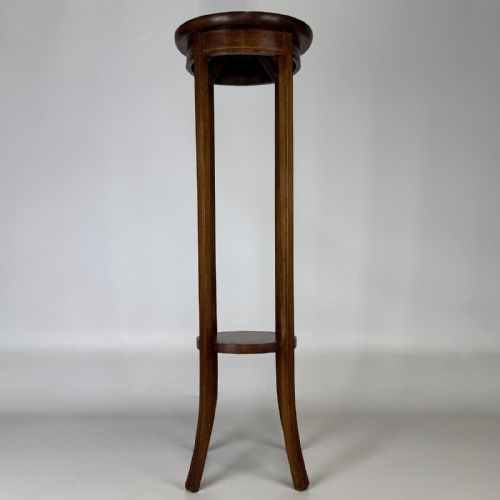
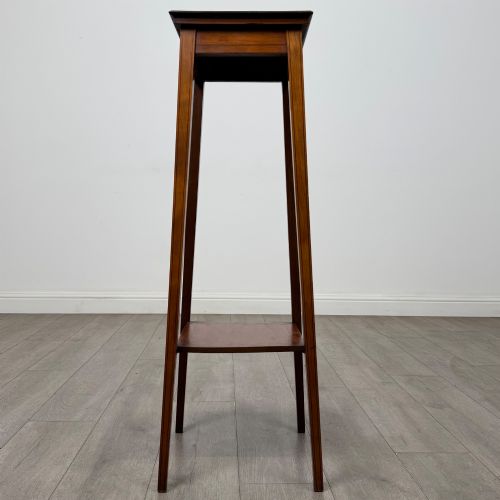
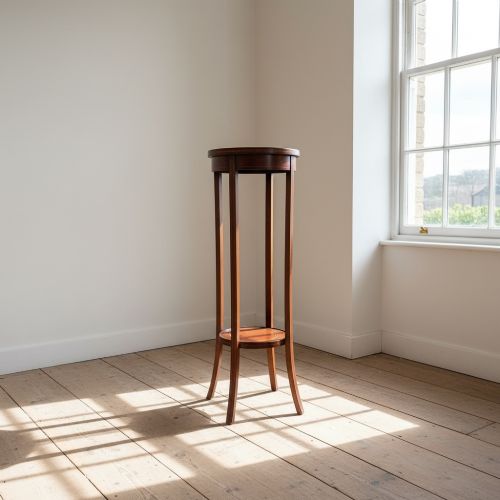
A tall wooden jardiniere functions as a specialised stand designed to support potted plants, ferns, or decorative jardinieres within domestic interiors. When searching for a tall wooden jardiniere, buyers encounter elevated pedestals and plant stands that derive largely from the Edwardian period, the nineteenth century, and the nineteen-twenties.
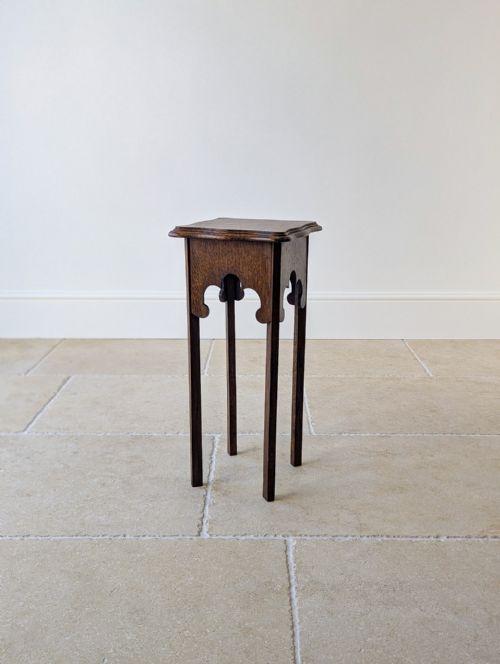
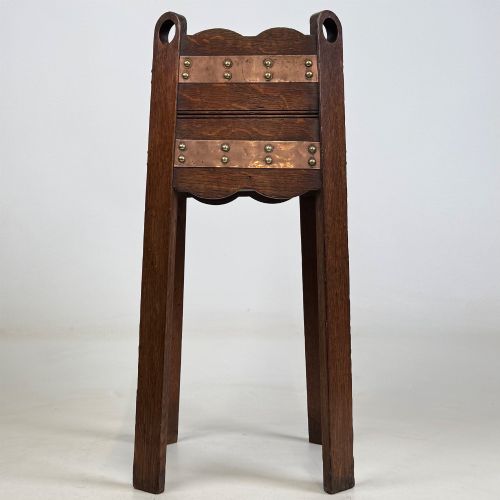
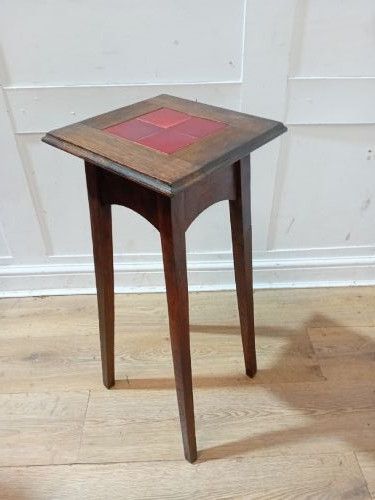
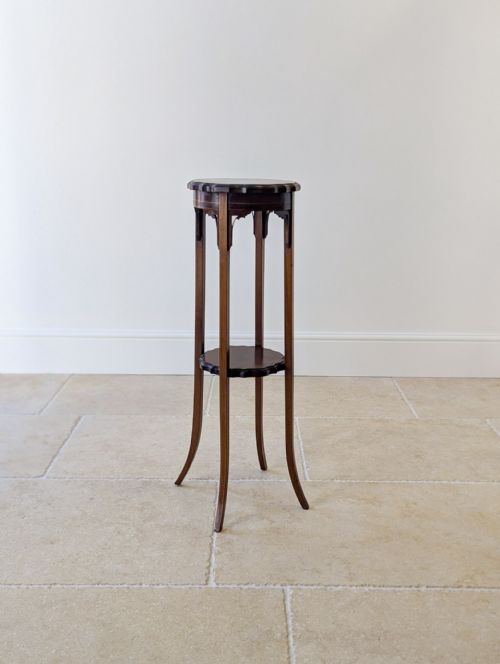
The selection here encompasses diverse regional forms, ranging from English oak and mahogany creations to Chinese carved hardwood and marble-topped specimens. Buyers frequently meet Edwardian inlaid mahogany pieces, Arts and Crafts oak stands, and coopered barrel designs featuring brass bands.
Makers utilised various secondary categories to describe these objects, including plant stands, torcheres, pediments, and planter tables. Despite these varied designations, each piece serves the primary purpose of elevating greenery and floral arrangements within a room.
Materials and construction methods
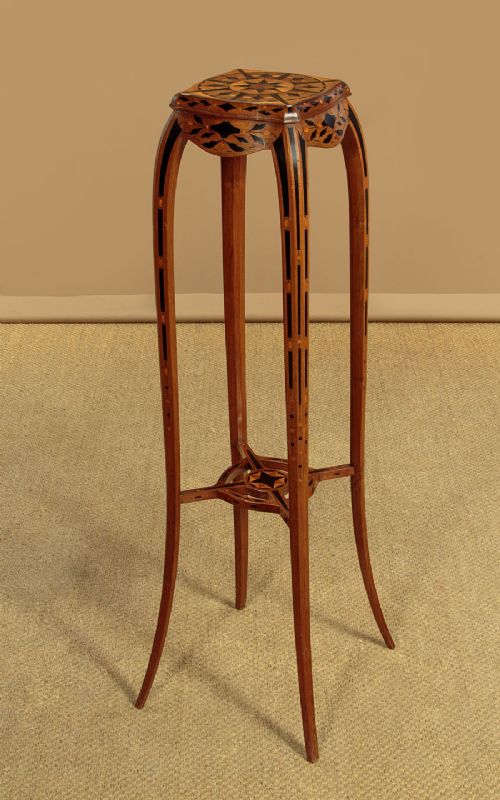
Craftsmen built these stands predominantly using hardwoods such as mahogany, oak, walnut, and satinwood, frequently applying detailed inlay or hand-carved motifs. English examples often display structural elements like barley twist legs and coopered wooden staves bound with brass.
Oriental pieces employ dense exotic hardwoods and hand-carved details, occasionally integrating inset marble slabs to protect the wood from moisture. Workshops combined traditional joinery with decorative turns, veneers, and satinwood stringing to achieve both stability and visual refinement.
Tall Wooden Jardiniere Retail Price Guide 2026
Typical asking prices for tall wooden jardiniere among the pieces listed under this phrase on Sellingantiques today, from the lower quarter to the upper quarter. They describe what is for sale here now, not the wider market.
Listings feature pieces spanning the Georgian era, Victorian period, and Edwardian decades, constructed from oak, mahogany, walnut, and marble.
Distinctions in construction and design
Quality in these stands rests upon the integrity of the timber, the precision of the joinery, and the sophistication of decorative embellishments like hand-carving or satinwood inlay. Finer pieces demonstrate careful timber selection, stable pedestal bases, and robust internal construction capable of supporting heavy ceramic or marble vessels.
Simpler production exhibits standard turned uprights and minimal finish, whereas superior examples integrate refined regional styles such as Arts and Crafts simplicity, French Louis XV curves, or detailed Chinese export carving.
Liberty of London
The Tall Wooden Jardiniere Glossary
- Jardiniere
- An ornamental pot or stand for holding plants or flowers. These items often form the focal point of a conservatory or reception room.
- Torchere
- A tall ornamental stand originally designed to carry a torch or candle, later adapted for lamps and small plants.
- Coopered
- Constructed from wooden staves fitted together side by side and bound with metal hoops, resembling barrel-making techniques.
- Barley twist
- A type of turning that resembles a spiralling rope or barley sugar stick, popular in seventeenth-century furniture and revived later.
- Satinwood inlay
- A decorative technique where contrasting light-grained satinwood is inserted into recesses within a darker primary timber.
Tall Wooden Jardiniere: Frequently Asked Questions
What is a tall wooden jardiniere used for?
These stands elevate potted plants and heavy floral arrangements to eye level, allowing greenery to catch natural light and act as a sculptural room divider.
Historically, they protected delicate flooring from damp pots and filled empty corners in Victorian and Edwardian drawing rooms.
How do I care for the wood?
Protect the wooden surface from moisture by placing a saucer or liner beneath any potted plant resting on the stand.
Apply a traditional beeswax polish periodically to maintain the lustre of mahogany, oak, or walnut without building up synthetic residues.
How do I date a plant stand?
Examine the timber species, joinery methods, and decorative styles to determine the era of manufacture. Edwardian pieces often show satinwood inlay, while nineteenth-century versions may feature heavy barley twist legs or marble inserts.
Where should I place it?
Position your stand near a window to support living plants, or in an empty hallway as an architectural accent piece.
Ensure the floor is even, as tall pedestals with narrow tripod or four-legged bases require stable ground.