

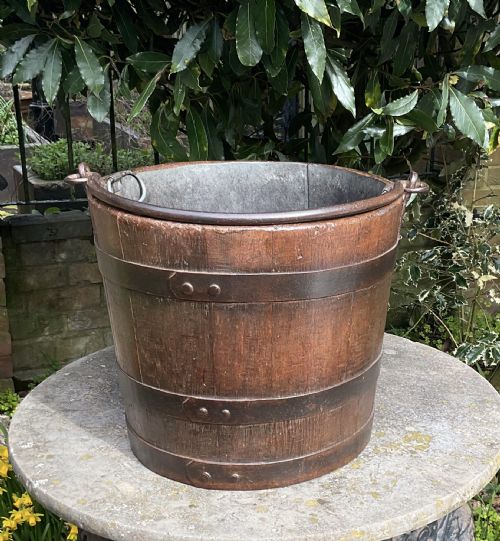


Brass Bound Oak Planter
A brass bound oak planter brings honest wood and polished metal together, offering a practical vessel for indoor greenery.
Brass Bound Oak Planter
A brass bound oak planter combines sturdy timber construction with metal bands, taking the form of buckets, barrels, and jardiniere stands. These pieces originate from Victorian and Edwardian eras, extending through the 1920s and 1930s with Arts and Crafts and English Country influences.
The most common version on this page is the coopered oak barrel or bucket fitted with metal banding, often retaining an interior liner. Examples range from Scottish peat buckets to Dutch styles and pedestal-mounted plant stands by Lister and Co.
How they were made
Craftsmen shaped solid oak staves using traditional cooperage techniques, joining curved wooden sections to form water-resistant vessels. These staves are held together by tight metal bands made of brass, copper, or iron.
Makers integrated metal liners in zinc or copper to protect the wood from moisture and soil. Some designs incorporate mahogany elements or sit upon dedicated wooden stands.
Brass Bound Oak Planter Retail Price Guide 2026
Typical asking prices for brass bound oak planter among the pieces listed under this phrase on Sellingantiques today, from the lower quarter to the upper quarter. They describe what is for sale here now, not the wider market.
Some oak vessels started life containing peat or ice before retiring to the drawing room as plant pots.
What varies in quality
Quality rests upon the precision of the cooperage work and the thickness of the timber used for the staves. Tightly fitted joints and robust metal banding indicate a higher standard of construction.
The presence of original interior liners, patinated brass fittings, and identifiable maker details elevate certain pieces above standard utilitarian vessels.
Lister and Co
The Brass Bound Oak Planter Glossary
- Coopered
- Constructed from wooden staves bound together with hoops, a technique traditionally used for casks and barrels.
- Jardiniere
- An ornamental pot or stand designed to hold growing plants or flowers.
- Stave
- One of the narrow vertical blocks of wood that fitted together form the circular sides of a bucket or barrel.
- Liner
- A protective interior insert, typically made of zinc or copper, placed inside the wooden vessel to hold soil and water.
Brass Bound Oak Planter: Frequently Asked Questions
How were brass bound oak planters originally used?
These vessels served as indoor plant holders, jardiniere stands, and occasionally as ice buckets in domestic interiors.
Their watertight construction protected interior floors and furniture while displaying large potted plants or floral arrangements.
How do I care for a wooden planter?
Keep the wood conditioned and use the internal metal liner to hold soil and water directly.
Avoid letting standing water sit against the oak staves to preserve the integrity of the antique timber.
What periods do these planters come from?
The available pieces span from the mid nineteenth century through the Edwardian era and into the 1930s.
Victorian and Arts and Crafts examples feature alongside pieces from the nineteen twenties.
Are all planters mounted on stands?
Many examples take the form of floor-standing buckets or barrels, while others incorporate dedicated jardiniere stands.
Some designs feature raised pedestal bases or come paired with matching wooden stands.