





Oak Bucket Planter
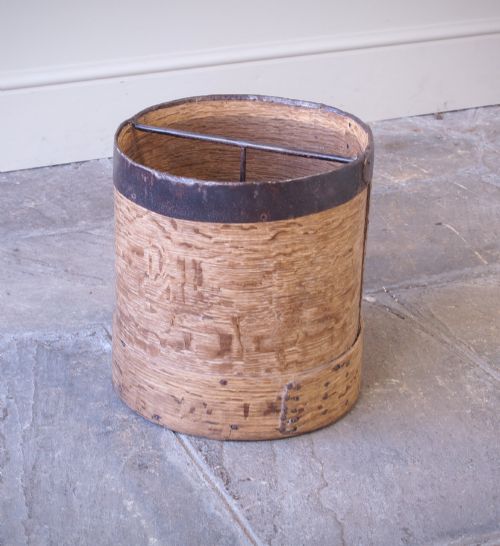
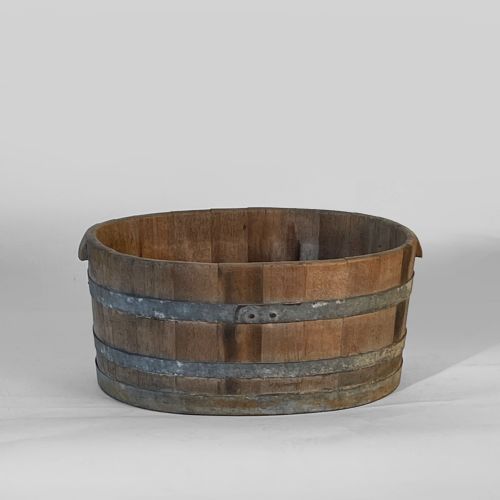
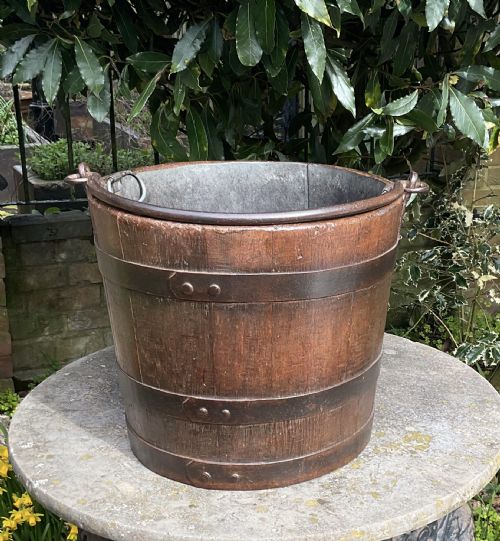
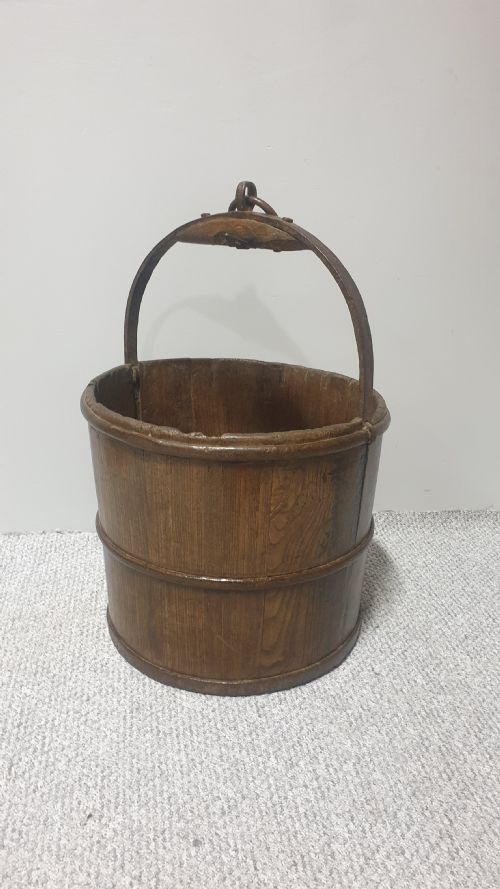
These oak bucket planter examples combine sturdy coopered timber with metal banding, offering traditional utility and rustic charm.
Oak Bucket Planter
An oak bucket planter serves as a practical vessel rooted in agricultural, domestic, and garden traditions, often adapted from earlier storage or washing uses. When exploring the oak bucket planter selection, buyers encounter forms ranging from low jardinieres and tall stick stands to deep log boxes and well buckets.
Makers shaped these items across several periods, including the Georgian, Victorian, and Edwardian eras, alongside regional pieces from English, Scottish, and French workshops. The most common versions on this page utilise coopered construction with distinct stave designs, reflecting vernacular country styles and formal Arts and Crafts aesthetics alike.
How they were made
Artisans constructed these vessels using solid timber staves, primarily oak, shaped and fitted together tightly to form a rounded body. This traditional coopered method relies on precise edge-bevelling so the joints hold liquid or dry goods securely without adhesive.
Staves are secured with external metal bands made of brass, iron, wrought iron, copper, or zinc, often held fast by rivets or overlapping joints. Some pieces incorporate metal liners, handles, or decorative mounts to complete the functional assembly.
Oak Bucket Planter Retail Price Guide 2026
Typical asking prices for oak bucket planter among the pieces listed under this phrase on Sellingantiques today, from the lower quarter to the upper quarter. They describe what is for sale here now, not the wider market.
Listings feature oak combined with brass, iron, copper, and zinc across Georgian, Victorian, and Edwardian periods.
What varies in quality
Quality rests upon the precision of the cooperage, where tightly fitted staves and clean interior lines separate standard utility items from finer decorative pieces. The weight and finish of the metal bands, whether polished brass or hammered iron, also dictate the refinement of the object.
The integrity of the timber and the retention of original components, such as drop handles, liners, or matching stands, elevate the stature of a piece. Better examples display balanced proportions and honest patination gained through decades of use.
Lister and Co
The Oak Bucket Planter Glossary
- Coopered
- Made by a cooper using curved wooden staves bound together with hoops to form a vessel. This technique traditionally produced casks, tubs, and buckets.
- Jardiniere
- An ornamental pot or stand for holding plants or flowers. These items often sit on floor-standing frames or feature decorative metal mounts.
- Stave
- One of the narrow vertical strips of wood that form the sides of a coopered bucket or barrel. Staves are bevelled on the edges to fit closely together.
- Patina
- The surface sheen and colour developed by wood and metal over years of handling, exposure, and age. This quality reflects the history of the object.
Oak Bucket Planter: Frequently Asked Questions
How do I care for an oak bucket planter?
Protect the timber by using a watertight plastic or metal liner inside the vessel when housing living plants. This prevents moisture from directly contacting the interior staves and causing the wood to swell or decay.
Dust the exterior gently and apply a light wax periodically to maintain the condition of the oak without altering the historic finish. Avoid placing the item in direct sunlight or near strong heat sources.
How can I tell the period of a piece?
Examine the construction methods, the type of metal used for the bands, and the overall style of the turning or handles. Georgian and Victorian examples often show hand-forged iron or heavy brass fittings, while Edwardian pieces may feature cleaner Arts and Crafts lines.
Pat patina and tool marks left on the timber staves also offer clues regarding age. Comparing the joinery with dated examples helps narrow down the era of manufacture.
Can these planters be used outdoors?
While many of these vessels were designed for garden or well use, antique items require sheltered placement to survive outdoor conditions. Extended exposure to rain and frost can weaken the metal bands and damage historic timber.
Using them on a covered patio or bringing them inside during colder months helps preserve the structural integrity of the coopered body.