
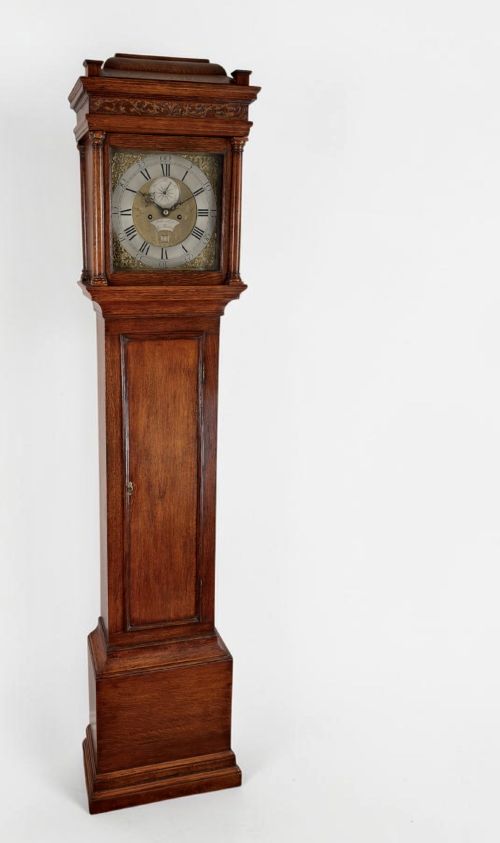
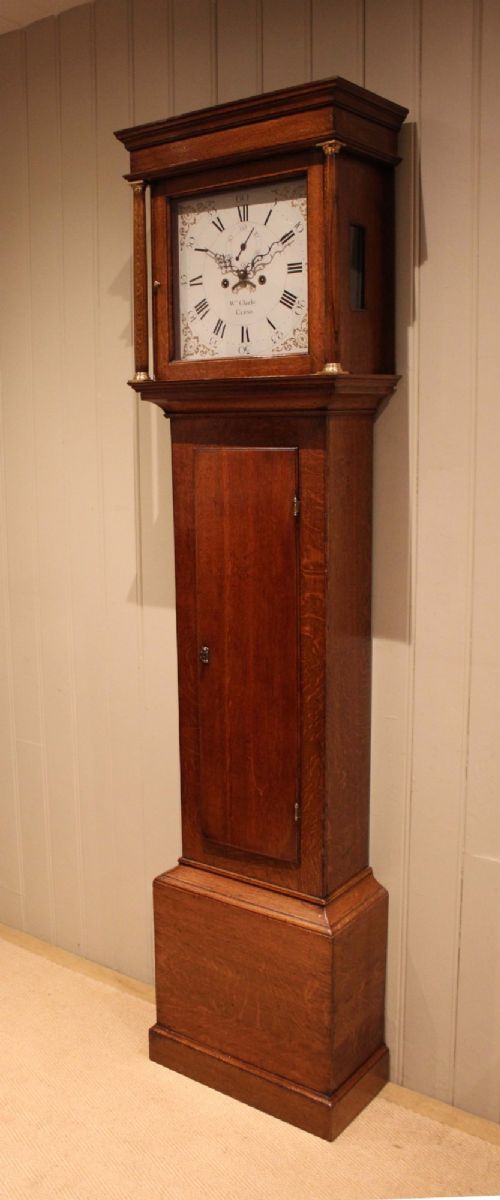
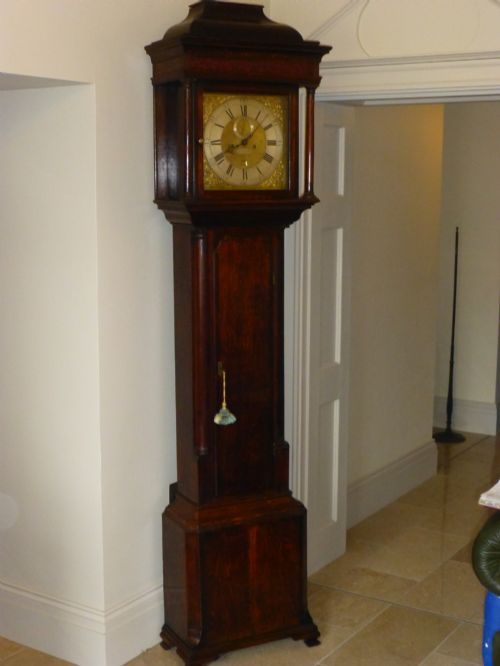
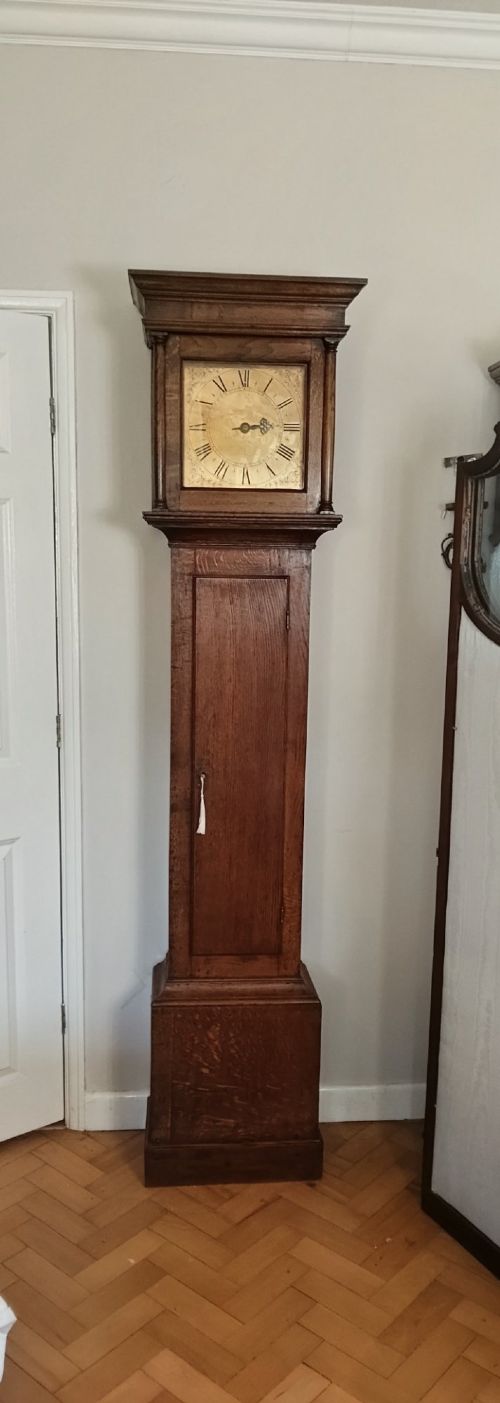


Vintage Oak Standing Clock
A vintage oak standing clock brings the measured tick of centuries into a room, grounding the space with architectural presence and honest timber.
Vintage Oak Standing Clock
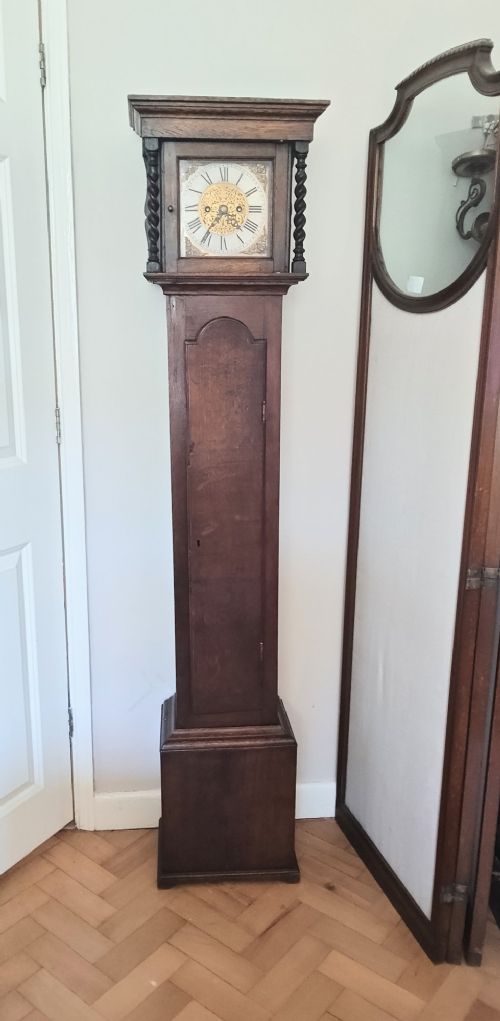
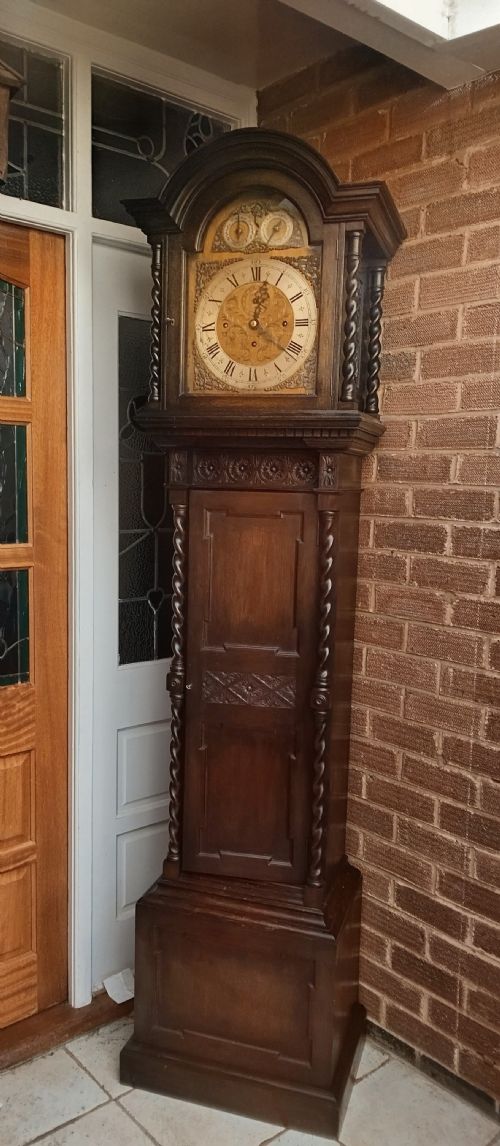
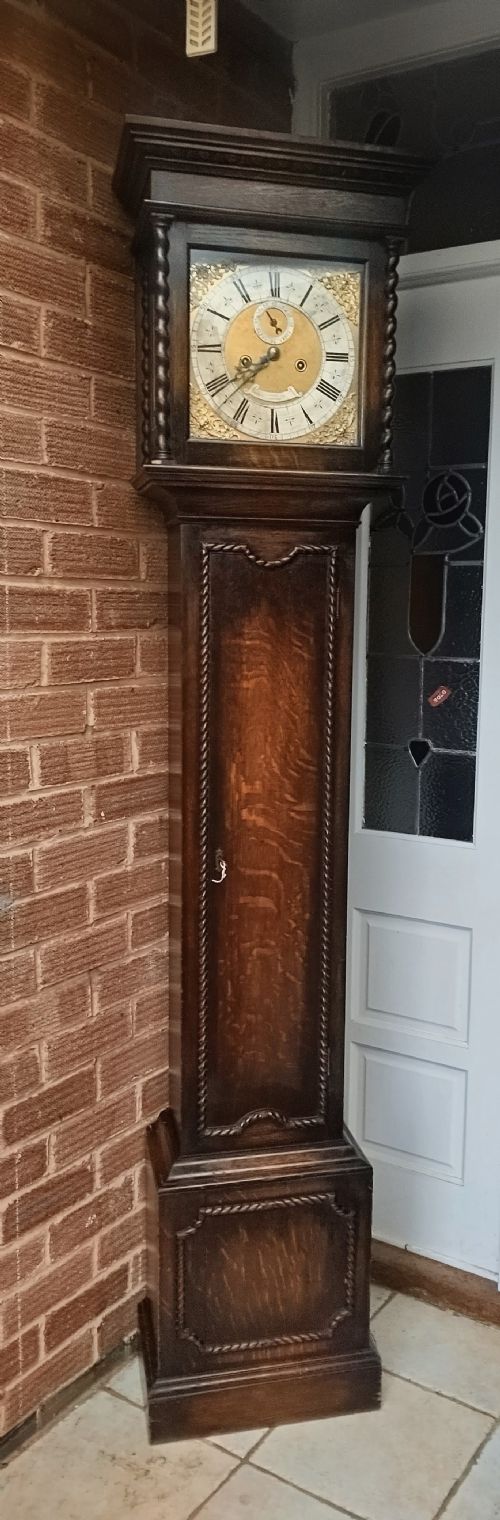
A vintage oak standing clock encompasses tall floor-standing timepieces, most frequently encountered as longcase clocks or grandfathers spanning from the Georgian period through to the nineteen thirties. These upright horological pieces range from full-height regional English examples down to more compact grandmother clocks produced in later decades.
Makers working across various counties housed weight-driven or spring-driven movements inside timber cases, creating domestic centerpieces that combined utility with craftsmanship. The listings on this page reflect this span, including regional country timepieces alongside later Edwardian and Art Deco interpretations.
How they were made
Construction relies primarily on solid oak, frequently paired with secondary woods like mahogany or walnut and accented by brass dials, glass hoods, and iron components. Regional makers built tall trunk cases designed to protect the pendulum and weights while showcasing the natural grain of the timber.
Movements span from thirty-hour country clocks to eight-day mechanisms and complex chiming systems, often featuring painted or engraved brass faces signed by the maker.
Some models play up to four different melodies, proving that old clocks liked a tune as much as anyone.
What varies in quality
Quality rests in the harmony between the movement and the case, alongside the crispness of brass dial engraving and the depth of the oak timber. Regional signed dials from makers in towns like Stockport, Henley, or Tewkesbury demonstrate individual skill in both horology and cabinet work.
Later twentieth-century examples show different industrial approaches, from musical chiming systems to patented German movements housed in oak or Black Forest cases.
Lee of Great Marlow·Richard Corless of Stockport·Thomas Webbe of New Quay·Richard Prew Of Tewksbury·Samuel Young Nantwich & Bunbury·Jn Wright Linton
The Vintage Oak Standing Clock Glossary
- Longcase clock
- A tall pendulum clock enclosed in a wooden case standing directly on the floor. These are commonly referred to as grandfather clocks.
- Grandmother clock
- A smaller, more slender version of the longcase clock, typically produced during the Victorian and later periods. They suit rooms with lower ceilings.
- Dial
- The face of the clock where the hours and minutes are displayed. Brass and painted iron are the materials seen in these pieces.
- Movement
- The internal mechanical workings of a clock that drive the gear train, escapement, and striking mechanism. Weights or springs supply the power.
Vintage Oak Standing Clock: Frequently Asked Questions
How do I tell an 18th-century clock from a later one?
Eighteenth-century examples often display simpler proportions with square brass dials and heavy oak trunk construction. Regional signatures engraved directly onto the brass plate point toward earlier country workshops.
Later pieces from the Victorian and Edwardian eras introduce arched dials, painted iron faces, and more compact proportions such as the grandmother clock format.
Where should I place a longcase clock?
These tall timepieces require a stable, level floor and a solid wall to anchor the case securely. Keeping them away from direct sunlight and dampness protects the oak timber and the interior movement.
Allow enough clearance around the hood for daily winding or pendulum access depending on whether the movement uses weights or springs.
What is the difference between a grandfather and grandmother clock?
Grandfather clocks are full-height floor-standing timepieces designed with substantial proportions to house long pendulums and heavy driving weights. They form the traditional tall shape seen in Georgian country houses.
Grandmother clocks scale down these dimensions into a shorter, narrower case suited for smaller rooms, typically emerging in the later nineteenth and early twentieth centuries.
How do eight-day movements work?
An eight-day movement requires winding approximately once a week using a key or crank to pull the driving weights back up inside the trunk. This system offers greater convenience than thirty-hour clocks that demand daily attention.
Many regional and later chiming examples utilise this setup to maintain steady timekeeping without constant intervention.