

Vintage Oak Filing Cabinet
A vintage oak filing cabinet brings serious workspace character into a home, offering sturdy storage built to last.
Vintage Oak Filing Cabinet
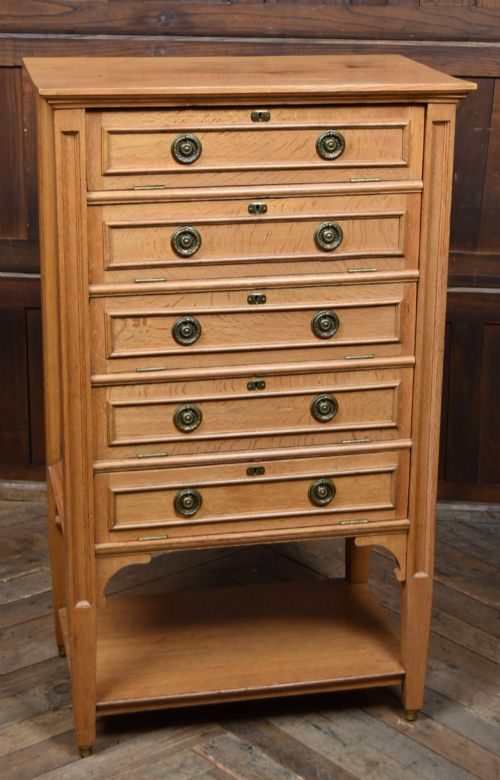
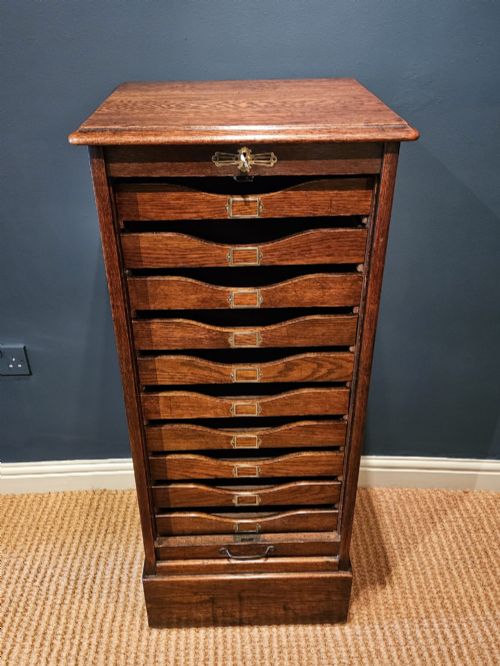
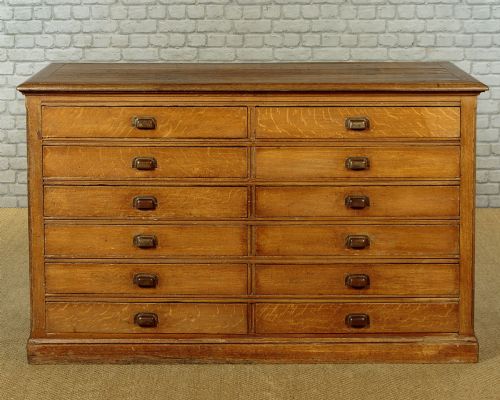
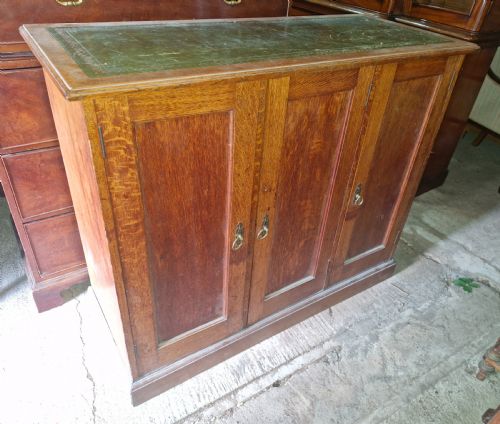
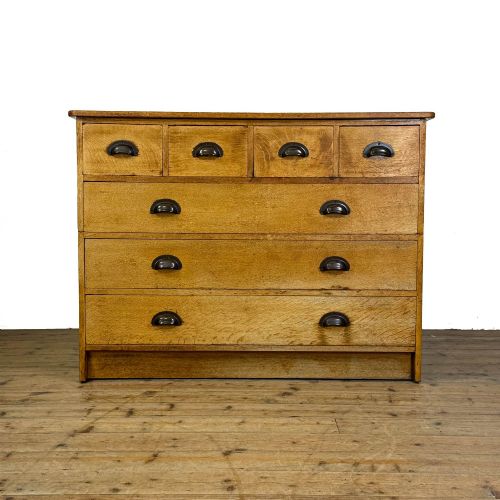
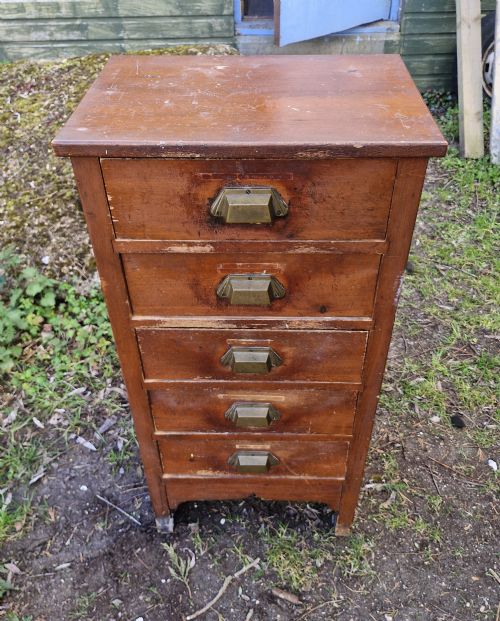
When you search for a vintage oak filing cabinet, you encounter sturdy office furniture designed for paper management across the Edwardian era, the nineteen-twenties, and the nineteen-thirties. These practical items range from small desktop drawers and single tambour door units to tall banks of twelve or more drawers and plan chests.
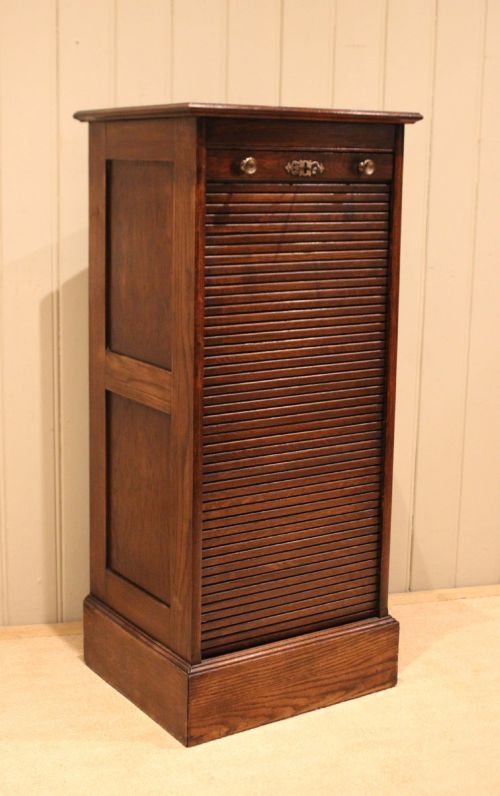
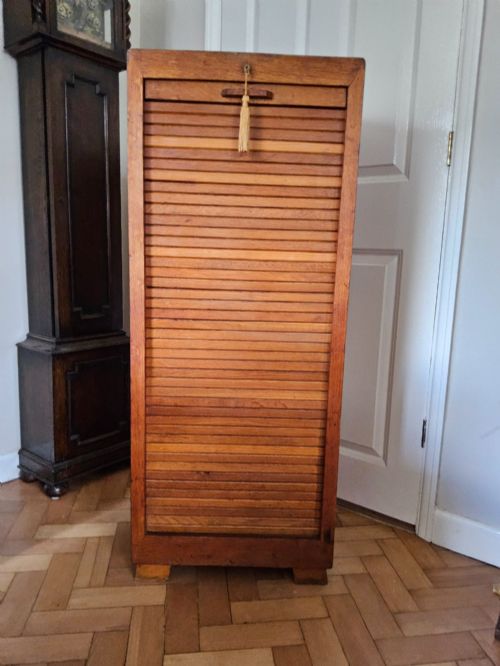
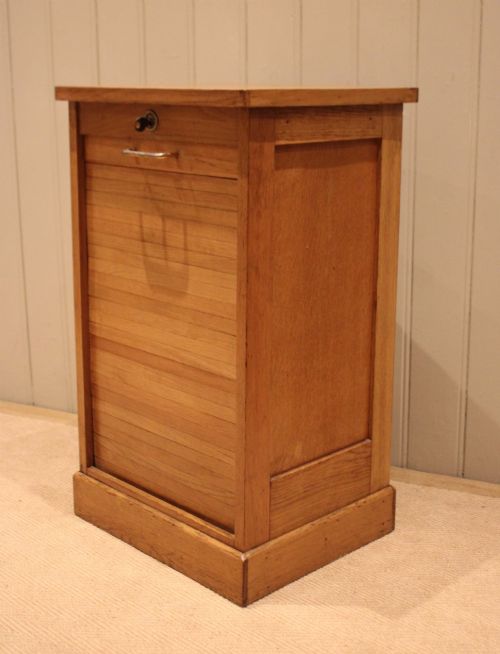
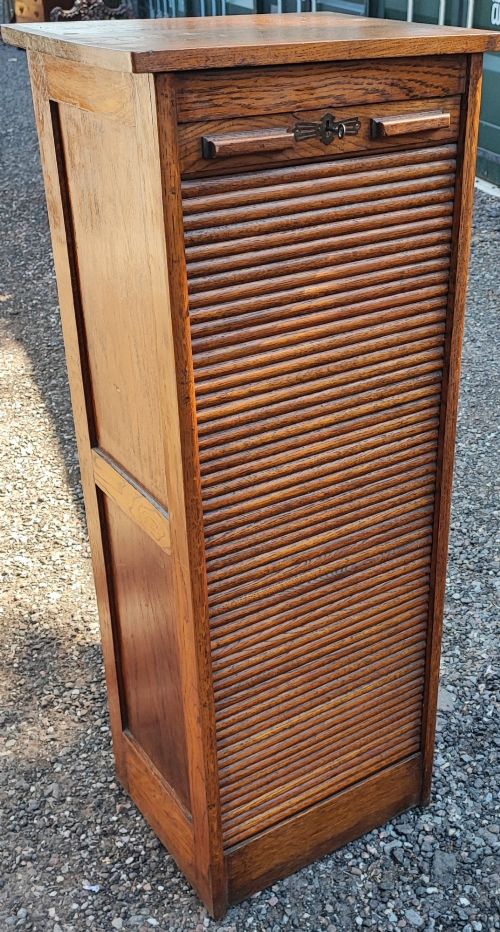
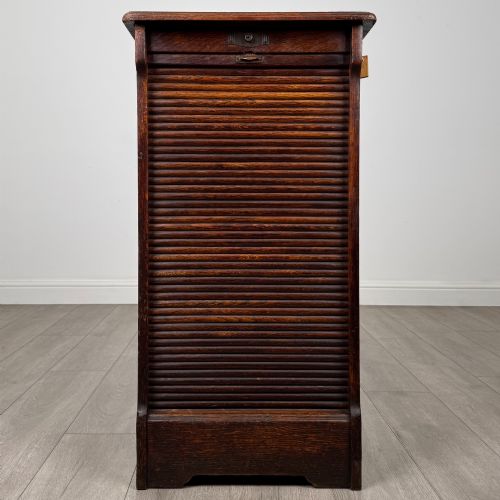
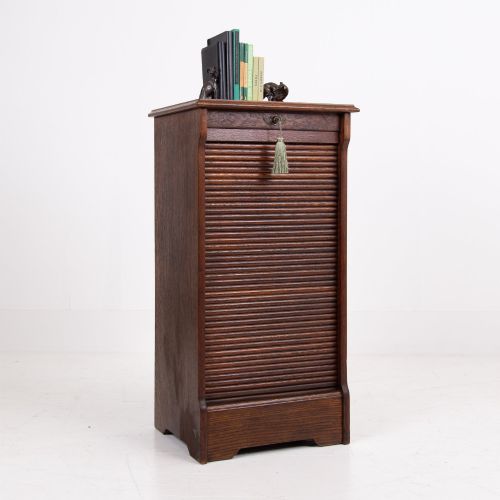
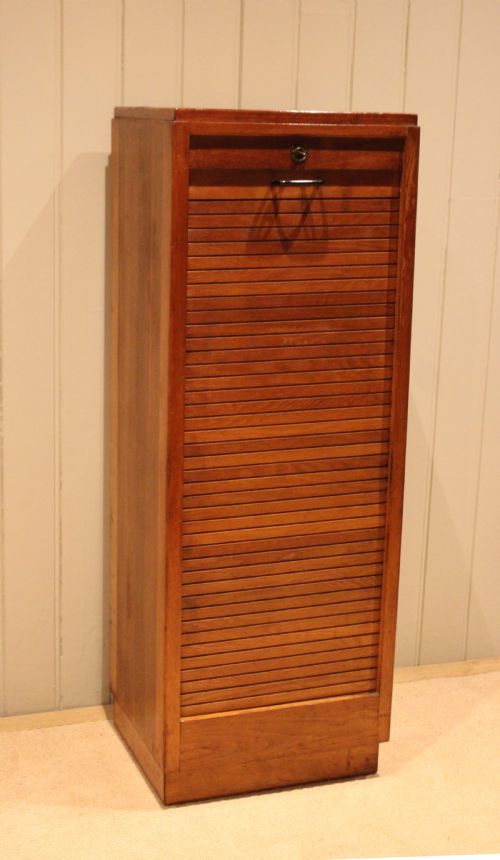
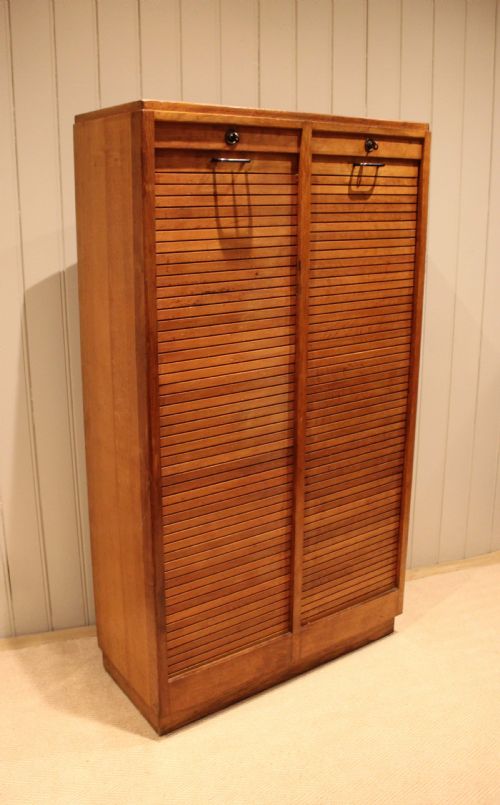
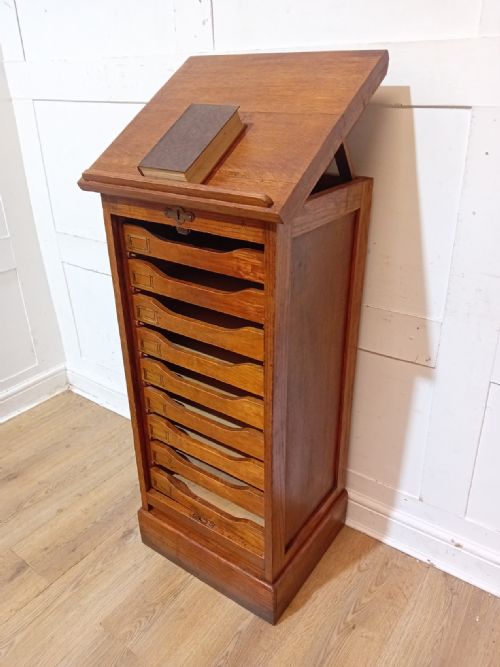
The version you meet most frequently on this page is the tambour front filing cabinet in oak, often dating from nineteen-ten to nineteen-thirty. These pieces conceal internal letter files or shallow drawers behind slatted wooden shutters that slide smoothly around a track.
Beyond standard office files, the selection includes related storage forms such as music cabinets, haberdashery units, and patented letter files by makers like Amberg and Shannon. British, French, and Victorian examples appear alongside industrial utility pieces.
How they were made
Makers utilised solid oak and oak veneers for the primary carcases and drawer fronts, pairing the timber with brass, steel, and metal hardware. Interiors occasionally incorporate canvas, leather, and pine components to support filing systems and drawer runners.
Tambour doors required precise woodworking, joining small horizontal strips of oak to flexible canvas or fabric backings so the shutter could curve around the cabinet sides. Brass handles, label holders, and patent locking mechanisms were then fitted to complete the functional design.
The archive includes specialised pieces ranging from music cabinets and plan chests to patent letter files and multi-drawer haberdashery units.
What varies in quality
The distinction between standard office utility and finer craftsmanship rests on timber selection and mechanical execution. Superior examples feature closely figured oak, panelled sides, and smoothly operating tambour mechanisms that glide without catching.
Patented filing systems and signed maker pieces represent a higher tier of production. The presence of original, well-cast brass handles and intact internal pigeonholes or drawer dividers elevates the standing of an individual cabinet.
Maple and Co·Amberg·Shannon
The Vintage Oak Filing Cabinet Glossary
- Tambour front
- A sliding door or shutter formed of narrow slats of oak glued to a flexible backing fabric. This clever mechanism slides around the side of the cabinet to conceal the interior.
- Plan chest
- A wide, shallow set of drawers originally designed for storing architectural blueprints and large maps. They provide generous flat storage surfaces.
- Tambour
- The slatted shutter construction method used on office cabinets to save space where hinged doors would prove impractical in a crowded room.
- Bank of drawers
- A tall or wide multi-drawer storage unit designed for systematic organisation. Collectors value them for sorting papers, stationery, or small collections.
- Haberdashery cabinet
- Retail shop storage furniture featuring numerous shallow glass-fronted or wooden drawers. They share similar proportions to large filing units.
Vintage Oak Filing Cabinet: Frequently Asked Questions
How do tambour doors work?
Tambour doors consist of narrow wooden slats attached to a flexible canvas backing that runs along a recessed track inside the cabinet frame. This allows the shutter to curve seamlessly around the side of the unit.
When opened, the door slides completely out of sight into the body of the cabinet, making them ideal for tight office spaces where swinging doors would obstruct movement.
Can these fit modern paper sizes?
Many vintage filing cabinets and letter files were built for older paper dimensions or specific filing systems like Amberg and Shannon patents. Internal drawer dimensions vary considerably across different periods.
It is sensible to check the internal drawer or pigeonhole measurements against your specific storage needs before placing one in a modern home office.
How do I date an oak filing cabinet?
Dating relies on stylistic clues, hardware designs, and construction methods visible across Edwardian, Victorian, and later utility periods. Patent stamps and brass manufacturer plates also provide reliable chronological markers.
Edwardian pieces often display rich polished oak and detailed brass pulls, while nineteen-forties French utility or industrial examples feature simpler, more stripped-back surfaces.
Are plan chests suitable for daily use?
Plan chests offer exceptionally deep and wide surface areas combined with numerous shallow drawers, making them robust enough for regular daily organisation. The heavy oak construction stands up well to frequent opening.
Their substantial footprint requires adequate floor space, but the generous top surface provides an excellent table or display area in a study.