




Vintage Oak File Chest
These vintage oak file chests offer utilitarian storage built to last, bringing solid construction and period character to any room.
Vintage Oak File Chest
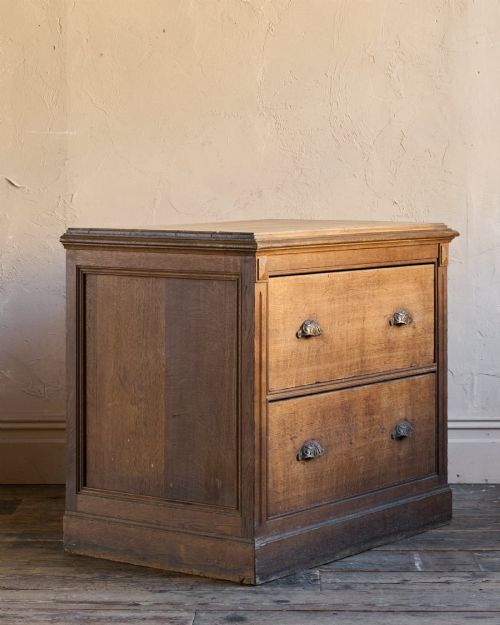
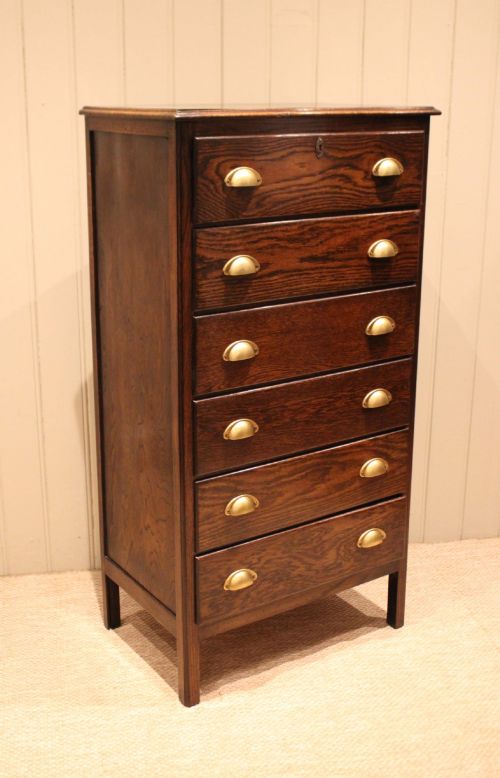
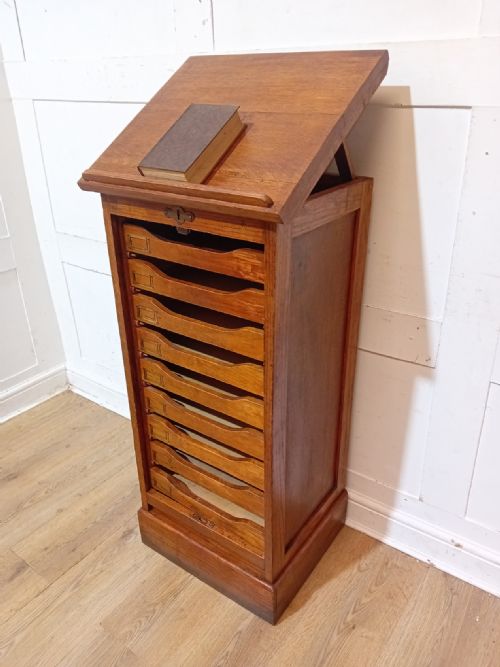
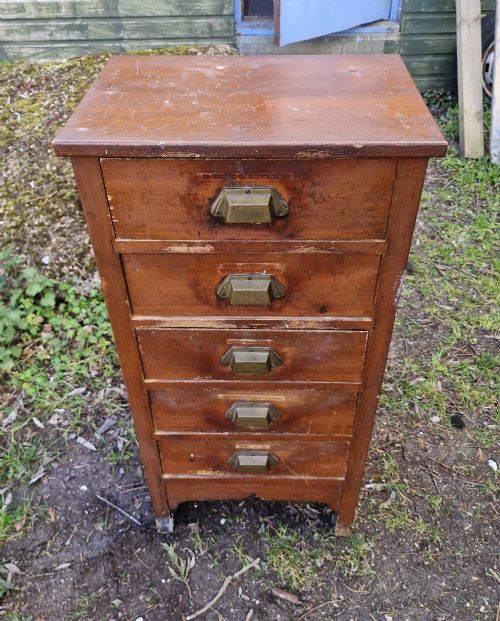
A vintage oak file chest is a practical storage piece designed for papers, documents, and office supplies, frequently taking the form of vertical filing cabinets, multi-drawer banks, and plan chests. These items originate from the Victorian, Edwardian, and mid-century periods, reflecting the heavy administrative demands of those eras.
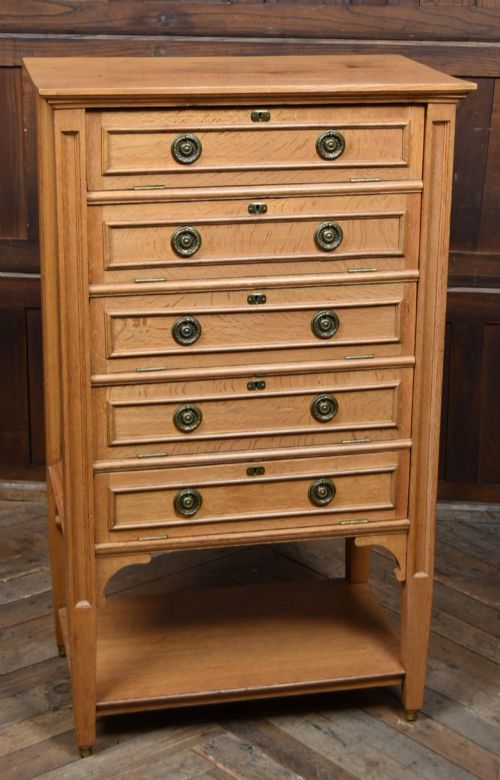
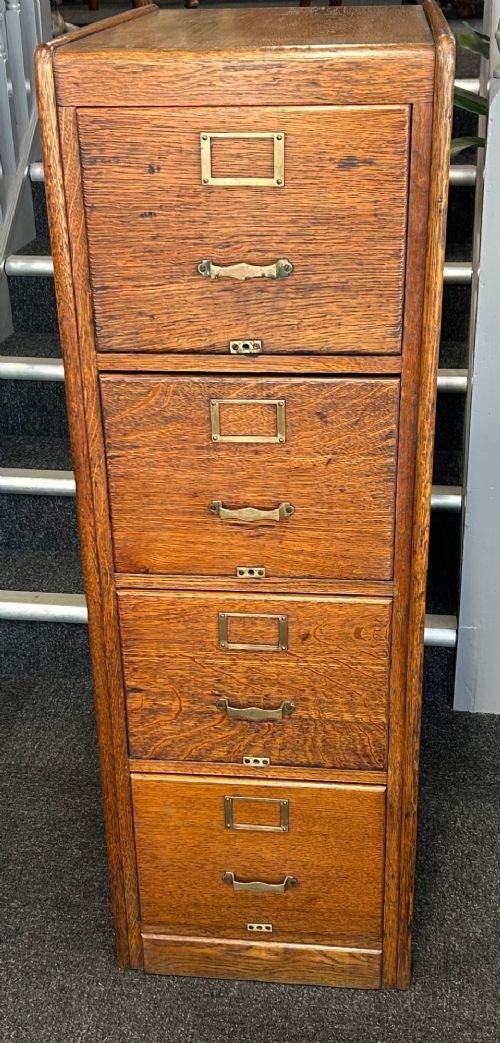
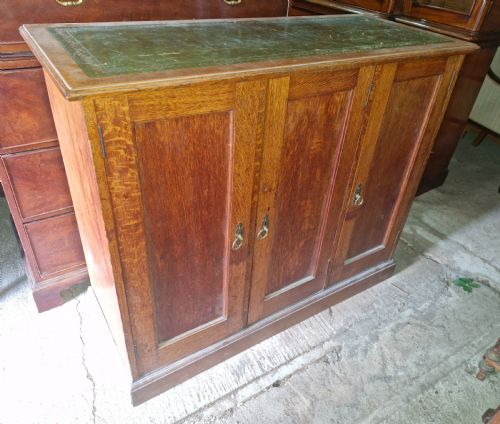
Buyers seeking a vintage oak file chest will find configurations ranging from tall five-drawer office cabinets and tambour-front units to expansive plan chests and specialised music filing cabinets. The majority date from the early 20th century, combining robust commercial utility with domestic usability.
Originating primarily from commercial and office environments, these chests utilise sturdy hardwoods to withstand daily handling. Their enduring appeal lies in their capacity to organise modern spaces while retaining the genuine patination of working antique furniture.
What varies in quality
Quality differences emerge in the execution of mechanical elements such as tambour doors, sliding mechanisms, and adjustable internal shelving. Superior examples retain original patent hardware and maker-specific locking systems that operate smoothly despite heavy age.
The choice of timber figure and the depth of the natural oak grain distinguish standard commercial grade items from finer bespoke office furniture. Superior pieces exhibit careful matching of timber across multiple drawers and well-preserved brass furniture.
Vintage Oak File Chest Retail Price Guide 2026
Typical asking prices for vintage oak file chest among the pieces listed under this phrase on Sellingantiques today, from the lower quarter to the upper quarter. They describe what is for sale here now, not the wider market.
The selection includes specialised forms such as tambour cabinets, plan chests, music cabinets, and multi-drawer banks.
Maple and Co·Shannon·Amberg
The Vintage Oak File Chest Glossary
- Tambour cabinet
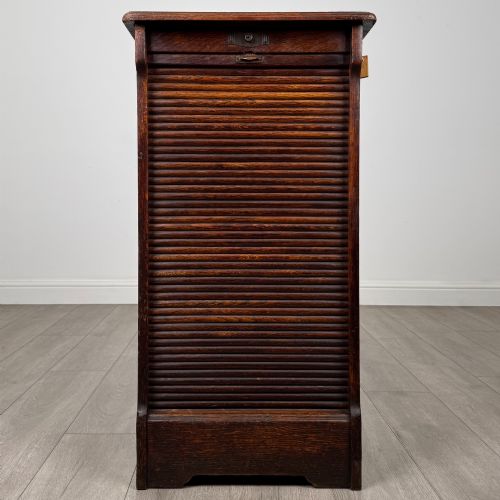
- A storage unit featuring a flexible door made of narrow strips of wood glued to canvas backing, allowing it to slide smoothly around a curved track. This mechanism conceals the interior compartments while saving exterior space.
- Plan chest
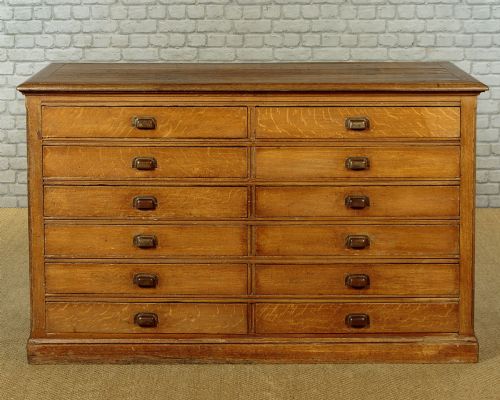
- A wide, shallow set of drawers specifically engineered for storing large architectural drawings, maps, and blueprints flat. These pieces provide expansive surface areas alongside numerous low-profile tiers.
- Bank of drawers
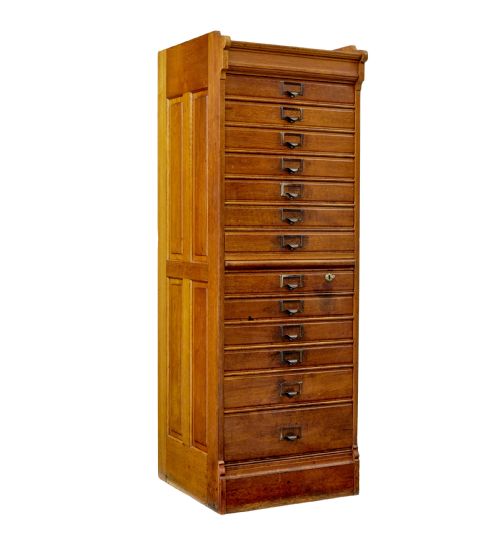
- A large cabinetry unit containing many individual small drawers stacked in columns and rows, frequently utilised for sorting documents or specimens. They often feature small brass label holders on each drawer front.
- Haberdashery cabinet
- A retail storage piece comprising multiple glazed or shallow drawers designed originally for displaying textiles and small goods. Their compartmentalized interiors suit modern desktop and collector storage needs.
Vintage Oak File Chest: Frequently Asked Questions
How do I date a vintage oak file chest?
Dating relies on examining construction methods, hardware styles, and patent stamps found on the timber or metal fittings. Pieces from the Victorian and Edwardian eras generally display heavier brass handles and traditional dovetail joints, whereas 1930s and mid-century utility pieces favor simplified lines.
Makers' marks or patent names stamped into the woodwork or metal lock plates offer definitive chronological markers. Comparing the drawer configuration and secondary woods like pine further clarifies the period of manufacture.
Can I use these cabinets for modern paper sizes?
Many vintage oak file chests accommodate modern paper formats, though internal dimensions vary considerably depending on the original commercial purpose. Vertical filing cabinets and specific A4 collector drawers fit standard documents easily.
Plan chests and larger drawer banks easily hold modern large-format papers flat. Checking the internal width and depth of individual drawers ensures compatibility with contemporary filing supplies.
How should I care for the oak surface?
Maintaining the oak finish requires occasional treatment with quality beeswax or furniture polish to nourish the timber and prevent drying. Avoiding direct sunlight and sustained moisture protects both the wood and the original brass hardware.
Gentle dusting with a soft cloth preserves the accumulated patination of the piece. Harsh chemical cleaners must be avoided to protect the historic polish.
What is a tambour door?
A tambour door consists of narrow wooden slats attached to a flexible canvas backing that runs in a grooved track. This design allows the door to slide sideways or vertically around a curve to enclose the cabinet interior.
This mechanism was particularly popular in early 20th-century office furniture for its space-saving qualities. It requires clean tracks and occasional light lubrication to maintain smooth operation.