


Oak Filing Drawers
Oak filing drawers bring practical order and rich grain to a room, offering sturdy storage built to last.
Oak Filing Drawers
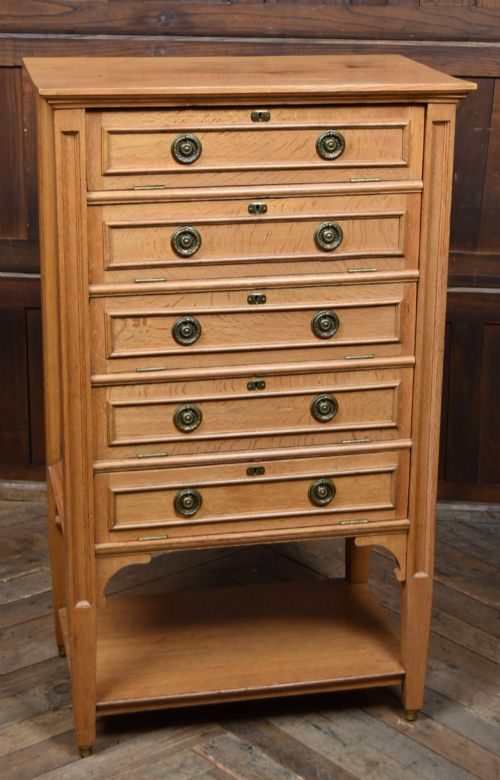
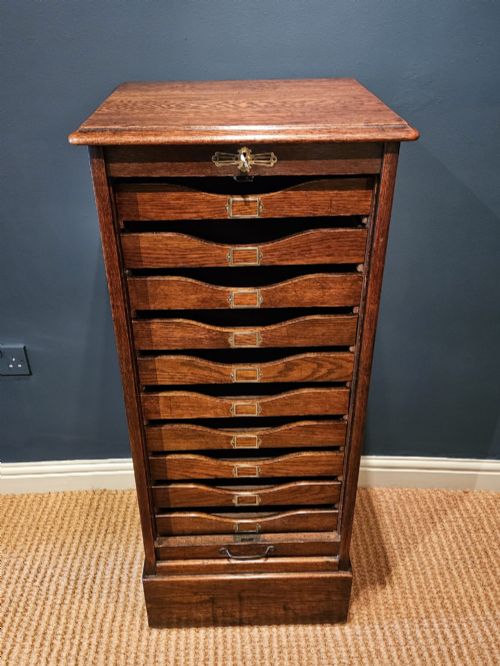
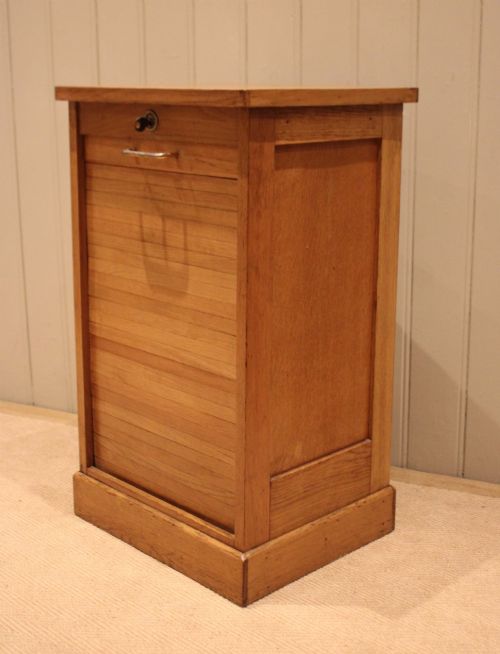
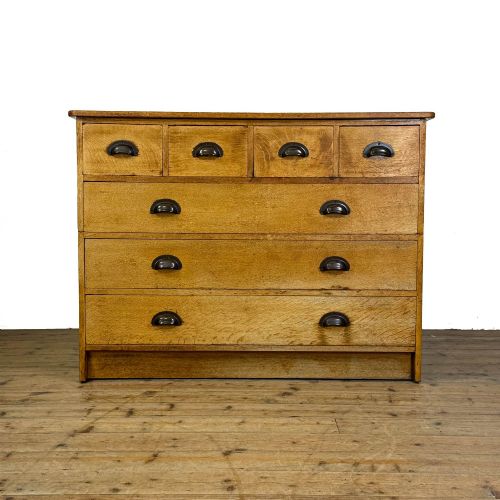
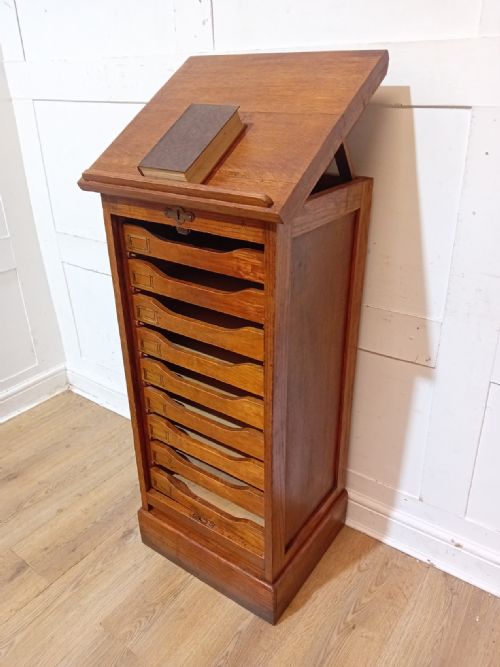
Oak filing drawers span the late Victorian period through the Edwardian era into the 1930s and mid-century, emerging in offices, banks, and shops to manage expanding paperwork. You will frequently find tall banks of drawers, index cabinets, and tambour front designs built from solid timber.
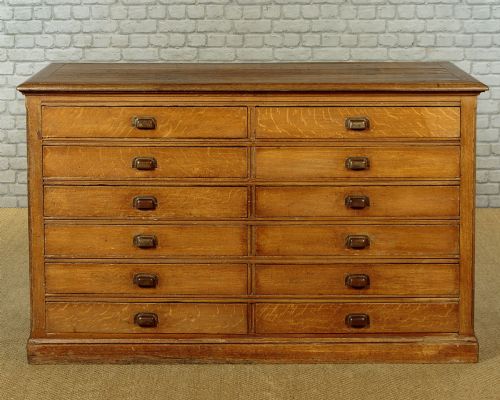
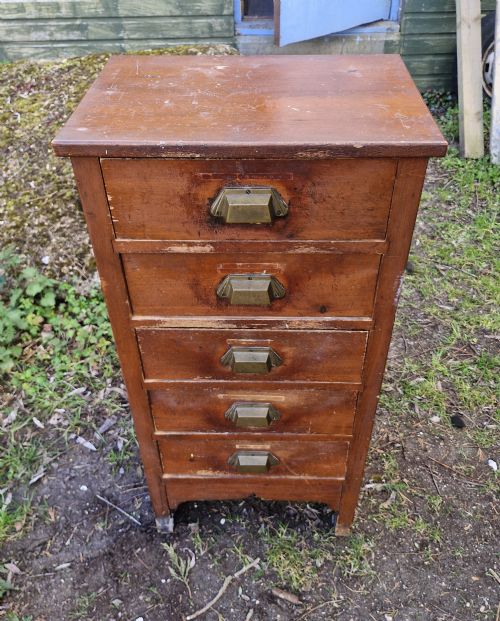
The pieces on this page range from compact desktop units and small office cabinets to large banks holding dozens of drawers. Many survivors show commercial or industrial utility, built for heavy daily use rather than domestic display.
Makers such as Shannon and Amberg patented specific letter file mechanisms that appear in these cabinets. Alongside standard office pieces, you will encounter plan chests, haberdashery units, and Wellington chests adapted for filing.
Materials and Construction
Makers relied primarily on oak, supplemented by pine for internal framing and secondary woods. Brass and steel hardware, including handles, label holders, and locking mechanisms, provide both structure and contrast against the timber.
Tambour fronts utilise narrow wooden slats glued to a canvas backing, allowing the door to slide smoothly around a curved track. Dovetail joints secure the drawer corners, ensuring the structure withstands continuous pulling and weight.
Some cabinets hide sixty-six tiny drawers designed to swallow a Victorian clerk's entire universe of paper clips.
Assessing Quality
The calibre of a piece rests on the selection of the oak, whether straight-grained or richly figured, and the integrity of the original hardware. Finer examples retain their working brass fittings, secure paneling, and smooth-sliding drawers without excessive timber shrinkage.
Complex mechanisms, such as functioning tambour doors and proprietary filing systems, elevate a piece above standard utility furniture. Complete sets with matching internal dividers and intact maker plaques represent the higher tier of survival.
Amberg·Shannon·Maple and Co
The Oak Filing Drawers Glossary
- Tambour
- A flexible sliding door made of narrow wood strips attached to fabric backing. It rolls along a recessed track to conceal the drawers inside.
- Wellington chest
- A tall, narrow chest of drawers secured by a single hinged locking side bar. This locking stile fastens over the drawer edges for security.
- Plan chest
- A wide, shallow set of drawers designed for storing blueprints, maps, and large sheets of paper. These units offer deep horizontal storage capacity.
- Dovetail
- A joint formed by interlocking wedge-shaped fingers, standard in quality drawer construction. It provides high tensile strength against being pulled apart.
- Index filing drawers
- Smaller partitioned compartments built to hold reference cards or specific paper sizes. They often include internal brass rod supports for card retention.
Oak Filing Drawers: Frequently Asked Questions
How do tambour doors work?
Tambour doors slide along curved wooden or metal grooves cut into the sides of the cabinet. The flexible wooden slats bend around corners to open or close smoothly.
Keeping the tracks clean and lightly waxed ensures the mechanism operates properly without binding or sticking in dry weather.
What were index filing drawers used for?
Index drawers held small reference cards, index records, and correspondence files in offices and libraries. Their compact proportions suited rapid sorting and retrieval.
Many retain internal metal rods or adjustable blocks to keep cards upright during daily use.
How do I date an oak filing cabinet?
Dating relies on hardware styles, construction methods, and patent dates stamped on internal metalwork. Edwardian and Victorian pieces often display heavier brass pulls and traditional dovetails.
Later 1930s examples shift towards simpler lines, utility standards, and lighter oak finishes.
Can I use these cabinets for modern paper?
Many historical filing drawers accommodate modern paper sizes, though some specialised index units suit smaller cards or specific document formats. Measuring the internal drawer dimensions before purchase confirms compatibility with standard folders.
Their sturdy construction easily supports contemporary domestic or office storage needs.