


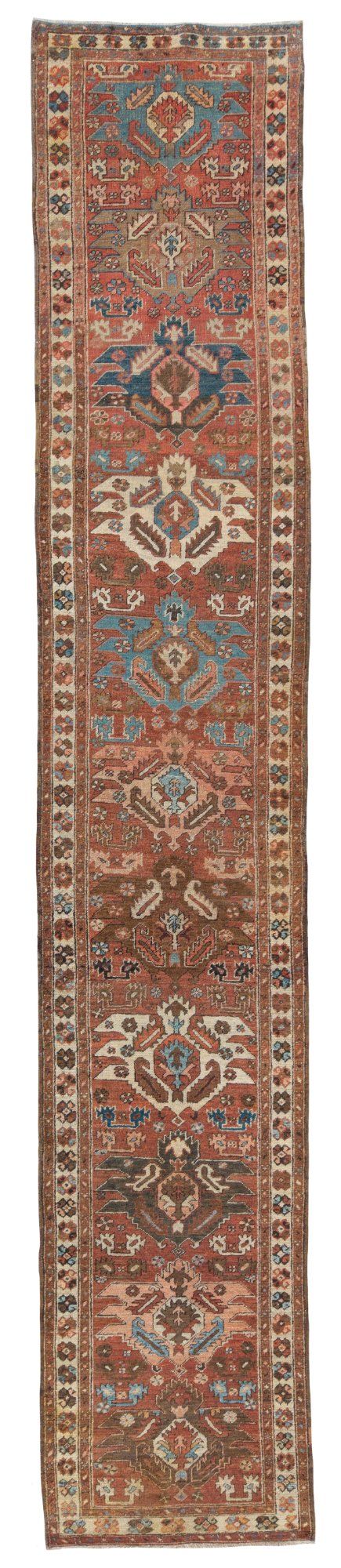
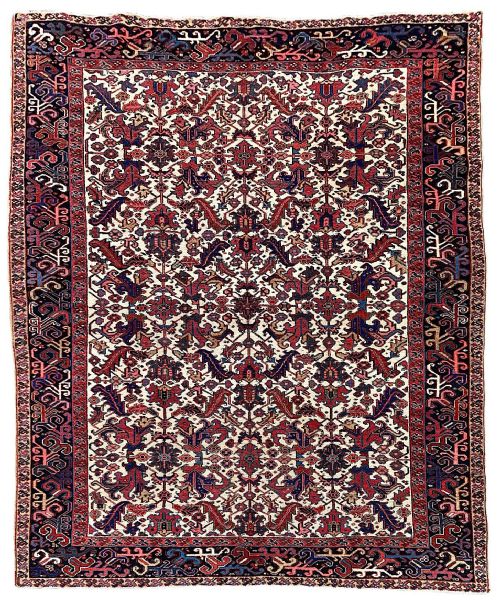
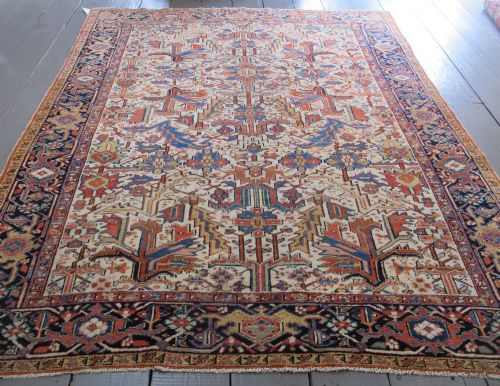
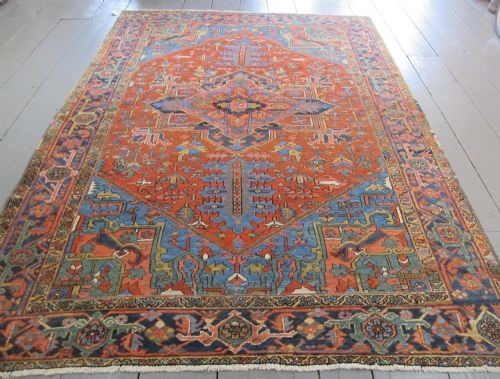
Vintage Northwest Persian Rug
A vintage northwest persian rug brings geometric strength and village character into a room through dense, time-tested knotting.
Vintage Northwest Persian Rug
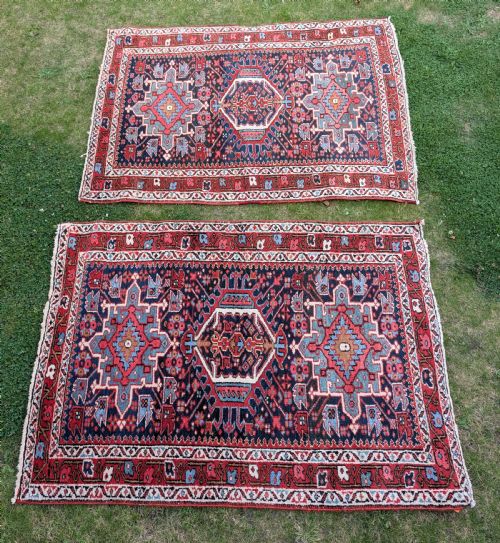
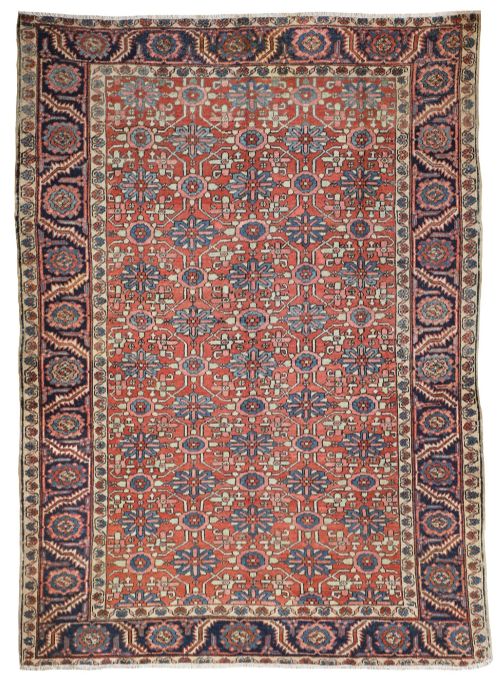
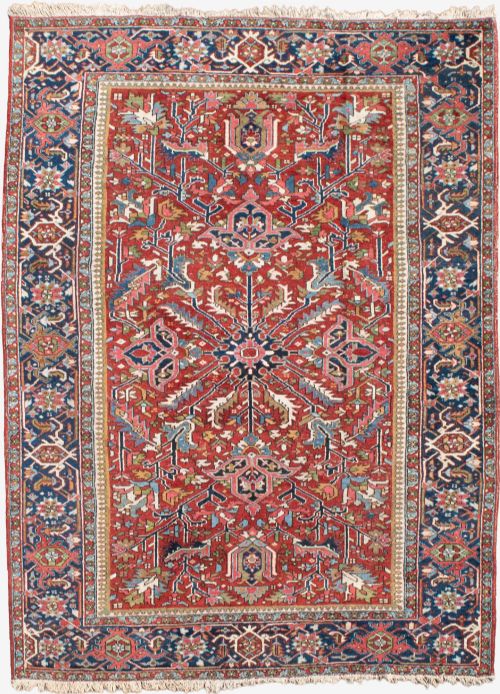
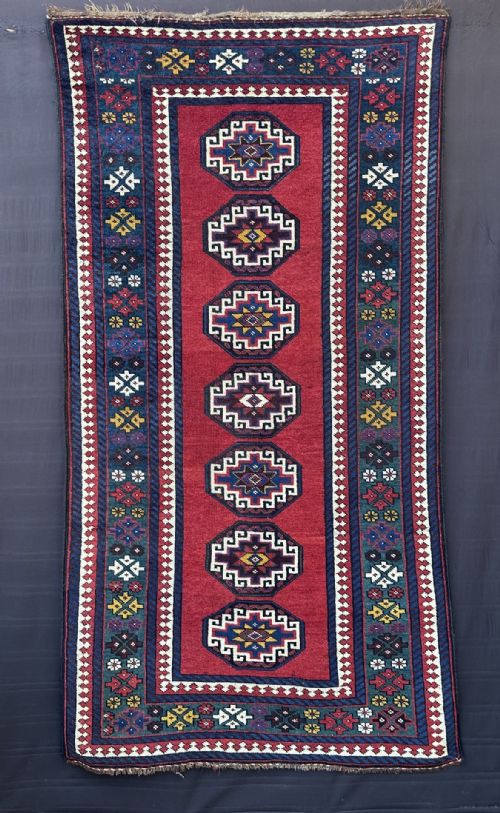
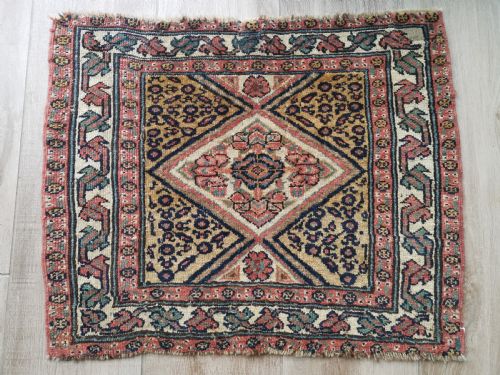
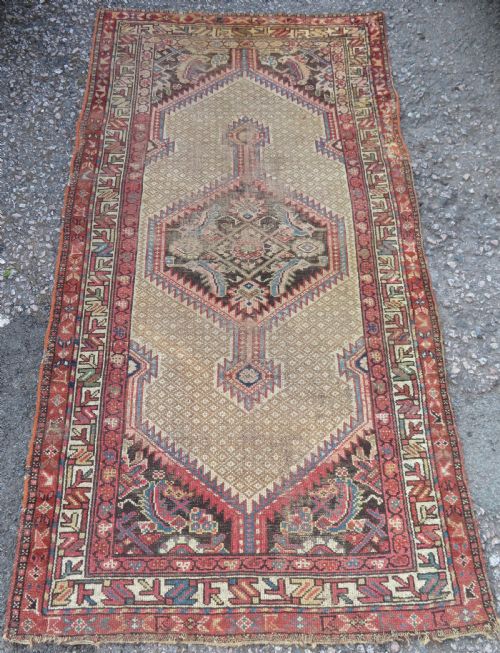
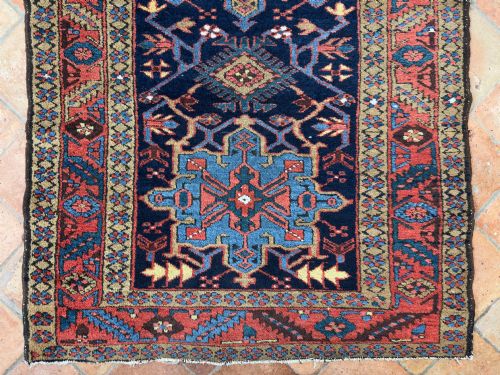
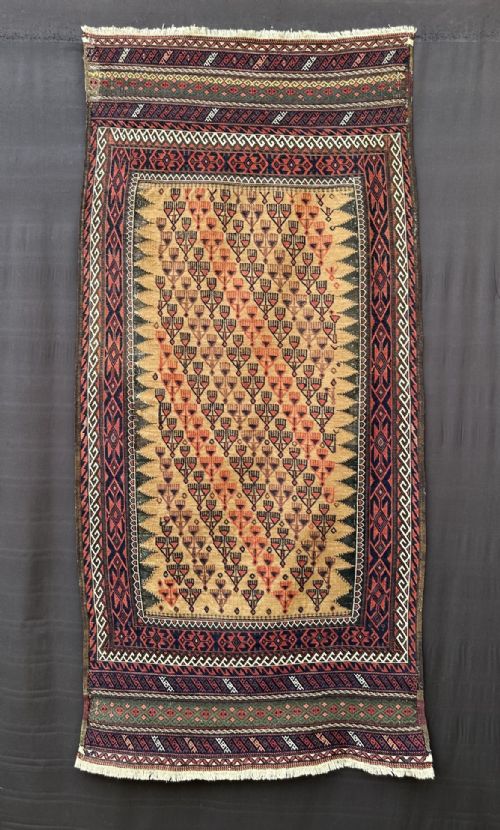
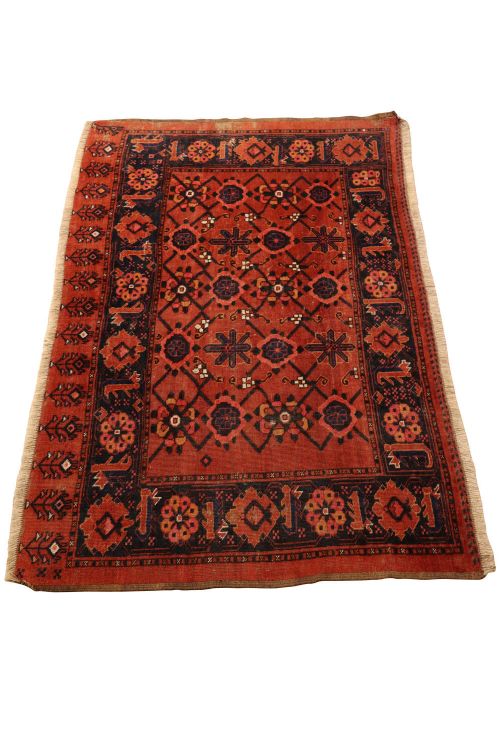
A vintage northwest persian rug encompasses hand-knotted wool floor coverings originating from historic weaving centres and tribal districts across the northern territories of Iran. These pieces emerge in formats ranging from small scatter rugs and square room-size carpets to long hallway runners and nomadic bag faces.
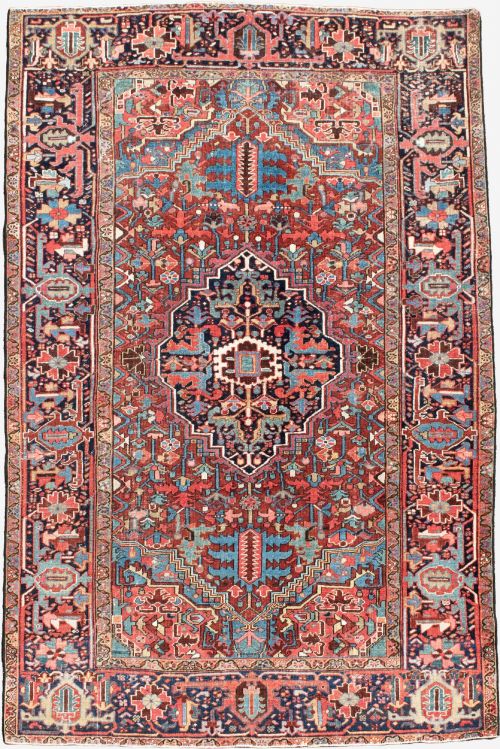
The most common examples encountered in this category include Heriz carpets and runners alongside Karaja rugs produced during the late nineteenth and early twentieth centuries. Village weavers in these regions relied on geometric medallions, bold repeating motifs and robust palettes rather than the refined curves typical of urban workshops.
Buyers select these floor coverings for their architectural structure and durable construction, which withstands heavy foot traffic while anchoring traditional or modern interiors. Each piece reflects the distinct local weaving traditions of specific valleys and towns within the broader northwest region.
Materials and construction
Weavers constructed these carpets using hand-spun wool for the pile, which provides natural resilience and absorbs vegetable and early synthetic dyes with rich variation. Cotton foundations, including cotton warp threads, supplied structural stability and allowed weavers to maintain straight margins across large room-size formats.
Nomadic and village groups occasionally incorporated camel hair into the pile for natural un-dyed brown tones or utilised specialised materials like silk accents in specific urban-influenced pieces. Artisans tied dense knots by hand onto upright looms, securing the ends with woven kilim finishes and overcast selvedges.
Vintage Northwest Persian Rug Retail Price Guide 2026
Typical asking prices for vintage northwest persian rug among the pieces listed under this phrase on Sellingantiques today, from the lower quarter to the upper quarter. They describe what is for sale here now, not the wider market.
Listings feature pieces spanning from the 1850s through the 1930s, utilising wool, cotton, and camel hair.
Markers of distinction
Quality in these textiles depends on the clarity of the geometric drawing and the saturation of the dye palette, where deeply saturated blues and reds demonstrate superior pigment preparation. Finer knots per square inch allow for crisper outlines in medallions and floral or geometric fill motifs.
Structural integrity relies on the evenness of the weave and the original proportions of the field relative to the borders, ensuring the rug lies flat without distortion. The choice of materials, such as lustrous hand-spun wool and sturdy cotton foundations, dictates the longevity and tactile depth of the surface pile.
Benlian
The Vintage Northwest Persian Rug Glossary
- Warp
- The vertical foundation threads stretched tightly on the loom before knotting begins. These cotton strings form the fringe at either end of the finished carpet.
- Weft
- The horizontal threads passed through the warp threads after each row of knots to pack the structure tight. They stabilise the foundation of the rug.
- Selvedge
- The bound edge running along the long sides of the carpet that protects the structure from fraying. Artisans wrap these side cords using sturdy wool or cotton threads.
- Medallion
- The large central ornamental motif dominating the field of many village carpets. Heriz and Karaja examples frequently feature bold geometric variants of this central design.
- Bag face
- The front panel of a nomadic storage sack that weavers separated from its plain-weave back. These smaller square panels display concentrated tribal patterns.
Vintage Northwest Persian Rug: Frequently Asked Questions
How do I identify a Heriz rug?
Heriz rugs are recognised by their bold, often massive geometric central medallions and sturdy corner spandrels. The drawing tends to be more architectural and rectilinear compared to curved city designs.
They also use a heavier wool pile on a cotton foundation, which gives them a distinct weight and durability suited for substantial living spaces.
Where were these rugs made?
These textiles were produced in the mountainous northwest provinces of Persia, encompassing specific weaving towns and surrounding tribal districts. Major production centres included Heriz, Karaja, Serapi, Bakshaish, and Sarab.
Each area developed distinct regional designs, colour preferences, and knotting structures passed down through generations of village weavers.
Can I use a hallway runner daily?
Northwest Persian runners were built for heavy domestic use in high-traffic corridors and stairways. The dense wool pile and sturdy cotton warps handle frequent footsteps exceptionally well.
Placing a quality rug underlay beneath the runner prevents slipping and cushions the foundation fibres against premature wear.
What is a Sofreh?
A sofreh is a specialised flatwoven or knotted cloth used traditionally for sharing meals or preparing bread dough within nomadic households. These functional textiles often feature minimalist tribal symbols and geometric borders.
Collectors prize them today as wall hangings or distinct floor pieces due to their unique ethnographic history.