





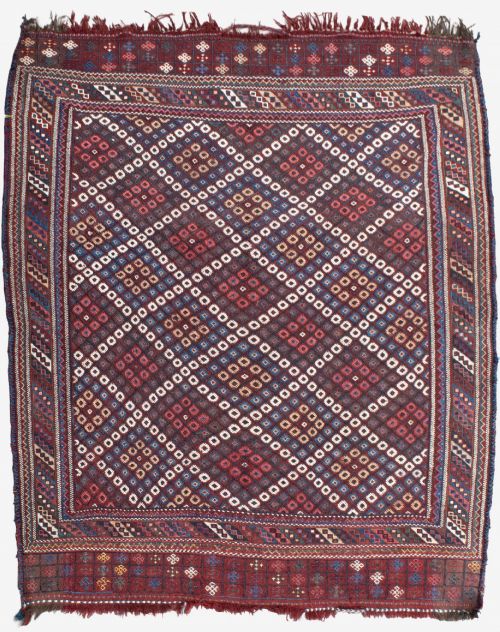


Vintage Nomadic Flatweave
When you search for vintage nomadic flatweave, you are looking at functional textiles woven by tribal groups across Persia, Central Asia, and Anatolia for daily domestic and pastoral life.
Vintage Nomadic Flatweave
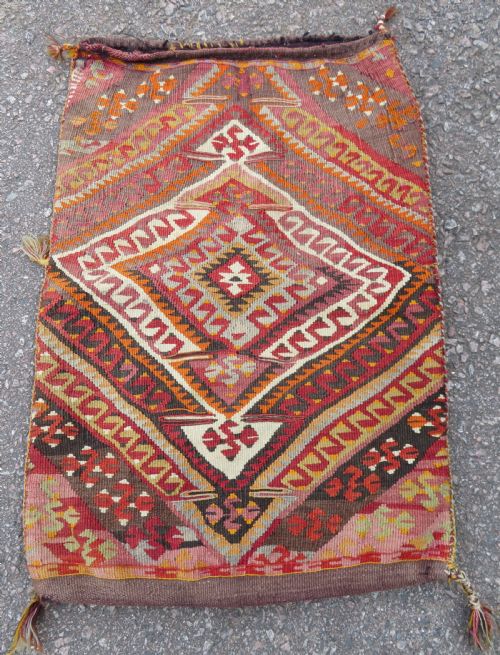
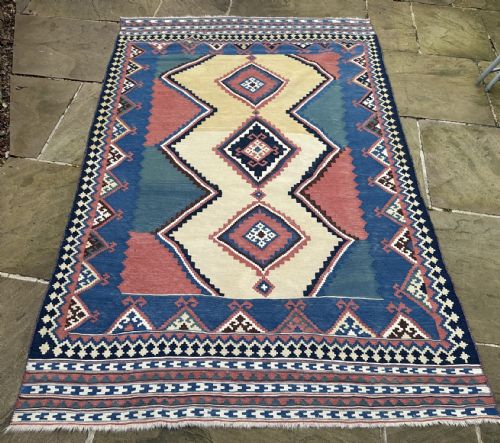
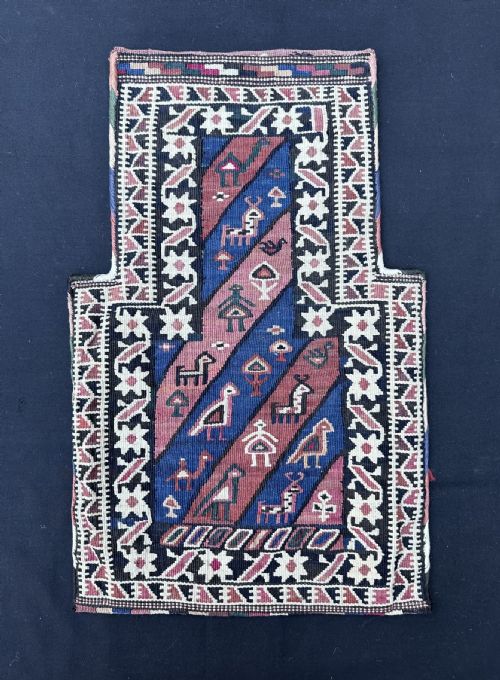
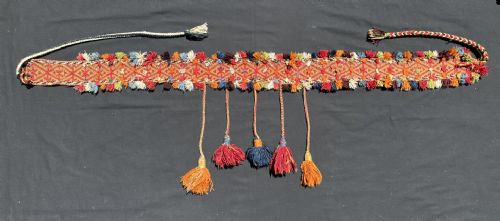
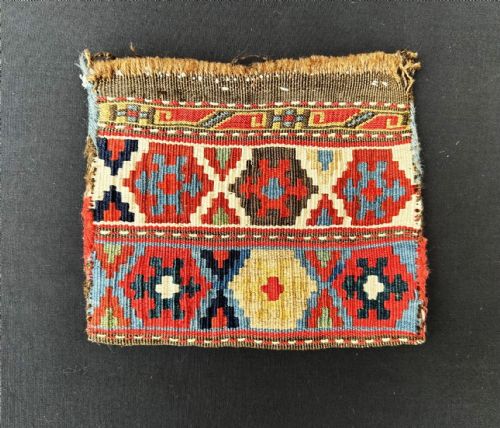
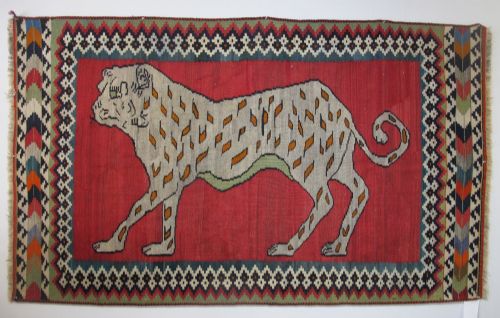
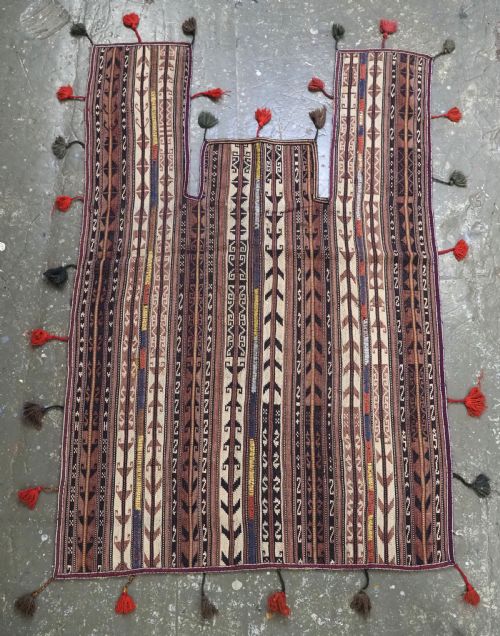
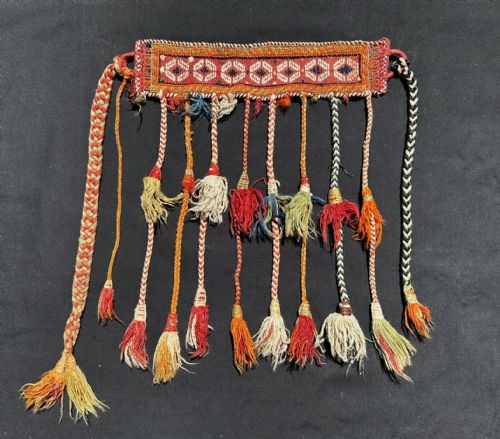
When buyers search for vintage nomadic flatweave, they encounter a wide array of utilitarian objects such as salt-bags, bread sofreh, animal trappings, and storage sacks produced by tribal weavers. These textiles originate from diverse regions including the Chahar Mahal valley of western Persia, the Fars province, and Central Asian territories inhabited by Uzbek and Turkmen groups.
The pieces on this page span the late nineteenth and early twentieth centuries, capturing a period when tribal communities still maintained traditional pastoral migration patterns. Rather than decorative floor coverings made for export, the most common items met here are woven containers and eating cloths intended for hard use inside tents and dwellings.
Materials and construction
Weavers relied primarily on hand-spun wool and cotton, frequently supplemented by goat hair for durability along the edges and silk for specific decorative accents. Natural dyes provided the deep reds, blues, and earth tones characteristic of these tribal pieces, reacting to plant sources and mineral mordants.
The structure relies on flatweave techniques rather than knotted piles, producing crisp geometric patterns through slit-tapestry or banded weft-work construction. Many larger textiles, such as tent bands and covers, were woven in multiple narrow strips and subsequently joined together to form the complete object.
Vintage Nomadic Flatweave Retail Price Guide 2026
Typical asking prices for vintage nomadic flatweave among the pieces listed under this phrase on Sellingantiques today, from the lower quarter to the upper quarter. They describe what is for sale here now, not the wider market.
Listings span production dates from the mid-nineteenth century through the early twentieth century, focusing on wool, cotton, and natural dye constructions.
Evaluating quality and execution
Quality in these flatweaves rests on the tightness of the weave, the precision of the geometric design execution, and the handling of the colour palette. Finer spinning of the wool and careful preparation of natural dyes produce a suppleness in the fabric and a richness in the aged surface that simpler commercial alternatives lack.
The integrity of the original structure, including surviving backs on storage bags and complete borders on sofreh cloths, distinguishes superior examples. Pieces that retain their full intended form without excessive modern structural repairs demonstrate greater fidelity to their original utilitarian purpose.
The Vintage Nomadic Flatweave Glossary
- Sofreh
- A flatwoven spread or cloth used for meals, dough preparation, or ritual dining among nomadic tribes. These rectangular textiles often feature restrained banded designs.
- Tacheh
- A woven wheat-sack or storage container produced by Lori and Bakhtiari groups in western Persia. They were designed to carry grain and provisions during seasonal migrations.
- Mafrash
- A large rectangular storage bag face or complete container used in tribal tents for bedding and household goods. They typically display bold horizontal bands or hooked medallions.
- Torba
- A small hanging storage bag used within a yurt or tent for personal possessions. Turkmen and Baluch weavers produced these with dense geometric ornament.
- Jajim
- A tightly woven flatweave fabric produced in strips and stitched together into durable covers or blankets. They often exhibit bright multi-coloured linear patterns.
Vintage Nomadic Flatweave: Frequently Asked Questions
What were flatweaves used for?
Nomadic tribes utilised flatweaves for practical domestic tasks such as carrying grain, storing bedding, spreading dough, and furnishing tents. Items like salt-bags and horse blankets served specific functional roles in daily pastoral life rather than acting as static decorative objects.
Because they were made without pile, these textiles folded easily for transport during seasonal migrations and withstood heavy wear inside temporary dwellings.
How do I care for a flatweave?
Gentle vacuuming without a rotating brush helps remove dust and grit that can settle between the tight weft threads. Professional textile conservation cleaning is recommended when deeper maintenance is required.
Keeping the textile out of direct, harsh sunlight prevents the natural dyes from fading over time while maintaining the integrity of the wool and cotton fibres.
Where were these textiles made?
The pieces originate from tribal and nomadic groups operating across Persia, Central Asia, and Anatolia. Major regions represented include the Fars province of south-west Persia, the Chahar Mahal valley, and territories associated with Uzbek and Turkmen tribes.
Each weaving group developed distinct structural habits and colour palettes tied to their specific geographic area and tribal heritage.
How can I tell regions apart?
Regional attribution relies on the specific structural format, palette, and motif vocabulary unique to each tribal confederation. For instance, Qashqai weavers in south-west Persia utilised different geometric arrangements compared to Yomut or Teke tribes in Central Asia.
Examining the specific type of object, such as a Bakhtiari tacheh or an Afshar sofreh, provides further clues to its geographical origin.