
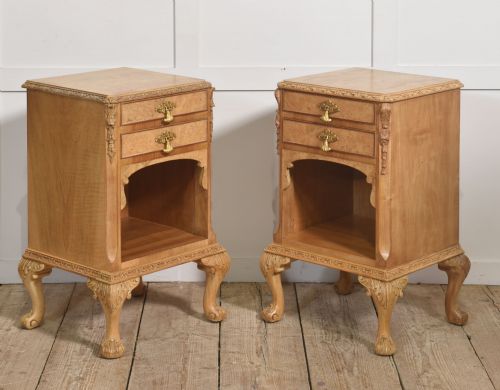


Vintage Night Stands
These vintage night stands are practical beside-the-bed storage pieces, ranging from Georgian mahogany cabinets to Art Deco walnut designs that anchor a bedroom.

Vintage Night Stands
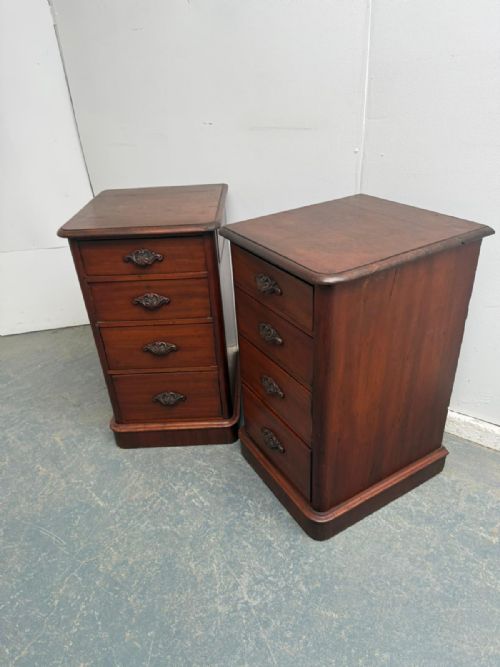
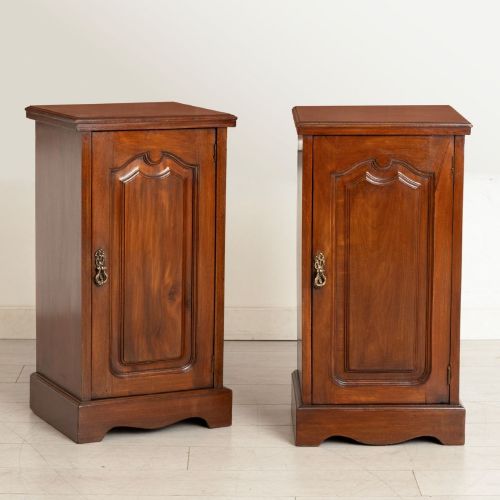
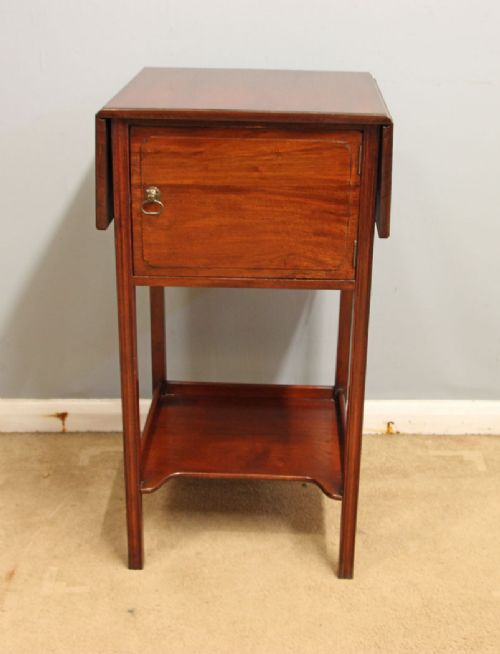
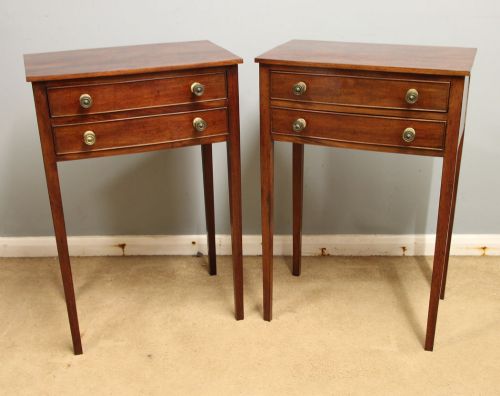
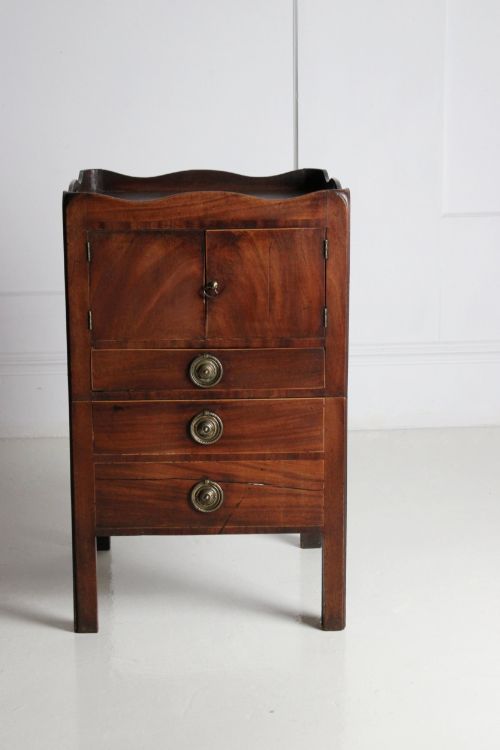
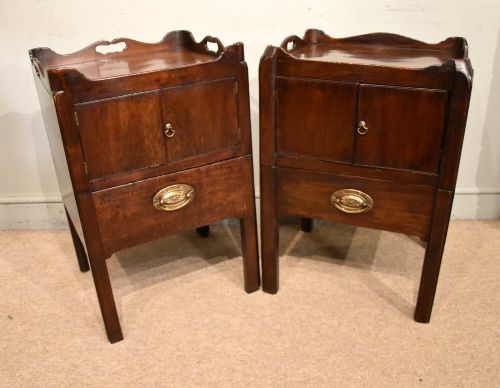
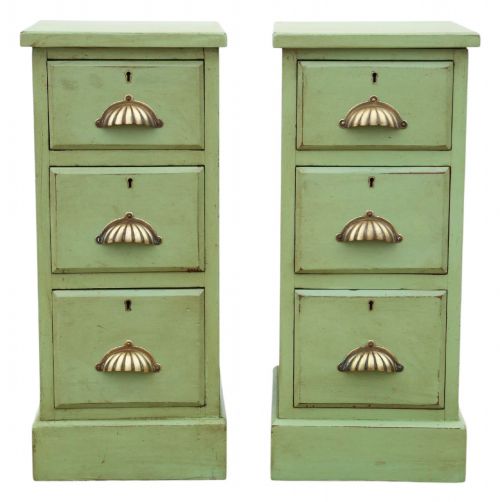
Vintage night stands appear primarily in forms such as bedside tables, cabinets, chests, and occasional shelves intended to sit beside a bed. The selection includes individual examples alongside matched pairs dating from the Georgian period through the Victorian era into the 1930s.
Mahogany and walnut predominate among the surviving pieces, often found with marble tops or boxwood inlay details. Buyers encounter everything from simple oak cupboards to refined French designs with marquetry and parquetry.
The objects serve the same domestic purpose they did originally, holding lamps, books, and small personal items within arm's reach of the mattress. Their proportions suit modern bedroom layouts just as well as historical ones.

Materials and construction methods
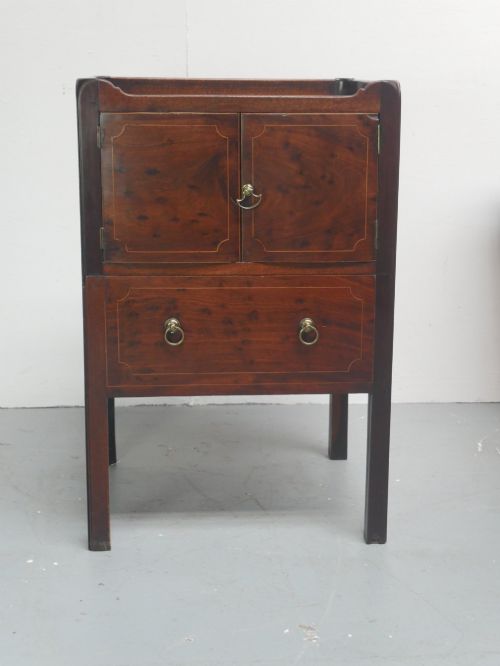
Cabinet makers built these pieces using solid timbers like mahogany, walnut, and oak, frequently employing burr walnut veneers to create rich grain patterns on door fronts and tabletops. Boxwood inlay adds linear contrast to flat surfaces.
Many items incorporate functional hardware in brass, while French and Victorian examples frequently feature fitted marble tops designed to resist moisture and wear. Tambour doors, carved details, and fitted drawers demonstrate traditional joinery techniques.
Vintage Night Stands Retail Price Guide 2026
Typical asking prices for vintage night stands among the pieces listed under this phrase on Sellingantiques today, from the lower quarter to the upper quarter. They describe what is for sale here now, not the wider market.
Listings span the Georgian period, 1880, Victorian era, 1910, 1920, and 1930, utilising mahogany, walnut, burr walnut, oak, and marble.
Assessing quality in construction and material
Quality rests on the selection of timber and the precision of the joinery, distinguishing straightforward utilitarian pieces from finely proportioned cabinet work. Matched pairs showing consistent grain alignment command particular attention.
The integrity of secondary materials, such as well-fitted marble slabs, original brass handles, and intact boxwood stringing, separates standard examples from those retaining their complete decorative scheme.
The Vintage Night Stands Glossary
- Tambour
- A sliding door made of narrow vertical strips of wood glued to a canvas backing. This mechanism allows access to tight cabinet spaces without swinging doors.
- Marquetry
- The art of applying pieces of veneer to a structure to form decorative patterns and pictures. It appears frequently on French tables.
- Parquetry
- A geometric mosaic of wood pieces used for decorative floors and tabletops. It differs from marquetry by using strictly angular patterns.
- Boxwood inlay
- Narrow strips of pale boxwood set into a contrasting darker wood surface for ornamentation. This technique highlights edges and panel borders.
- Pot cupboard
- A small bedside cabinet originally designed to enclose a chamber pot. These form the direct functional ancestors of the modern night stand.
Vintage Night Stands: Frequently Asked Questions
How do I identify a Georgian night stand?
Georgian pieces display characteristic timber choices like solid mahogany, often featuring straightforward lines, panelled doors, or tray tops designed to keep items from sliding off.
Look for traditional joinery methods and proportions that reflect the aesthetic of the eighteenth century, distinguishing them from later revival styles.
Are matched pairs common for vintage night stands?
Matched pairs do appear across various periods, particularly from the Victorian era and the 1930s. Finding two identical cabinets intended to flank a bed requires patience as single pieces are more common.
Pairs often show slight variations in grain or wear due to their age and separate histories before being brought together.
What maintenance do marble-topped night stands need?
Marble tops require simple wiping with a damp cloth and mild soap to remove dust and prevent staining from glasses or bottles. Avoid harsh acidic cleaners that can etch the polished stone surface.
Applying a specialist stone wax helps protect the surface from moisture over time while preserving the natural sheen.
How do Art Deco night stands differ from Victorian ones?
Art Deco night stands from the 1920s and 1930s favour smooth walnut veneers, geometric forms, and streamlined silhouettes without excessive ornamentation. They reflect a modern shift in interior design.
Victorian pieces tend to rely on heavier mahogany or exotic hardwoods, featuring deeper carved details and more traditional cabinet proportions.