

Pair of Night Tables
A pair of night tables serves as a coordinated bedside solution for lighting and storage, spanning periods from the eighteenth century to Art Deco.
Pair of Night Tables
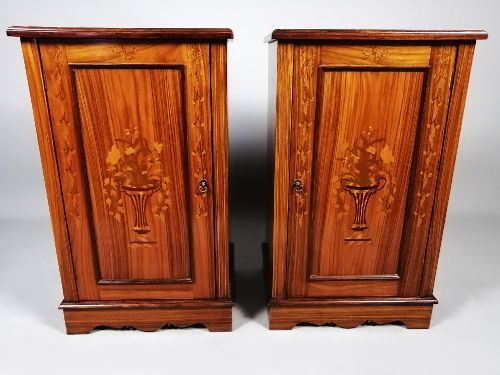
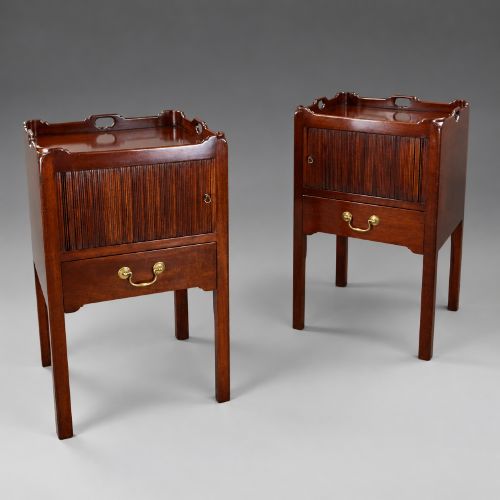
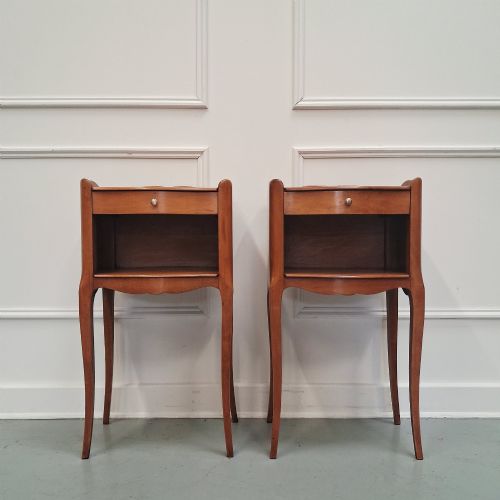
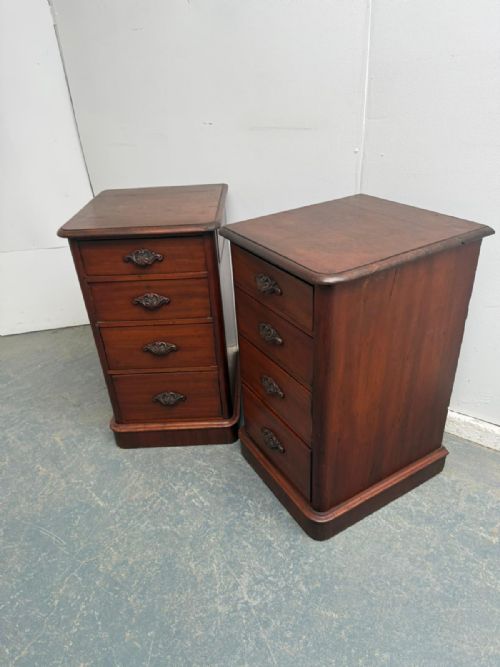
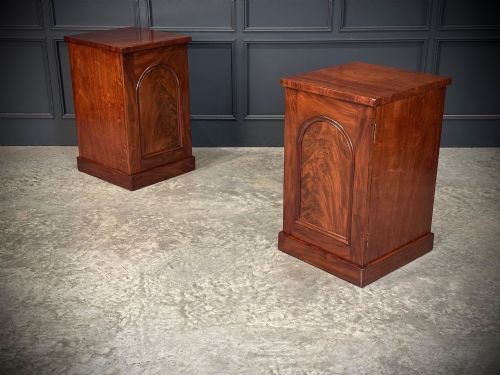
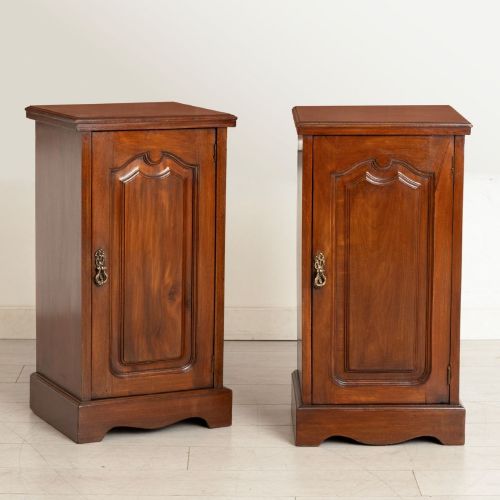
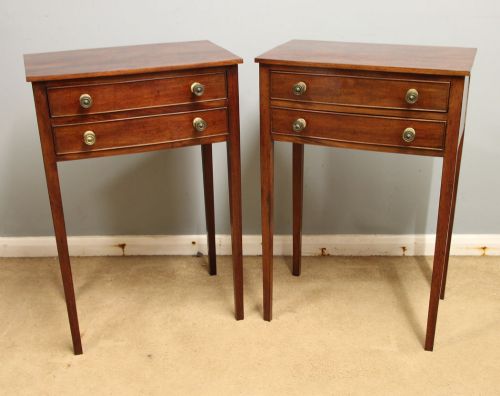
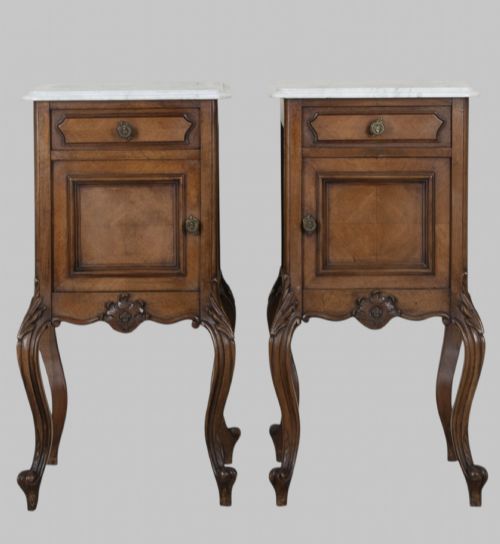
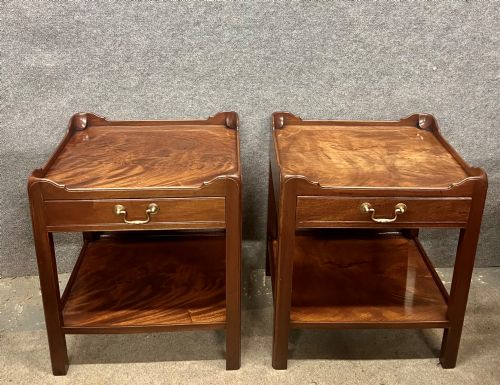
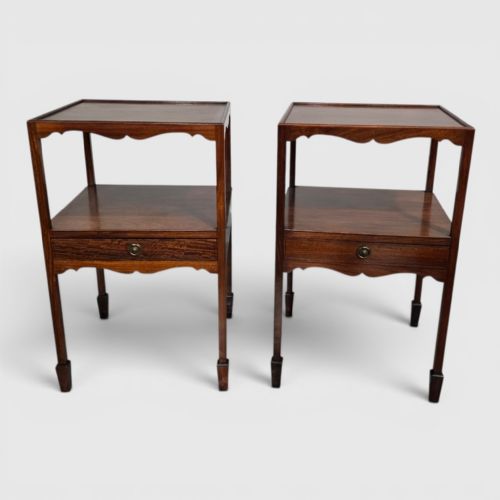
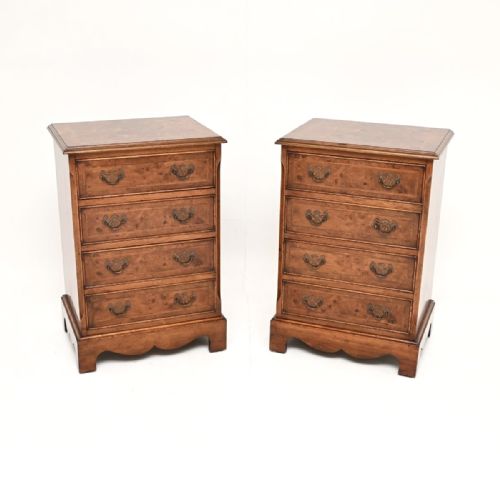
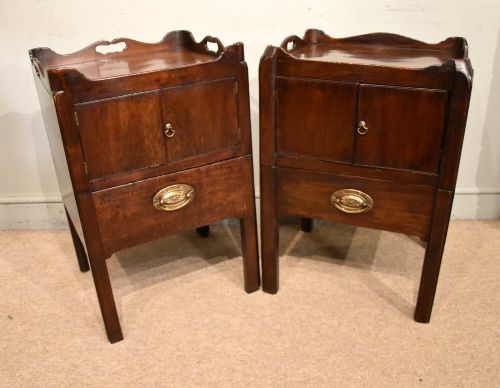
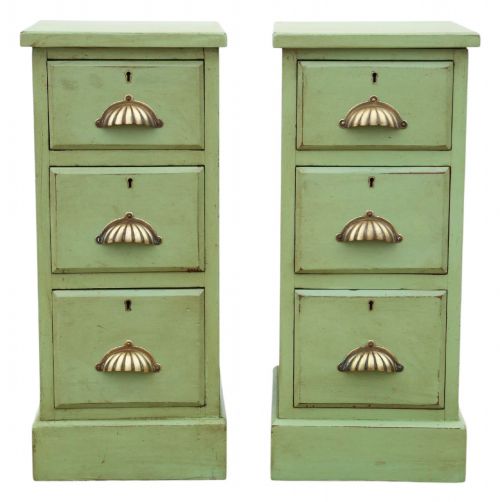
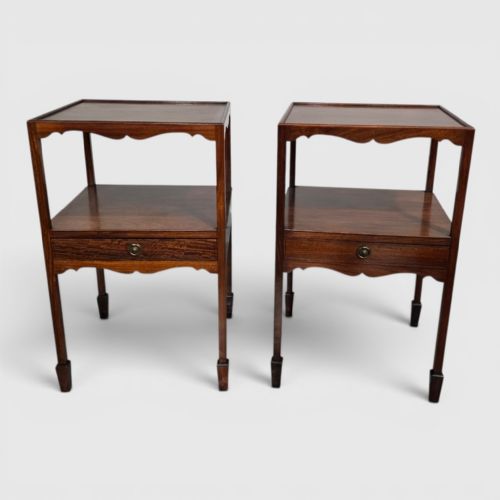
A pair of night tables encompasses matched bedside cupboards, chests of drawers, and lamp tables designed to sit beside a bed. When browsing this selection, buyers frequently encounter pieces from the Georgian era through to the 1930s.
The inventory includes various regional interpretations such as French provincial cabinets, Italian nightstands, and English Victorian mahogany pieces. Common formats range from open lamp tables to enclosed pot cupboards and multi-drawer chests.
Makers and designers historically produced these matching pairs to balance symmetry in a bedroom. The forms adapt readily to modern interiors while retaining their original utilitarian purpose.
How They Were Made
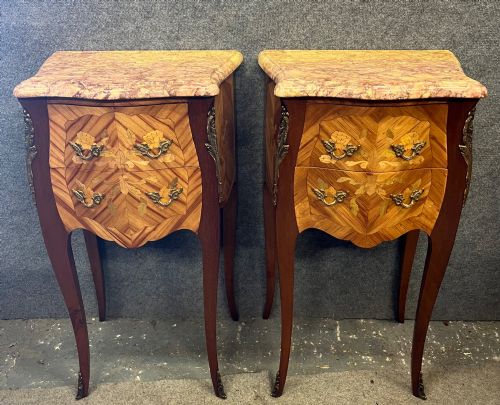
Cabinet makers utilised solid woods and decorative veneers over secondary timbers, frequently employing mahogany, walnut, satinwood, and oak. Marquetry and parquetry techniques added geometric and floral surface patterns using contrasting timbers like kingwood and tulipwood.
Fine examples incorporate fitted marble tops or inset leather panels, alongside hand-cut dovetail joints in drawer construction. Brass and gilt-bronze mounts provided structural reinforcement and decorative handles for doors and drawers.
Faux bamboo finishes let 19th-century makers satisfy a sudden craze for exotic flora using ordinary British hardwoods.
What Varies in Quality
The grade of timber selection heavily influences the hierarchy of these pieces, distinguishing plain woods from highly figured flame mahogany or burr walnut. Finer execution is evident in complex serpentine or bombe forms paired with intricate marquetry work.
Original hardware, sound structural joinery, and matching grain patterns across both tables in the pair separate standard workshop production from master cabinet work.
Maple and Co·Sormani
The Pair of Night Tables Glossary
- Marquetry
- Inlaid wood veneers forming decorative pictures or patterns. Artisans cut various coloured timbers to create intricate floral or geometric designs across table tops and cabinet doors.
- Parquetry
- Geometric mosaic woodwork formed of small veneer pieces laid in repeating patterns. It differs from marquetry by strictly utilising angular, repeating shapes like cubes or chequers.
- Commode
- A low cabinet or chest of drawers containing doors or pull-out compartments. Originally standing on legs, these versatile units transitioned into standard bedroom storage.
- Pot cupboard
- A small bedside cabinet historically enclosing a chamber pot. These enclosed compartments typically feature a single door and a shelved interior.
- Serpentine
- A curved furniture front characterised by a convex centre flanked by concave sides. This undulating shape requires advanced woodworking skill to execute cleanly on drawer fronts.
Pair of Night Tables: Frequently Asked Questions
What is the difference between a night table and a commode?
A night table generally refers to any small bedside support surface or open lamp table designed for immediate bedside use. A commode specifically denotes an enclosed cabinet format featuring drawers or doors for concealed storage.
Historically, the term commode also encompassed specific sanitation furniture, though in bedroom settings it evolved into a decorative low chest.
How do I identify an Art Deco night table?
Art Deco bedside tables typically date from the 1930s and display streamlined silhouettes with contrasting veneers such as walnut and bird's-eye maple. They often feature geometric shapes and minimal ornamentation compared to earlier Victorian or Georgian pieces.
The focus shifts toward bold wood grains and sleek, curved or bow-front profiles.
Can I use these antique tables in a modern bedroom?
These tables adapt easily to contemporary spaces, providing functional surface area for lamps and books alongside concealed storage. Their varied dimensions allow them to fit beside modern bed heights without overwhelming the room.
Mixing historical periods, such as placing a Georgian mahogany cabinet in a minimalist setting, introduces textural contrast.